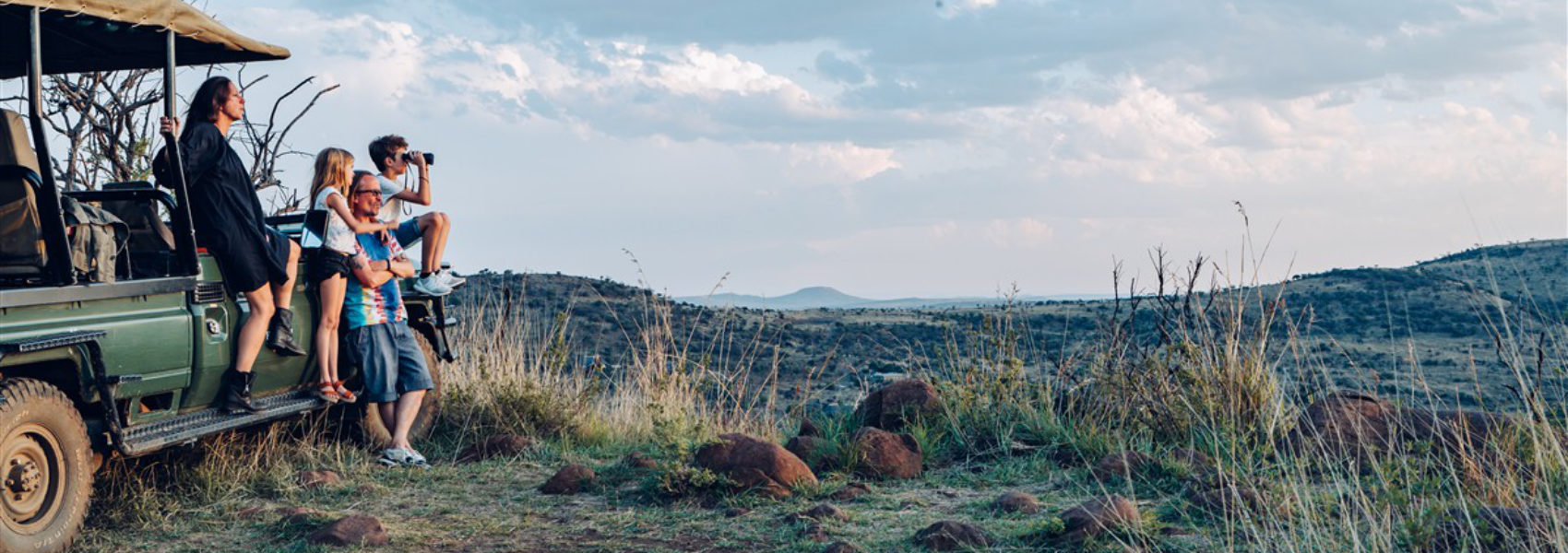
'Worldschooling': Educating Your Children on a Family Sabbatical
Published 26th Feb. 2026
Reading time
It’s no secret that we’re strong advocates of a family sabbatical, so amid the downpours of February, we were delighted to host an event at the Royal Academy discussing just that. Bringing together Thomasina Miers of Wahaca, Walter Kerr of Oppidan Education and, of course, our very own Tom Barber, the event opened the floor for a practical and frank conversation about the best way to take a sabbatical with your children. Read on for our key takeaways…
- The Sabbatical Argument
- What Does a Good Day on Sabbatical Look Like?
- The Destinations That Teach
- When to Go
- The Practicalities: Myths Debunked
- The Bigger Picture
The Sabbatical Argument
There is a truth about learning that every good teacher knows, but that our education system rarely has the space to honour: knowledge retained in the long term is almost always knowledge attached to an experience.
Travelling with your children is the perfect antidote to that disconnection. Whether it takes place over a term, a season or even a year, a thoughtfully structured sabbatical is one of the most powerful educational investments a family can make. A fantastic sabbatical isn’t defined by its length, but rather its intentionality: the decision to step outside ordinary life and immerse your family in something broader.
When families come to us thinking about a sabbatical, the conversation usually starts practical – think schools, visas, costs, logistics. But underneath, it’s almost always emotional, a concept Tom has nicknamed the Four Rs: Reconnection, Regret, Recalibration and Reset.

Image by Jess Bibby.
1. Reconnection
Modern family life is so logistically intense that parents and children often operate in parallel, rather than in tandem. In our (expert) opinion, shared experiences are the secret sauce of healthy relationships – the bus journey you always lose your way on, the bakery that serves the best croissant, the new skill you learnt together. These bonding moments become part of family folklore, ready to be told at every future get-together.
2. Regret
Many parents, particularly those who have built demanding careers, dream of making up for time lost with their children. A sabbatical offers that chance.
3. Recalibration
When you step outside your normal environment, everyone reassesses. Parents often return less burnt out and more present, while children grow in confidence in ways that are hard to engineer at home. And there is something quietly powerful about children realising, in a real and lived way, just how fortunate they are relative to much of the rest of the world.
4. Reset
Finally, a sabbatical offers the chance to pause, live more intentionally and remind yourselves how special quality time with your family is.
A week's holiday rarely allows for any of this; a month, a term or a year does. Children need time to absorb, to ask questions, to be bored, to wonder. The ability to travel properly, slowly and with intention gives families something that the school run, the homework table and the comprehension result rarely do: the chance to genuinely reconnect.
Taking a child away, when done well, is not a gap in their education. It’s often better for their development than the equivalent time spent in school.

Image by Faustine Poidevin-Gros.
What Does a Good Day on Sabbatical Look Like?
As Walter explained during the event, this is the question parents ask most often, and it deserves a direct answer. Structure matters enormously – a sabbatical that drifts into permanent holiday mode benefits nobody. But structure does not mean rigidity.
The rhythm we recommend looks something like this: an early start, ideally with some form of exercise together, whether that’s a stroll, a swim or whatever the environment you’re in offers. Then, it’s into focused work. For children up to 13, around 75 to 90 minutes of core academic work across two sessions, with a short assessment before lunch. This is non-negotiable – the assessment anchors the morning, giving your child a sense of achievement and progress.

Image by Faustine Poidevin-Gros.
The afternoon is where the magic happens. Out and about, with learning woven into the environment rather than imposed upon it, makes for a fantastic learning experience. Be that an orienteering course around the temples of Angkor Wat, five things to find and identify on a shark-tagging expedition, or a sketch, a photograph or a question to answer before dinner. In the evening, spend some time journalling: what did they see, what did they learn and, crucially, what did they want to know more about.
The content of the morning connects to the physical context of the afternoon. That connection is everything.

Image by Olivier Romano.
The Destinations That Teach
Some places are more than just holiday destinations: they’re extraordinary outdoor classrooms. A few of our favourites are…
1. Gallipoli, Turkey
Walk the beaches at Anzac Cove, and the First World War comes to life in a way no textbook can replicate. For History students of any age, it’s a transformative experience.
2. Washington DC and the American South, USA
From the Cold War museums of the capital to the Civil Rights trail through Alabama and Memphis, this is Politics, History and RS lived at full volume.

Image by Birgit Sfat.
3. The Spice Route, Middle East, North Africa & Asia
Learn all about culinary history, colonialism, global economics and cultural exchange across some of the world's most beautiful coastlines as you travel along the Spice Route. Thomasina Miers, who we were lucky enough to host at our event, knows better than most how food is a portal into everything else.
4. The Galapagos, Ecuador
There really is no better place for Biology students. Evolution, natural selection, ecosystems, conservation – Darwin's notebook comes alive in its volcanic terrain and sparkling waters.
5. Athens, Greece
If your children study Classical Civilisation, Ancient History, Philosophy or Politics, there is nowhere better on earth than the ancient capital of Greece. The Agora, where Socrates taught, the Parthenon, Olympia – these switch from being tourist sites to primary sources.
If you didn’t see your teen’s favourite subject on that list, don’t worry: we're working on a dedicated series of guides on the best destinations for GCSE and A Level subjects, coming soon. The concept of 'worldschooling', using travel as the primary context for a child's learning, runs through everything we do.

Image by Jess Bibby.
When to Go
Timing a sabbatical well requires a little thought, but luckily we’re here to help.
- Ages six to nine (Year 2 to Year 4) are wonderfully formative years for travel, provided there are no imminent entrance exams, and your little one is settled in their school (rather than mid-transition).
- Ages nine to ten – or Year 4 to Year 5 – is an excellent window for a family sabbatical. Academically, children are old enough to engage meaningfully with what they encounter, but exam pressure has not yet arrived.
- Perhaps unsurprisingly, Year 6 is a firm no for families with selective school ambitions. The 11+ is not a process that accommodates a term abroad…
- But the real sweet spot? The tweenager years: ages ten to 12, or Years 7 and 8. Entrance exams are in the rearview, but GCSEs have not yet begun. Children this age are old enough to engage properly, absorb languages and appreciate cultural differences, but not yet so tied to exam timetables or teenage social life. In Tom's experience, this window is the single most powerful moment for a family sabbatical.

Image by Jess Vide / Pexels.
The Practicalities: Myths Debunked
The main reasons families give for not going on a sabbatical are almost always solvable. Here are the most common concerns, and our honest answers:
1. Accommodation
In our opinion, hotels aren’t the answer – they negate the very point of a family sabbatical, which is to give children an insight into real life in a different culture. House swap websites are excellent options, and many families arrange swaps through their own networks. Top tip: letting your own property while you're away can also significantly offset costs.
2. Visas
Most countries limit tourist access to three months, but notable exceptions include Costa Rica, Canada and New Zealand. If you’re after a longer stay, make sure to start visa applications early, as they can take a while to be approved.

Image by Jessica Lynn Culver/Getty Images.
3. Pets
Many countries accept pets, provided they have microchips and the relevant health documentation. Alternatively, pet-sitting websites are great for finding someone to live in your home and care for your furry family members while you're away.
4. Finances
A Revolut or Starling account will avoid foreign exchange fees. For longer stays, we’d recommend opening a local bank account.
5. Children falling behind
This is the fear that looms largest and, in our experience, dissolves fastest. Most children return from a family sabbatical with increased confidence, greater independence and a far broader worldview than their peers. What’s more, Oppidan Education can shape a bespoke curriculum around your child’s exam syllabus and the places you visit, keeping work time structured and clearly bounded while turning the rest of the day into an adventure.
One practical note when planning your sabbatical: don't start with a destination. Start with what you want to achieve, experience and feel by the end of it. The right places will follow from that (we can help with this, don’t worry).
Okay, okay, just one more tip: talk to the school early. The conversation is almost always more productive when parents approach it as a partnership rather than an announcement.

Image by Jess Bibby.
The Bigger Picture
There is a growing movement advocating for what educators are beginning to call ‘worldschooling’ – the deliberate use of travel as the primary context for a child's learning. Institutions like Minerva University, where students live and study across seven cities, are building this philosophy into higher education. The International Baccalaureate and schools like UWC Wales have long understood that a diverse, globally literate curriculum produces more rounded, more resilient, more empathetic young people. And, from September 2028, Global Citizenship will be formally embedded in the UK curriculum.
Families who have given their children an understanding of the lived experience of other cultures, other histories and other ways of organising the world will have given them something no classroom can fully replicate.

Image by Birgit Sfat.
Beyond the education argument, there is something simpler and perhaps more important. As Tom succinctly put it: 'You are giving children time, attention and exposure to the wider world. You are engendering curiosity, adaptability and courage, and often returning as calmer, more present parents. That is an investment in long-term family resilience and perspective.'
A sabbatical, done well, is not a detour from your family life: it’s one of the best things you’ll ever do for it.

Image by Jess Bibby.
Written by Tom Barber (Original Travel) and Walter Kerr (Oppidan Education) | Header image by Olivier Romano.
You might also like
Practical advice and inspiration for your next trip
A Levels by Stealth: Travel That Supports Top Grades
With four teenagers in or entering sixth form, my family have noticed firsthand that A Level study demands not just recall but interpretation. The jump from GCSE to A Level is substantial; essays are longer, critical thinking matters much more and independent evaluation is rewarded. Several experts suggest that examiners across AQA, Edexcel and OCR consistently reward students who demonstrate awareness of competing perspectives, real-world examples and a confident grasp of context.
26th March 2026 - Family Travel
GCSEs by Stealth: The Holidays That (Genuinely) Help Their Grades
With four teenagers currently moving through the GCSE and A Level years in our household, we have become mildly obsessed with the idea of the ‘incremental gain’. Not in a hot-housing sense. More in the way that any decent sports coach knows that small, cumulative advantages often show up where it matters – in the final scoreline. Because one thing becomes very clear very quickly when you have children doing GCSEs and A Levels across AQA, Edexcel and OCR:
24th March 2026 - Family Travel
A Love Letter to Bonding Holidays
This blog is a love letter to a type of holiday I can't recommend enough – the Bonding Holiday. At its heart is a simple belief: shared experiences strengthen relationships. These are trips where just two family members travel together – parent and child, grandparent and grandchild, godparent and godchild. The best ones revolve around a shared interest – art, music, wildlife, food, history – and the aim is beautifully straightforward:
15th December 2025 - Family Travel