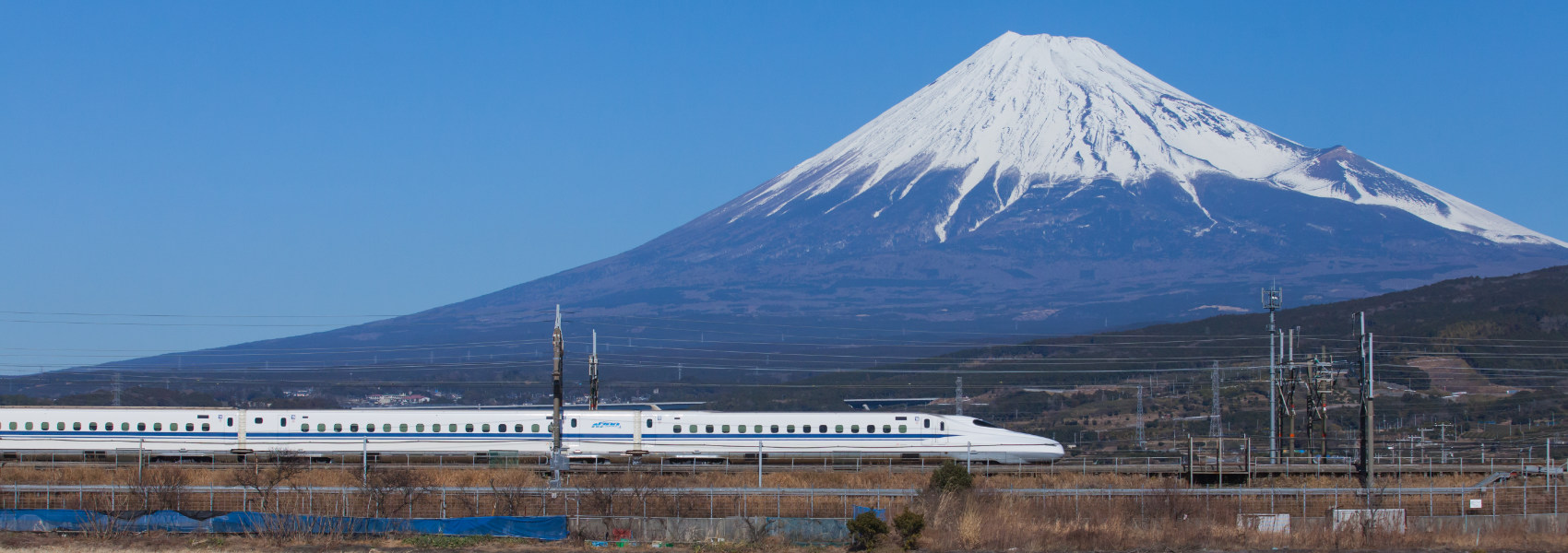
Our Guide to Bullet Trains in Japan
Do you want to immerse yourself in Japanese culture while also seeing as much of the country as you can in one trip? Enter Japan’s bullet train. Iconic, impressive and efficient, these sleek speedsters are an integral part of the country’s culture, transporting thousands of locals every day. In between strolling cherry-lined streets, sampling skewers of yakitori or watching anime shows, hopping aboard a bullet train should feature on any Japan holiday itinerary.
But what exactly are bullet trains, where can you ride them and what do bento boxes have to do with any of this? In this guide, we’ll answer all these questions and more with the help of our Japan expert, Joyce…
1.
What are bullet trains?
Bullet trains (also known as Shinkansen, meaning ‘new main line’) are Japan’s high-speed trains. They combine powerful electrics, aerodynamics and ultra-fast tracks to reach the showstopping speeds that have earned them their iconic name. The fastest bullet train currently in operation is the E5 Series, which boasts maximum speeds of 200mph and operates on the Tohoku and Hokkaido lines.
The country’s other trains travel at 50-100mph and include the local, express, semi-express, rapid and limited express (also known as special express) lines. The names alone are ripe for confusion, so if you’re keen to travel on one of them, our Japan expert, Joyce, says some insider knowledge is incredibly helpful.

Image by ErenMotion / Adobe Stock
2.
Bullet train routes
Bullet trains cover eight lines, connecting most of the major cities within Japan’s main islands of Honshu, Kyushu and Hokkaido. The oldest, most popular and – in our humble opinion – most bucket-list worthy route is the Tokaido Shinkansen, which connects Tokyo, Nagoya, Kyoto and Osaka.
The other routes are:
- Sanyo Shinkansen – connects Osaka with Fukuoka or Kyushu
- Tohoku Shinkansen – connects Tokyo with Aomori at the northern tip of Honshu
- Hokkaido Shinkansen – connects Aomori with Hakodate on the island of Hokkaido
- Joetsu Shinkansen – connects Tokyo with Niigata
- Hokuriku Shinkansen – connects Tokyo with Tsuruga in the Fukui Prefecture
- Kyushu Shinkansen – connects Fukuoka in the north with Kagoshima in the south
- Nishikyushu Shinkansen – shuttles between Takeo Onsen and Nagasaki

Image by lesniewski / Adobe Stock
3.
Planning your journey
Purchasing tickets for bullet trains
At the moment, there’s no singular English site for buying bullet train tickets. Instead, there are multiple systems, each covering selected lines. To add to the confusion, an increasing number of third-party ticket services are also cropping up online.
Not to toot our own horn too brazenly here, but this is when booking with a tour operator really come into its own, as our travel specialists can work out complicated train routes and timings, leaving you free to rock up to the station, hop aboard and enjoy the peculiar floating feeling of being on a train travelling at nearly 200mph.

Image by torsakarin / Adobe Stock
Do I need a reservation?
In short: no, but they’re always recommended. While a reservation isn’t necessary unless you’re travelling on the Tohoku, Hokkaido or Hokuriku lines, it’s worthwhile to ensure peace of mind and especially useful if you’re travelling during peak times.
Additionally, if you fancy a – well – fancier experience, you’ll need to be riding in a green car (business class) or a Gran Class / Supreme Class car (first-class). These seats do require reservations, so it’s helpful to consider how comfortably you’d like to travel when booking.

Image by Ben Gunsberger / Getty Images
Luggage policies on bullet trains
Each passenger is allowed to bring up to two pieces of luggage (weighing no more than 30kg and measuring no more than 250cm total in width, depth and height). Small carry-on bags are also allowed.
It’s worth noting that on the Tokaido, Sanyo, Kyushu and Nishikyushu lines, there’s a special rule for oversized luggage, requiring passengers to make seat reservations in the last rows of the cars. However, on all other lines, this isn’t necessary, and if you book with us, we will sort the logistics so you won’t have to worry about a thing.

Image by Pia Riverola
4.
Travelling on a bullet train
On-board amenities
If you loathe the thought of travelling backwards, bullet trains are bound to delight since the seats in every car can be turned 180 degrees, meaning you can always face forward. With the exception of some older trains, all seats are also equipped with a magazine pocket, reading light and electrical outlet. There are also multiple toilets on board, most of which are Western-style – no risk of an uncomfortably journey here.
To add to the cushy calm, in some trains, seats can be reclined, a footrest kicked up and a seat warmer switched on. Oh, and there’s also free Wi-Fi on all trains, meaning you'll have no problem streaming a topical movie during your journey. Joyce recommends Netflix’s Bullet Train Explosion.

Image by Anthony / Adobe Stock
Etiquette while on board
Before you speed through the country in superbly sleek style, there are some general etiquette rules to keep in mind so that you don’t disturb your fellow passengers:
- Line up on the platform before boarding (no change there for us Brits)
- Don’t block the aisle with luggage
- Keep your voice down
- Set your mobile phone to silent
- Don't take phone calls except in the deck areas or between cars
Essentially, if you ever saw Brad Pitt's action-packed blockbuster Bullet Train, just avoid doing everything he does in that.

Image by Olivier Romano
Train bento boxes
Feeling peckish on board? Joyce tells us there’s a local custom for that, too. While some bullet trains are still served by food and drink carts, the number is gradually decreasing. But not to worry, ekiben (or, train bentos) are keeping the joys of light-speed dining alive. These on-the-go pre-packed meals are such an integral part of Japanese train culture that they predate plastic itself.
Conveniently, wherever there’s a bullet train, there’s a store selling ekiben. So, you’ll have no problem stocking up. To go full meta, you could even buy a bento box shaped like a bullet train. If that’s not the setup for an iconic photo, we don’t know what is...

Image by PixHound / Adobe Stock
Header image by torsakarin / Adobe Stock
Why visit Japan with Original Travel ?
Whether you’re a family seeking Tokyo’s futuristic museums or a couple wishing to relax in Hokkaido’s onsens, we’ve got you covered. Our consultants have first-hand experience of living in Japan, so we know the secret spots off the beaten track (and how to reach them). Train travel is the best and most efficient way to explore the country, and wherever you visit, getting to grips with Japan’s diverse culture is a must. We work with guides who provide in-depth experiences on the history of Samurai or Geisha culture, and we have hand-picked traditional ryokan properties to rest your head in.
Enquire nowA few of the benefits of travelling with us to Japan
- Our local Concierges
- The Original Travel app
- Wi-Fi router and e-Sim
- Destination Dossier
- 24-hour helpline
- Expert guides
- 100% carbon absorption
You might also like
Practical advice and inspiration for your next trip
Our Eight Best Hikes in Japan
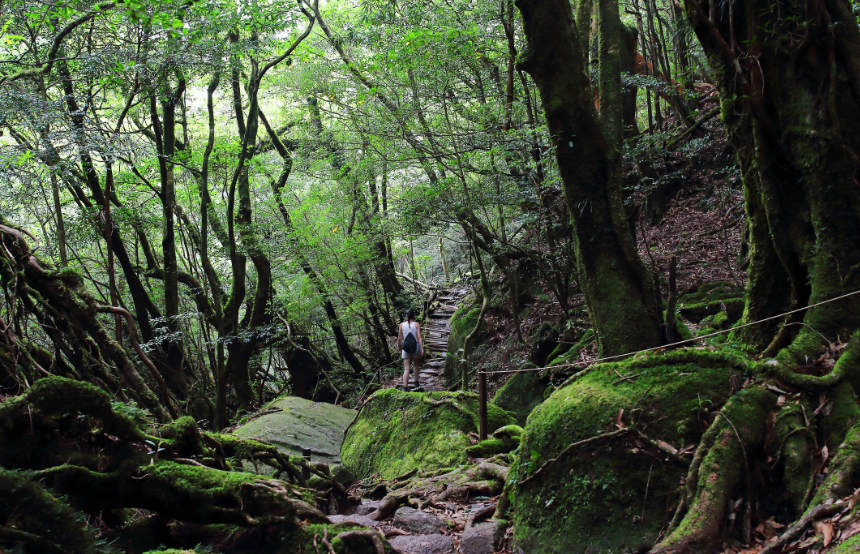
In our experience (of which we have plenty), there are two main things that draw travellers to Japan: rich culture and spectacular scenery. And how better to appreciate this killer combo than spending your holiday hiking in Japan? From the ancient Kumano Kodo pilgrimage network to the film-worthy landscapes of Yakushima Island, Japan boasts a number of incredible hiking trails, winding past dense forest, tranquil temples and wonderful waterfalls.
21st September 2026 - Japan Travel Inspiration
Best Temples in Japan
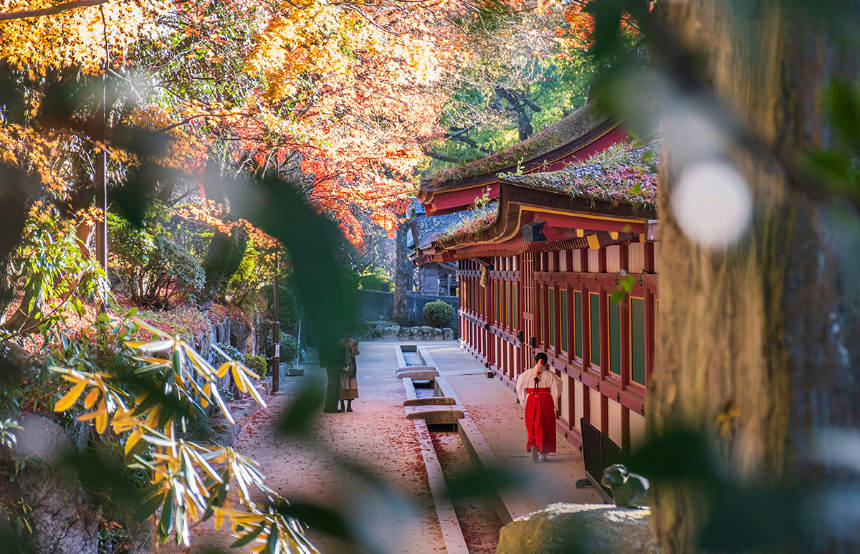
Just stepped off the Shinkansen, explored the vibrant streets of Tokyo and had your fill of ramen? Then you’ll know Japan is dazzling, and a little hectic at times. That’s where temples come in – and with over 150,000 sacred sites across the country, you’ll see signs for otera (temple) and jinja (shrine), everywhere. Follow them and find peaceful pavilions, meet resident deer bowing for a biscuit or two and even tiptoe through ninja hideouts filled with secret rooms.
27th April 2026 - Japan Travel Inspiration
Best Time to Visit Tokyo
A multifaceted metropolis, Tokyo caters to everyone – and every season. While it's become synonymous with cherry blossoms in recent (Instagrammable) years, it has far more to offer than merely a springtime sojourn. Painted in shades of red throughout autumn, blanketed in snow in winter, and heavy with heat and humidity in summer; this urban titan yields to the full influence of every season. Whether you want to part from the herd to witness snowy wonderlands or brave the crowds to capture the fleeting floral blooms, you can experience it all right here.
2nd March 2026 - Japan Travel Inspiration