Life Concepts Around the World
Published 5th May. 2026
Written by Ella Mawson
Reading time
One of the joys of travel is encountering new cultures and ideas. From ancient traditions to modern philosophies, the world is rich in beliefs with the power to expand our outlook. We’ve spun the globe and cherry-picked some of our favourites, from the conviction that every activity should involve a little fun, to the celebration of joint effort over individualistic action. Read on for our shortlist of life concepts around the world and prepare for a conceptual circumnavigation of the globe...
Meraki
Greece
This untranslatable Greek word describes the act of creating with love, devotion and attention to detail. Meraki is the supper lovingly laid out for friends and family; the fresh flowers arranged in a vase; or the handwritten note accompanying a thoughtful gift. The phrase often connotes craftsmanship, but high art isn’t the aim here. Meraki is about heartfelt effort and the idea that simple tasks can be infused with passion and soul.

Moana
South Pacific
You might know this word from the eponymous 2016 Disney movie, but moana (meaning ‘ocean’ in many Polynesian languages) is celebrated as both a living entity and a connecting force between humans, islands and the sea. Rather than viewing the sea as a barrier, those in the South Pacific see it as a pathway, creating one interconnected world. On a more spiritual level, moana mirrors life’s journey, one strewn with challenges requiring courage and resilience.

Shokunin
Japan
In its simplest form, shokunin can be understood as ‘craftsperson’ or ‘artisan.’ But on a deeper level, it signifies an unwavering devotion to one’s craft. The word emerged during the Edo period, when guilds of carpenters, potters and blacksmiths formed to sustain traditional crafts, and it retains relevance today. Shokunin is about doing your best work, and on any trip to Japan, you’ll notice it everywhere, from a highly skilled sushi chef’s presentation skills to a calligrapher’s singular perfect brushstroke.

Sanuk
Thailand
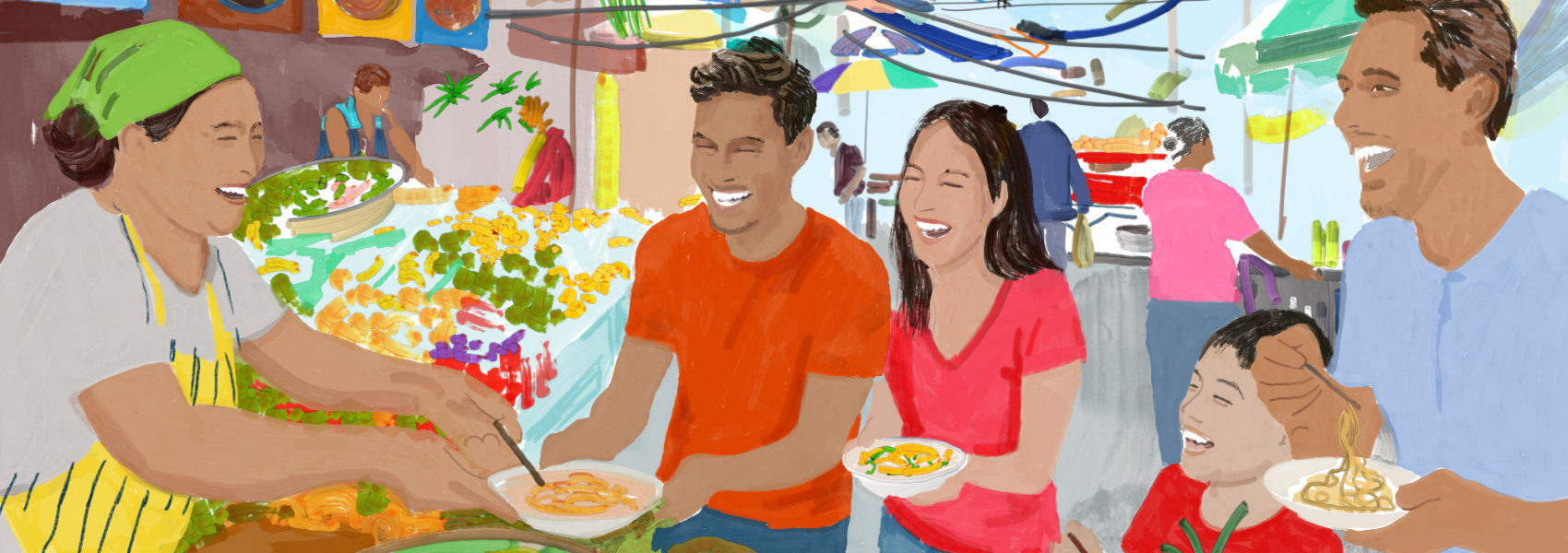
It’s no surprise that the ‘Land of Smiles’ has a life philosophy dedicated to joy. The belief behind sanuk is that every activity, from studying to socialising, should involve a little fun. Even the workplace should be a place of laughter and collaborative spirit. After all, it’s proven that productivity improves when people enjoy what they do. Travel around Thailand, and you’ll see sanuk in street markets, where vendors chat and laugh with customers; at festivals, where communities come together to celebrate; and in family homes, where chores are enjoyed rather than endured.

Harambee
Kenya
Adopted as Kenya’s national motto after independence in 1963 – and even appearing on the country’s coat of arms – harambee is the nation’s guiding belief, deeply embedded in Kenyan culture. The Swahili word translates as ‘all pull together,’ celebrating joint effort over individualistic action. In modern-day Kenya, this philosophy is ever-present, from a company’s staff supporting a colleague going through a tough time to a village pooling labour to build a school.

Sobremesa
Spain
In Spain and Latin America, sobremesa (meaning ‘over the table’) refers to the custom of lingering at the dining table after a meal. Instead of rushing off after the food is finished, people commonly stay seated for half an hour or more – with a cup of coffee or digestif – to enjoy company and conversation. Sobremesa links to the belief that meals build relationships and community, encouraging people to slow down and savour the moment.

Marhaba
Jordan
While travelling in Jordan and the Middle East, marhaba (meaning ‘welcome’) is a word you’ll soon recognise in hotels, restaurants and markets. Though common in daily interactions, the greeting carries a more profound meaning, reflecting deep-rooted values of openness and hospitality. Marhaba comes from the Arabic root rahaba – to be spacious or open – so marhaba is, in essence, to make space for someone in your world. No surprise there, given Bedouin culture developed in the desert, where mutual aid and the sharing of shelter, food and water were necessities.

Pura Vida
Costa Rica
Pura vida, meaning ‘pure life’ or ‘simple life,’ is the informal motto of Costa Rica, embodying the nation’s optimism. The phrase was popularised in the 1950s after the release of the comedy film Pura Vida and appears in daily interactions as a catch-almost-all greeting, farewell or thank you. The associated hand gesture (the shaka: a waggling fist with thumb and little finger outstretched) is used both to celebrate and commiserate, whether over a successful surf session or a stressful time at work. The message? It’s all good.

Pachamama
Andean regions
Translated as ‘Mother Earth’ from the Quechua and Aymara languages, pachamama embodies the importance of living in harmony with nature. In pre-Inca cultures, pachamama was worshipped as a deity – sustaining the soil, mountains and natural world – and was central to agricultural and fertility rituals. Today, pachamama is still honoured in Peru, Bolivia and Ecuador, whether by farmers making offerings at the beginning of the planting season or eco-lodges championing sustainable practices and living with the land, rather than exploiting it.

Ubuntu
South Africa
The word ubuntu, meaning ‘I am because we are,’ from South Africa’s Bantu languages, expresses the philosophy that we’re all interconnected through our common humanity. Day to day, this means acting with care and consideration towards others, whether by volunteering to help a neighbour after a flood, sharing food with those less fortunate or treating junior colleagues with respect. Despite occasional stress-testing, ubuntu has helped South Africa’s post-apartheid regime recovery, guiding social and foreign policy and helping rebuild the Rainbow Nation.

All images by Annabel Briens
You might also like
Practical advice and inspiration for your next trip
The Soundtrack of Travel
You might let the rhythm lead the way on the dance floor, but how about giving it guidance over your travels, too? From jammin’ jaunts through the American South to orchestral odysseys in Germany, there are plenty of ways to tune in (sorry) to the melody on your next trip. And, in our expert opinion, there’s nothing like tangoing with the locals or belting your heart out in a traditional karaoke room to immerse yourself in another country’s culture.
20th May 2026 - Culture
The Grand Egyptian Museum Opening
As Tom Holland (the esteemed historian, not Spiderman) so succinctly put it in the first edition of our magazine, Original Traveller, ‘Egypt is where tourism began’. And the next chapter in the history of tourism in Egypt is about to begin. We’re always looking for a reason to shout about this captivating country, and this November, we have the perfect excuse: the long-awaited opening of the Grand Egyptian Museum (GEM).
3rd November 2025 - Egypt Culture
Our Favourite Spiritual Holidays
Everyday life can be chaotic. Our favourite antidote? Escaping to one of the silent and sacred corners of the world. Whether hiking mystical mountains or observing ancient rituals, spiritual holidays offer a chance to reconnect and slow down. From the cloud-kissing monasteries of Meteora to the heart of Mexico’s Maya culture, read on to discover our favourite spiritual escapes around the world... Meteora monasteries, Greece Himalayas, India Yucatan Peninsula, Mexico Nairobi and Laikipia, Kenya Meteora monasteries, Greece Best for:
24th July 2025 - Culture