
A Guide to Starting a Collection of Rare Travel Books
Published 19th Nov. 2026
Reading time
We're delighted to be collaborating with Peter Harrington, one of the world's leading rare book dealers, for A Journey on the Nile, a special evening exploring Egypt through the world of Agatha Christie's Death on the Nile. Bringing together our shared love of books and travel, the event will feature first editions of Christie's novels alongside rare books exploring Egypt's history, geography and culture.
To mark the occasion, the travel team at Peter Harrington have shared their advice on starting a collection of rare travel books, from vintage travel guides and accounts of great expeditions to first editions of favourite literary classics.
The World on Your Shelf - A Guide to Collecting Rare Travel Books
From vintage travel guides and great expeditions to first editions of literary classics set in a beloved place, rare books offer a way to explore the world – and remember the places that have captured your imagination.
Few things transport us to another place quite like a good book. Ernest Hemingway's descriptions of Pamplona in The Sun Also Rises, Karen Blixen's account of life on a Kenyan coffee plantation in Out of Africa, or Jan Morris's portrait of Venice are as compelling as the journeys themselves.
For travellers, collecting rare books takes that connection further. A first edition of a favourite novel, a century-old guide to a much-loved city, or an illustrated account of an early expedition can serve as a personal reminder of a trip. Over time, these finds can grow into a library reflecting a lifetime of travels and memories.
Where to begin
- Vintage travel guides: a window into the past
- Fictioneering: following in the footsteps of favourite books
- Great expeditions: the history of exploration
- Natural history: exploring the world's wildlife
- Illustrated journeys: the art of travel
- A place of your own: building a destination-led collection
- What makes a travel book collectible?
- How to start your collection
Vintage travel guides: a window into the past
Long before online reviews and Google Maps, travellers relied on printed guidebooks to navigate unfamiliar places. By the late 19th century, publishers were producing guides to destinations across the world, filled with folding maps, railway timetables, hotel recommendations and advertisements. Competition for customers was fierce, and guides could be very elaborate to appeal to the moneyed traveller.

Image by Peter Harrington: Hotel Metropole Guide to Shanghai, 1903
Shanghai’s Hotel Metropole, for example, gave its clientele a handy pocket guide to the city, complete with a map, advertisements for its many amenities, and useful tips for navigating what, to many visitors, would have been an overwhelming experience. Vintage guides to Paris, Rome or Cairo reveal streetscapes and establishments that have long since disappeared.
Baedeker and Thomas Cook guides are natural starting points, but local publications produced by hotels – such as the Metropole – and railway companies can be equally interesting. Often discarded after use, well-preserved copies can be surprisingly scarce.
Fictioneering: following in the footsteps of favourite books
As literary-inspired travel, or 'fictioneering', grows in popularity, travellers are increasingly seeking out the books that inspired their journeys.
Agatha Christie's Death on the Nile, Lawrence Durrell's Alexandria Quartet, Percy FitzPatrick's Jock of the Bushveld and Hemingway's The Sun Also Rises have all inspired readers to discover the places behind their stories.
For literary-minded travellers, a first edition or signed copy adds another dimension to the experience. Beautifully crafted fine bindings, often with original designs inspired by the text, offer another way to turn a favourite book into a lasting memento of a journey.

Image by Peter Harrington: Death on the Nile by Agatha Christie, 1937. Bound by the Chelsea Bindery
Great expeditions: the history of exploration
For those drawn to remote landscapes and extraordinary journeys, the history of exploration offers a rich collecting field.
The great Arctic and Antarctic expeditions left behind remarkable accounts of endurance and discovery. First editions of works by Ernest Shackleton, Robert Falcon Scott and Roald Amundsen allow collectors to follow some of the most dramatic journeys in polar history. Inscribed copies offer a tangible link to these great adventurers.
Mountaineering offers equally compelling possibilities, from early Alpine ascents to Himalayan expeditions. E. F. Norton's The Fight for Everest recounts the ill-fated 1924 expedition during which George Mallory and Andrew Irvine disappeared. The writings of pioneering women climbers such as Aubrey Le Blond and Fanny Bullock Workman offer fascinating perspectives on adventure in the mountains.
Natural history: exploring the world's wildlife
For travellers drawn to wildlife and the natural world, rare natural history books offer another avenue.

Image by Peter Harrington: The Birds of Europe by John Gould, 1832-37
Early naturalists documented plants, birds and animals through detailed observations and often extraordinarily beautiful illustrations. John Gould’s bird illustrations from across the world, Charles Darwin's writings inspired by his voyage aboard HMS Beagle, and illustrated accounts of 19th-century scientific expeditions are particularly appealing.
A passion for birdwatching in the Americas, African safaris or the extraordinary wildlife of the Galapagos Islands might inspire a collection of early ornithological studies, botanical illustrations or accounts of scientific exploration.
Illustrated journeys: the art of travel
Some of the most beautiful travel books date from an era when journeys to distant places were extraordinary undertakings. Artists and explorers returned with journals, sketches and observations that publishers transformed into lavish illustrated volumes.
David Roberts's magnificent 19th-century views of Egypt and Nubia, for instance, brought ancient temples and landscapes to European audiences through exquisite hand-coloured lithographs.

Image by Peter Harrington: Egypt & Nubia by David Roberts, 1846-49
Early travel narratives offer another possibility. Richard Burton's Personal Narrative of a Pilgrimage to El-Medinah and Meccah recounts his journey through Arabia, while Lady Anne Blunt's Bedouin Tribes of the Euphrates draws on diaries kept during her travels through the Middle East in the 1870s. Katherine Routledge was the first to write about the Mystery of Easter Island, and ‘great game’ adventurers like Alexander Burnes made incursions into little-understood parts of central Asia.

Image by Peter Harrington: The Mystery of Easter Island by Katherine Routledge, 1920
Early maps and atlases are equally fascinating, revealing how geographical knowledge developed as trade routes expanded and new territories were charted.
A place of your own: building a destination-led collection
One of the pleasures of collecting is that there are no fixed rules.
A fascination with Japan might lead to early illustrated accounts of Kyoto, vintage railway guides or books on Japanese gardens. Someone drawn to Italy might collect literary works set in Venice and Florence alongside 19th-century guidebooks.
Collections can also follow an interest across destinations. A surfer might seek out early books and photographs documenting surfing in Hawaii, California and Australia, while a skiing enthusiast could collect Alpine resort guides, early ski manuals and vintage travel posters.
Peter Harrington has handled collections devoted to subjects as varied as the history of Hawaii, the Northwest Passage and mountaineering across several continents. Often, the starting point is simply a collector's personal connection to a place or subject.
What makes a travel book collectible?
Age alone doesn't make a book valuable. A 200-year-old guide may be relatively common, while a 20th-century pamphlet could be exceptionally scarce.
Rarity, condition, historical significance and demand all influence value. First editions are often sought after, particularly those documenting important journeys or discoveries. Original maps, photographs and illustrations can add to a book's appeal, especially when complete and well-preserved.
Provenance – the history of a book's ownership – also matters. A guidebook inscribed during a journey, or a volume presented by an explorer to a fellow adventurer, can tell a story beyond its printed pages.
How to start your collection
The best advice is simple: start with what interests you.
Think about the places you've loved, journeys you hope to take or writers whose descriptions have stayed with you.
You needn't begin with an expensive first edition. A vintage guidebook, illustrated travel account or early edition of a favourite memoir can make an excellent first purchase.

Image by Faustine Poidevin
Take time to understand different editions, their condition and what makes particular copies desirable. Specialist booksellers can help identify interesting material and source books suited to your interests and budget.
Above all, allow your collection to evolve. A single book about a memorable holiday might lead to an interest in a region's explorers, natural history or literary heritage.
Over time, your library becomes a record not just of the places you've visited, but of an aspect of the world that has captured your imagination.
Begin your travel book collection on the Peter Harrington website.
Header image by Fodor Benedek / Adobe Stock
You might also like
Practical advice and inspiration for your next trip

The Soundtrack of Travel
You might let the rhythm lead the way on the dance floor, but how about giving it guidance over your travels, too? From jammin’ jaunts through the American South to orchestral odysseys in Germany, there are plenty of ways to tune in (sorry) to the melody on your next trip. And, in our expert opinion, there’s nothing like tangoing with the locals or belting your heart out in a traditional karaoke room to immerse yourself in another country’s culture.
20th May 2026 - Culture

Life Concepts Around the World
One of the joys of travel is encountering new cultures and ideas. From ancient traditions to modern philosophies, the world is rich in beliefs with the power to expand our outlook. We’ve spun the globe and cherry-picked some of our favourites, from the conviction that every activity should involve a little fun, to the celebration of joint effort over individualistic action. Read on for our shortlist of life concepts around the world and prepare for a conceptual circumnavigation of the globe.
5th May 2026 - Culture
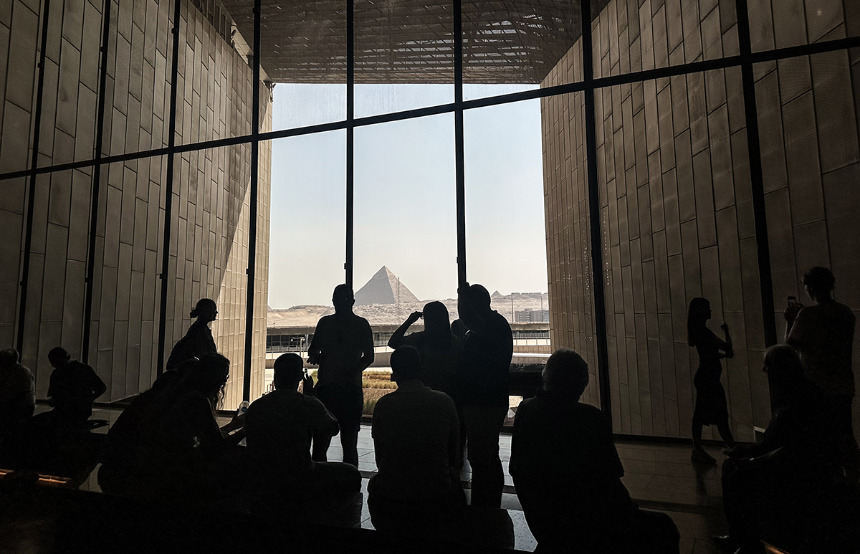
The Grand Egyptian Museum Opening
As Tom Holland (the esteemed historian, not Spiderman) so succinctly put it in the first edition of our magazine, Original Traveller, ‘Egypt is where tourism began’. And the next chapter in the history of tourism in Egypt is about to begin. We’re always looking for a reason to shout about this captivating country, and this November, we have the perfect excuse: the long-awaited opening of the Grand Egyptian Museum (GEM).
3rd November 2025 - Egypt Culture