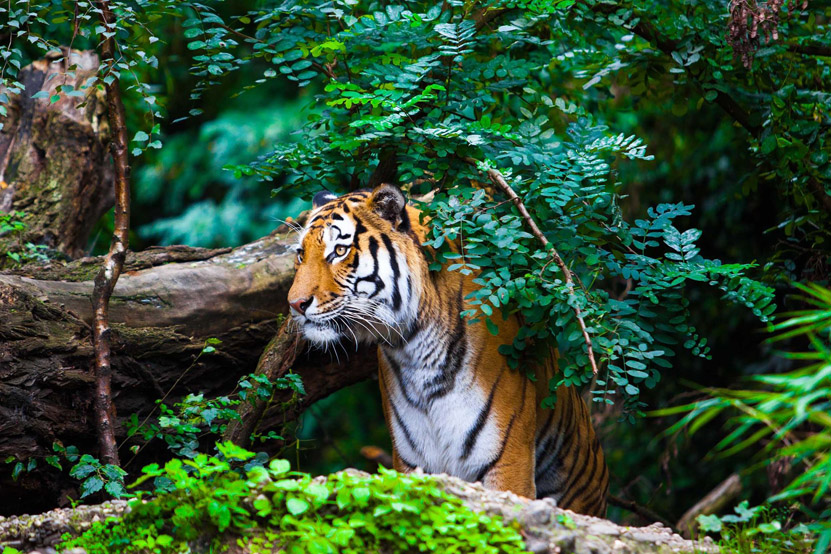
Best Places to See Tigers in Asia
Published 28th Jun. 2021
Reading time
There has been a 95% decline in tiger numbers over the last century, and now only around 5,500 remain in the wild - a sobering statistic. There are now around double the number of tigers living in captivity across Asia and Africa than in the wild. However, in more positive news, Nepal is now on track to become the first country in the world to double its wild tiger population since 2010, and conservation projects across the continent are helping numbers to slowly rise.
Eye(s) of the Tiger
Tigers rely primarily on sight and sound rather than smell when hunting, and they use their impressive night vision to help them hunt successfully in the dark. They usually hunt alone and stalk their prey, and happily take on animals larger than themselves.
Frances Mavor - Asia Specialist
Visit Pench National Park in India to experience the place that inspired The Jungle Book, which also happens to be home to a healthy population of tigers
Subspecies
There are six subspecies of tiger that remain alive in the wild today: the Sumatran, Bengal, Indochinese, South China, Malayan and the Amur or Siberian. The Bengal tiger is the most numerous of all subspecies, with around 2,500 left in the wild, but poaching is a big issue, as is habitat loss. The South China tiger is critically endangered, and believed to be extinct in the wild as none have been sighted for more than 25 years. All species face pressures from poaching and habitat loss, as they are forced to compete for space with dense and growing human populations.
Jacqui Brooks - Asia Specialist
Panna National Park is a huge success story for tigers, a few years ago the entire population had been poached, so they relocated tigers from other parks and they now have around 25 tigers there.
Swimming Cats
While most cats would choose to stay well clear of water, tigers love swimming and those living in tropical forests spend time cooling off in pools or streams. However, much like a person trying to keep their hair dry, tigers prefer to keep their head above water. They also use water to their advantage when hunting, by chasing their prey into the water to trap them.
Where To See Them
The best places to spot tigers varies from season to season, but throughout India's national parks, such as Ranthambore, Kanha or Bandhavgarh National Parks, there are usually opportunities to spot the magnificent Bengal tiger in its natural habitat. India's national parks re-open in October after the monsoon so generally the best time to travel in search of these big cats is from October to March.
Holly Barber - Asia Specialist
Phen Sanctuary within Kanha National Park is perfect for those wanting to get away from the jeeps, and while seeing a tiger here is rare, there is plenty of other wildlife to spot
In Numbers
- 88 pounds - Amount of meat they can consume at once
- 2 miles away - Distance a tiger's roar can be heard
- 40 miles per hour - Full speed a tiger can reach
You might also like
Practical advice and inspiration for your next trip
Our Guide to the Okavango Delta Flood Season
Flooding might conjure thoughts of chaos and suspended travel, but in the Okavango Delta, floods are a celebrated part of nature's cycle. And in 2026, that cycle is in full swing, with high rainfall and strong flooding making for a truly promising season. But why is flooding so beneficial to the Delta, and how exactly does this effect travel in 2026? Read on for the answers to all these questions and more.
5th October 2026 - Botswana Safari & Wildlife
Our Favourite States for an American Safari
Casinos in Vegas, movie stars in LA and New York’s yellow taxis all rank among the USA’s most recognisable icons but look beyond the bright lights and you’ll find the wild and wonderful world of American safaris. From Alaska’s grizzly bears to Florida’s alligators, America’s animal kingdom boasts an A-list impressive enough to rival Hollywood’s. So, ready to wield your binoculars, pull on your cowboy boots and take a walk on the wild side?
7th September 2026 - USA Safari & Wildlife
Kenya vs South Africa: Safari Favourites
Picture the scene: a hidden lion suddenly rises just a few feet away – in an instant, every sense sharpens. That’s the magic of safari. When it comes to Kenya vs South Africa, both deliver unforgettable wildlife moments, but in very different ways. What they do share, however, is expert guides narrating the scene, goosebump-inducing encounters and plenty of comfort in between – from luxurious lodges to star beds beneath African night skies.
11th May 2026 - Safari & Wildlife