Just back: Cara’s Research Trip to Oman
On a research trip to Oman, one of our North Africa and Middle East specialists, Cara, discovered a country that was every bit as warm and welcoming as it was adventurous. From mountain escapes in Jabal Akhdar to snorkelling in the Daymaniyat Islands, it was full of firsts. The trip left such a lasting impression that she found herself drawing on Arabic words and concepts to capture some of her experiences. Intrigued? Read on to learn more about her adventure and top tips...
- Where did you visit?
- What did you get up to?
- What made your trip special?
- What’s your favourite thing you ate?
- What new things did you learn?
- What was something you’d never done before?
- What’s one thing that can’t be missed?
- Did anything surprise you about the destination?
- What’s a top tip you’d give to clients?
Where did you visit?
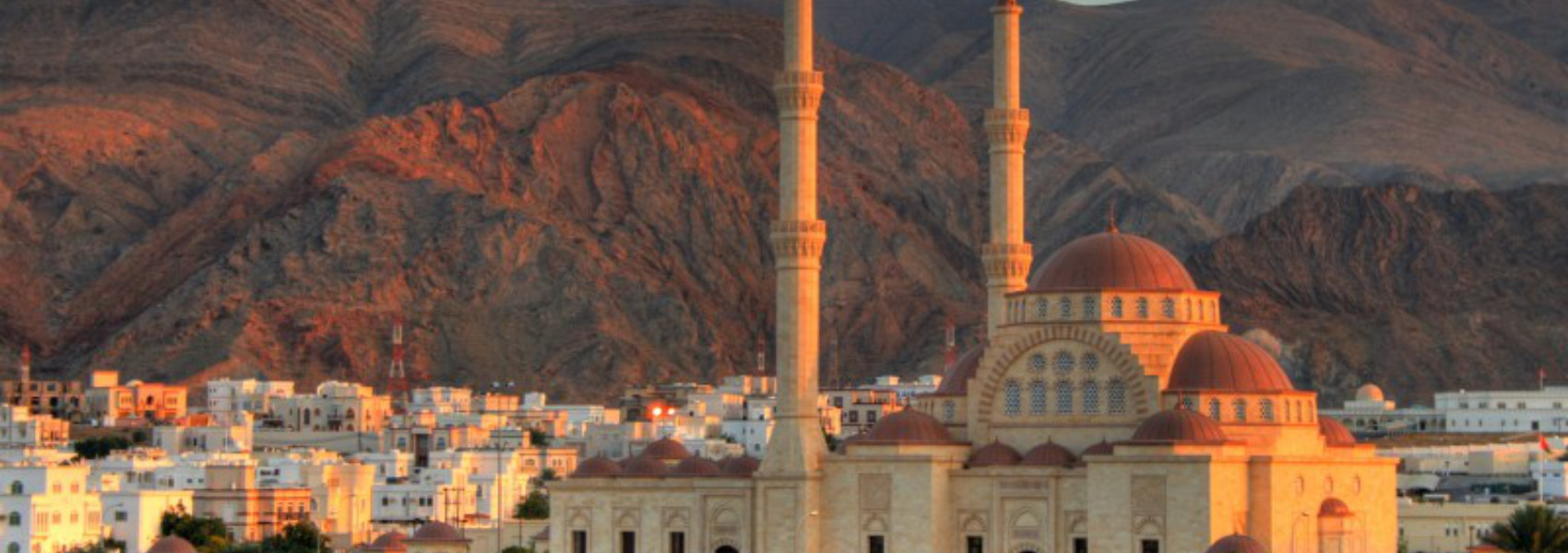
I visited Oman for the first time, beginning my trip in Muscat. I was immediately struck by how harmonious the city felt, which made me think of the Arabic concept of al-insijam, meaning harmony. From the uniform white buildings stretching along the coastline to the mountains rising behind them, everything felt calm and cohesive.
After two nights in Muscat, I set off on a two-and-a-half-hour drive to Jabal Akhdar, breaking up the journey with a stop in Nizwa. I spent two nights in the mountains before returning to Muscat and heading straight to the marina. From there, I boarded a boat to the Daymaniyat Islands for some top-notch snorkelling.
What did you get up to?
I ticked off some of Muscat’s highlights, from the marble Sultan Qaboos Grand Mosque to the elegant Royal Opera House, before heading to Nizwa, where I explored the 17th-century fort, stocked up on dates in the souq and meandered through the old town.
After Nizwa, it was on to Jabal Akhdar, where al-hudu', meaning serenity, perfectly captured my experience. I filled my days with hiking, stargazing and rock climbing, so it wasn’t exactly a slow-paced part of my trip, but something about being in the mountains made me feel calmer than ever. The vast canyons and dramatic ridges glowed beneath the bright sun, softened by pockets of greenery and, at sunset, transformed into something almost dreamlike. Both hotels offered great wellness activities, from yoga and sound baths to guided stargazing, but honestly, the landscape alone was enough.

Image by Cara Burdon
What made your trip special?
The warmth and hospitality of my guide and driver, Shueib! From the moment we met, he welcomed me into Oman and its culture with open arms. We laughed, sang to Arabic music, chatted in my very rusty Egyptian Arabic, and he patiently answered my constant stream of questions. When he noticed my water bottle was empty, he even stopped to buy me more, along with several Omani drinks for me to try.
This warmth wasn't unique to Shueib. Every Omani I met seemed genuinely excited to share their country and culture. There was an underlying calmness and respect to every interaction; it felt less like a service and more like an exchange or a conversation, even a friendship. It reminded me of ad-diyafa, the Arabic concept of hospitality, which is closely associated with warmth and generosity.
What’s your favourite thing you ate?
Omani halwa (a traditional sticky sweet) has to be up there as one of my favourite things I ate on my trip. In Nizwa, I ate enough to feed what felt like the entire village, then stretched my legs with a rather sweaty climb to the top of the fort, where I was rewarded with panoramic views.

Image by Cara Burdon
What new things did you learn?
As relaxing as Oman was, it was equally an adventure. I learnt so much about a culture that had previously felt mysterious to me, discovering new landscapes, tasting unfamiliar foods and meeting the fascinating people who call it home. Each day brought something new.
What was something you’d never done before?
I’d never tackled Alila Jabal Akhdar’s famous Via Ferrata before. It was absolutely terrifying, and I loved every minute of it. Suspended on the edge of a cliff, surrounded by some of the most spectacular mountain scenery, I felt both exhilarated and at peace.
While al-mughamara means adventure, it also suggests taking a leap into the unknown, embracing uncertainty and finding the courage to try something new. My leap of faith wasn't just clipping myself onto a mountainside for several hours. It was also embracing a country and culture that are often misunderstood and overlooked. What I initially perceived as mystery became overwhelmingly exciting: an invitation to explore, learn and discover.

Image by Cara Burdon
What’s one thing that can’t be missed?
The drive from Muscat to Jabal Akhdar is stunning. I was mesmerised by the scenery, as grey-purple mountains rose above lush palm groves, desert landscapes and traditional villages. It felt refreshingly untouched by the pull of westernisation.
But if I had to pick one thing, it would be the Daymaniyat Islands. I remember watching Muscat's white skyline slowly shrink into the distance as the emerald sea took over the horizon and feeling instantly revitalised after plunging into the crystal-clear water. I barely had time to clear my snorkel before spotting a group of around 15 turtles gliding between coral reefs. I spent hours in the water, and the sunburn I earned in the process was, I think, ultimately worth it.
Did anything surprise you about the destination?
I was most surprised by how different the pace and atmosphere felt in the mountains compared with Muscat. The people of Jabal Al Akhdar seemed to embody this same sense of balance. My Muscat-born driver told me the Arabic spoken there was softer and gentler than in the city, and he was right. It sounded breathy, flowing and soothing - life itself seemed slower and more fluid compared with the structure and coherence of Muscat.

Image by Cara Burdon
What’s a top tip you’d give to clients?
Give yourself plenty of time to really explore all that Oman has to offer. There’s so much more to discover than I could have imagined and I’m now determined to return as soon as possible.
Header image by XtravaganT/Fotolia

Why visit Oman with Original Travel ?
With a passion for helping clients get under the skin of Oman, our talented team are well-equipped to plan your dream trip. We can arrange bespoke experiences, be it a private pottery class in Bahla or a geologist-led tour in the mountains; and we offer vetted accommodation options to suit every traveller, from exclusive desert camps to rustic guesthouses. Whether you opt for a self-drive trip or a private driver, our Concierges can enhance your holiday with tips and tricks, while our expert team of local guides impart insider insight into daily life in Oman.
Enquire nowA few of the benefits of travelling with us to Oman
- Our local Concierges
- The Original Travel app
- Wi-Fi router and e-Sim
- Destination Dossier
- 24-hour helpline
- Expert guides
- 100% carbon absorption
You might also like
Practical advice and inspiration for your next trip

Ten Unmissable Landscapes in Oman
With one foot in its storied past and the other stepping into a promising future, Oman is a diverse and exciting destination topped off with a wealth of staggeringly beautiful landscapes you can click your camera at. This is a place where warm Arabian hospitality ripples through the mountainous slopes of Jebel Akhdar and into the deep canyons of the Hajar Mountains. The Oman landscapes offer swoops of sand dunes, golden crescent beaches and mountains that carve their way across the skyline.
24th November 2022 - Oman The Natural World

Top Five Wadis in Oman
Oman, the most beautiful and peaceful of all the Gulf monarchies, is neatly divided between mountains, beaches and deserts. It's the antithesis of its neighbouring Emirates, described by Moroccan explorer Ibn Battuta as 'a fertile land of streams, trees, orchards and palm groves' in the 14th century. The statement remains true today and we think there's no better way to discover the country than through its amazing wadis.
28th August 2021 - Oman The Natural World

24 hours in Muscat
Muscat, sitting between the Hajar Mountains and the shores of the Gulf of Oman, was a great maritime power until the late 18th century. The city has a gentle pace of life, which can be felt everywhere from the beaches to the old fishing harbour - an atmosphere that is a manifestation of a country with a long history and whose sailors and navigators criss-crossed the Indian Ocean for many centuries. Here's how we would spend 24 hours in Muscat.
28th June 2021 - Oman 24 Hours In