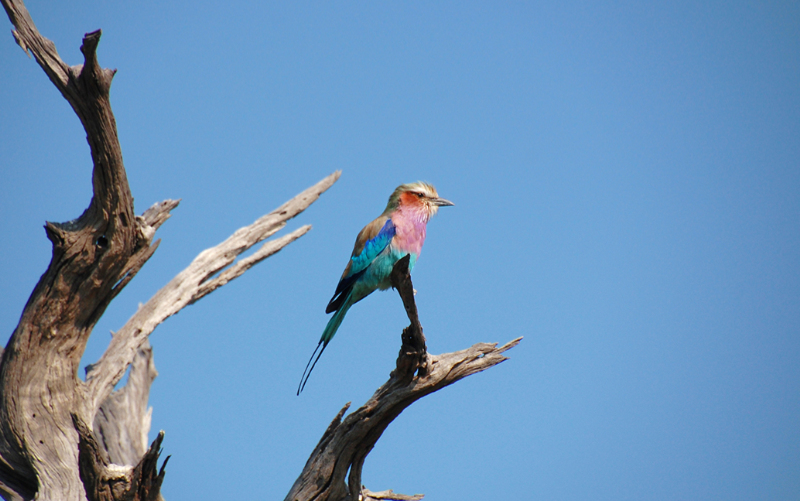
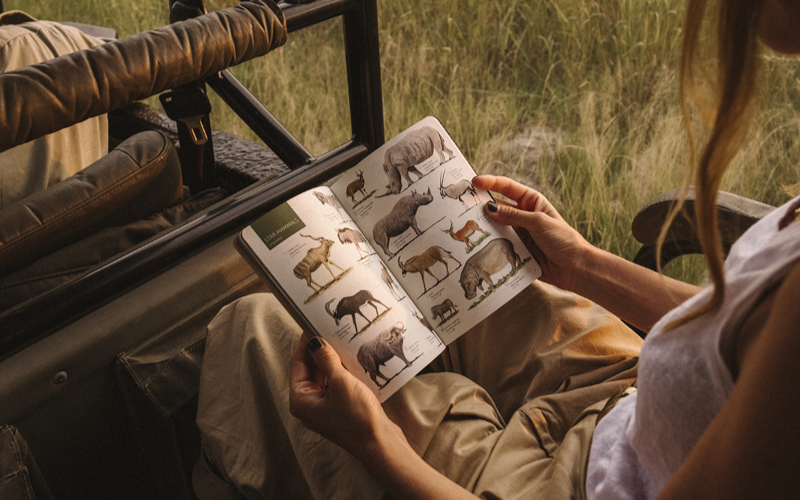
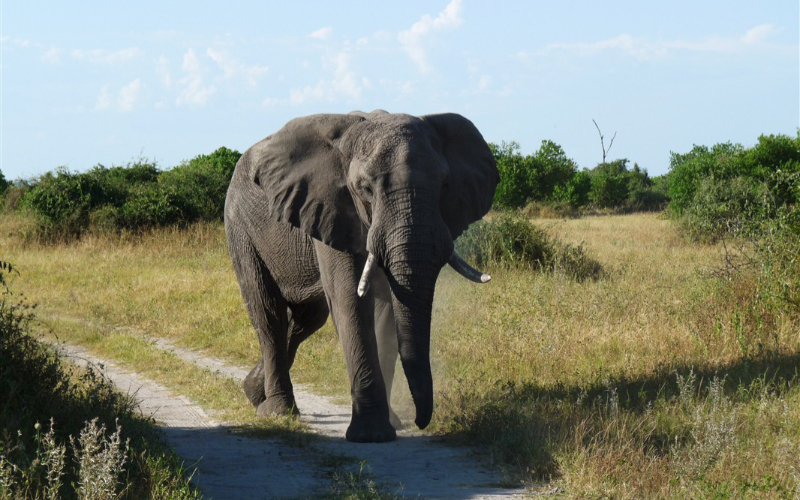
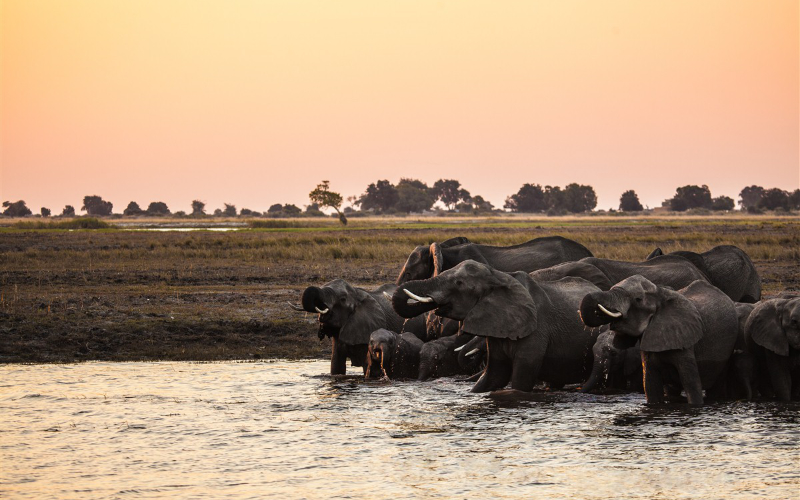
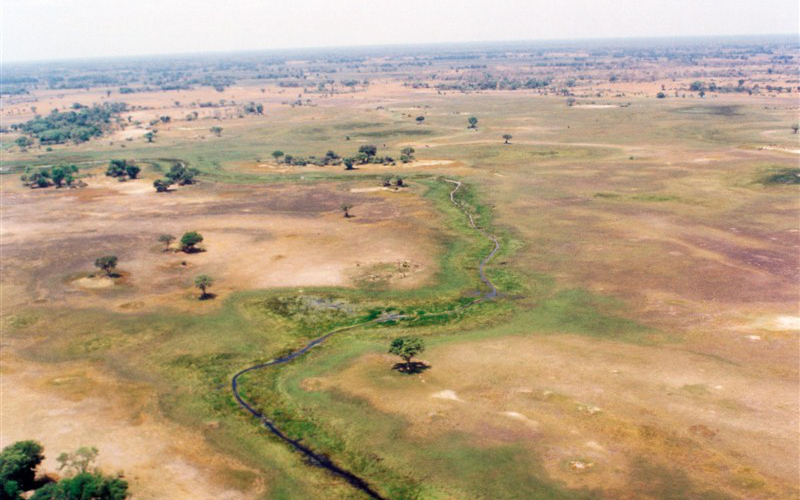
The landlocked, southern African nation of Botswana has a varied terrain that includes desert (the Kalahari covers over 70% of its territory), salt pans and a mighty delta. Botswana enjoys two main seasons: winter, between April and October, and summer, from November to March. Winters boast warm, sunny days with very cool nights, while summers are largely characterised by sweltering temperatures, heavy showers and thunderstorms. So when is the best time to visit Botswana? It depends on what you’re most interested in experiencing. Budget-conscious travellers, avid birdwatchers and photographers can find much to enjoy in the hot, wet summers. In contrast, the dry winter is best for traditional game viewing, clear skies and optimal temperatures. Discover our month-by-month breakdown of Botswana’s climate below.
Best season to visit Botswana
January
February
March
April
May
June
July
August
September
October
November
December
Botswana month by month
January in Botswana
January is the middle of Botswana’s summer and green season, so it’s a hot and wet month to visit. It boasts the highest rainfall of the year, with sweltering temperatures leading to spectacular (yet short) storms, followed by longer sunny intervals. Migratory birds and young grazing animals are abundant in January, and the lush landscapes make for fantastic photography opportunities. January and February offer excellent rates, so it’s a good time for budget-conscious travellers to visit.
February in Botswana
The green season continues into February, which sees almost as much rainfall as January and the odd atmospheric thunderstorm. While not the best month for traditional game sightings, February offers fantastic birdwatching opportunities and sunny spells. The Kalahari Desert begins bursting into life, and it’s a great time to witness the annual zebra migration to the seasonal grasses of the Makgadikgadi Pans.
March in Botswana
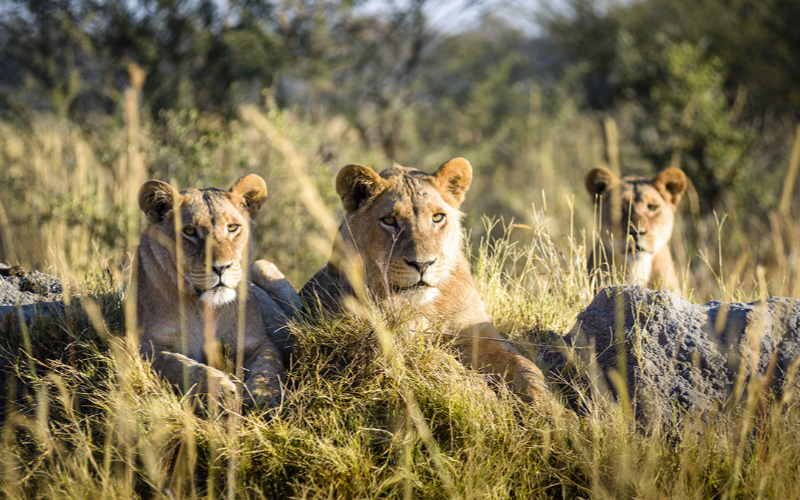
Botswana experiences less rainfall in March (especially towards the end of the month), but it’s still a hot time of year to visit. It’s another fantastic month to catch the zebra migration and predator-prey interactions, as well as brilliant birdwatching. March is still Botswana’s low season, so visitors can enjoy affordable rates at camps and lodges. Watch out for mosquitoes if you travel to Botswana in March, especially near bodies of water.
April in Botswana
April marks the start of the shoulder season and is a good time to go on a safari in Botswana. Daytimes are hot and dry, but nights can be cooler, so you’ll want to pack layers for early morning and evening game drives. It’s antelope breeding season, so expect to see males jostling for female attention. The Okavango Delta is usually flooded thanks to seasonal inflows, drawing diverse wildlife to its waters.
May in Botswana
May is another great shoulder season month for safaris in Botswana, with clear blue skies and pleasant temperatures predominating. Evenings and mornings are even chillier (especially in the Kalahari Desert), and wildlife sightings are excellent, with animals searching for permanent water sources. Compared to the peak high season (starting next month), April and May offer relatively good value for safari holidays.
June in Botswana
Winter kicks off in June, with warm days and cold nights. With the start of peak season, visitors and prices increase, and it’s the best time to visit Botswana to see endangered African wild dogs, as it’s the denning season from June to September. Watch animals congregating at permanent water sources such as the Okavango Delta, Kwando River and Chobe River. The dry winter season is also a mosquito-free period, so it’s an ideal time for families to visit.
July in Botswana
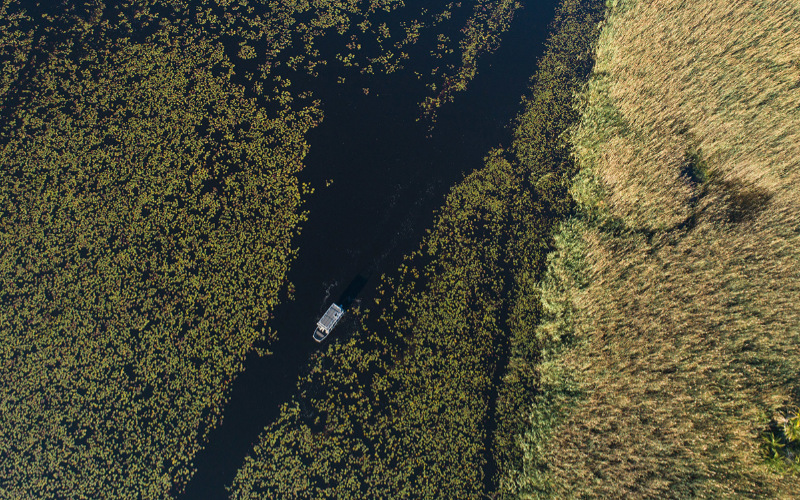
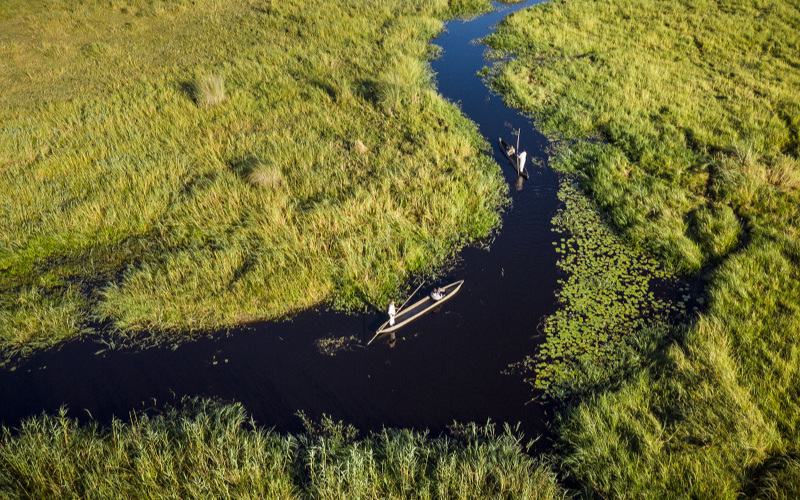
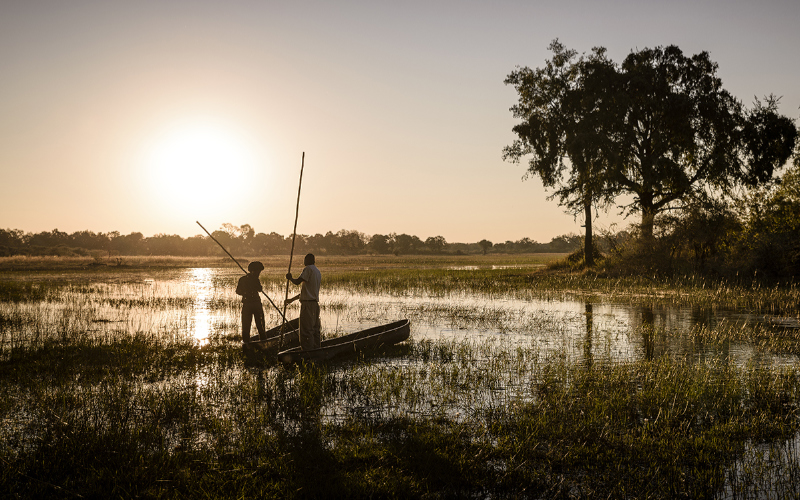
The dry (and high) season continues in July, which experiences pleasantly warm days with chilly mornings and evenings. Along with June, this is the coldest month of the year and is another very popular month for safari in Botswana, as animals are easy to spot at water sources and there’s less vegetation around. It’s a great time to head out on a magical mokoro (dugout canoe) ride in the Okavango Delta, which is at its best thanks to rising floodwaters – the delta can reach as much as three times its size during this period.
August in Botswana
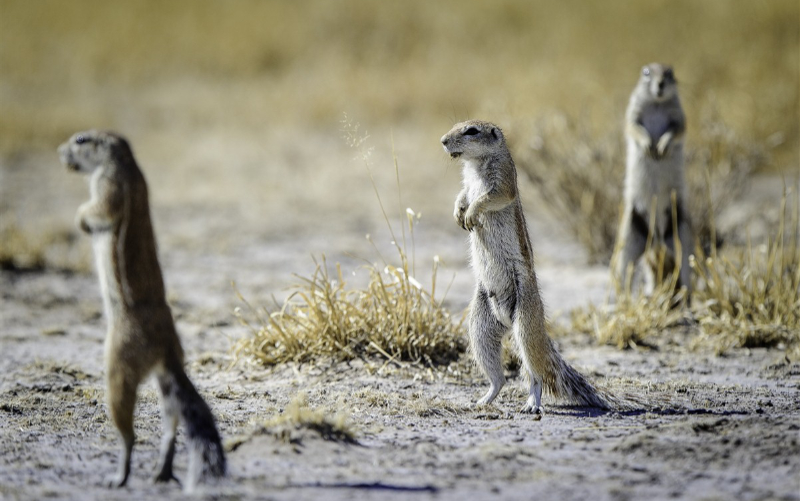
August is another peak wildlife viewing month, with temperatures rising once again. The delta remains at its fullest, so it’s the perfect time to glide along on a mokoro, passing parched animals seeking respite in the waters. Between July and September is also the best time to get up close and personal with mobs of meerkats in the Makgadikgadi pans, while the dry season’s clear skies make it a wonderful time for stargazing in the desert.
September in Botswana
Enjoying similar conditions to August, September hots up even more, with bright, sunshine-filled days and warm, balmy evenings perfect for sundowners. Animals congregate around shrinking water sources, and predators prowl the dusty plains in national parks such as Chobe, so you can expect lots of wildlife action. Botswana Day, otherwise known as Boipuso, is celebrated on 30th September.
October in Botswana
October’s intense heat might put off some travellers, but wildlife sightings are excellent for those who can stand it. Time game drives to early mornings and evenings to avoid peak temperatures that can climb above 40°C. It’s also around this time when visitors can witness the annual catfish run as they devour small baitfish on the receding floodplains of the Okavango Delta. Catch the fierce feeding frenzy (including birds and crocodiles), and even try your hand at tiger fishing.
November in Botswana
As a shoulder season month, November can offer great value for money with reliable animal viewing, although the weather can be unpredictable. It’s very hot, and the first part of the month is dry, with seasonal rains usually arriving later in November. This revitalises the dusty plains with much-needed greenery. November is also the best time to visit Botswana to witness abundant animal births and the resulting predator action.
December in Botswana
December sees the arrival of thunderstorms and more frequent rainfall, allowing vegetation to grow. Plentiful food and water mean newborns are well-nourished and grow quickly, but predator-prey action is still high. It’s another very hot month in Botswana, with migratory birds arriving for the wet season between December and March.
Gaborone
Gaborone is the capital of Botswana, located to the south of the country. It has a semi-arid steppe climate, experiencing rains throughout the year (but only approximately 18 inches in total). The average temperature is 20°C. The hottest month is January, averaging about 25°C, and July is the coolest, at only 12°C. November to February are the wettest months (although the variations are not too striking). Between June and August, it hardly rains (less than 0.12 inches fall).
The Kalahari Desert
The Kalahari Desert occupies a vast part of Botswana. This is one of the driest regions in the world, but it still has a rainy season. While the dry season lasts around eight months, the wet season varies between only one and four months, however. Surprisingly, this region is rich in vegetation. The southwest part is the driest, but in the north and east, there are large forests and savannahs with more than 20 inches of rainfall. In winter, the climate is semi-arid. Swept by the tropical Sahelian climate (crossing West Africa from west to east), winter temperatures remain cool. The Kalahari Desert has cooler temperatures than other deserts, such as the Sahel or Sahara, due to its 2,000ft to 5,000ft altitude. Between June and August, nights can often be frosty. Thanks to its altitude, the Kalahari Desert also has warm (but bearable) summer months, when temperatures rarely exceed 29°C. The best time to discover the desert is just after the rainy season when roads are usable again, and temperatures are pleasant.
A word from our specialists
We think shoulder season is the best time to visit Botswana to take advantage of fewer crowds and cheaper rates (without missing out on spectacular sights). Water sources begin drying up in April and May, so game viewing becomes more reliable, and nights are cool but not as cold as the main winter months. Visit in November, another shoulder month, to see newborns emerge into the world among the first rains.
Botswana Holiday Ideas
A few suggestions to get the holiday planning process started
Experience Botswana at its most alive, from zebra migrations across salt pans to mokoro canoe safaris through the Okavango Delta during the green season
Experience the best of Zimbabwe and Botswana on this 11-day family safari adventure
11 days, from £6050 to £8150
What our clients say about their Botswana trip
8 reviews
4.8 / 5
"Perfect communication with people in England and Botswana. All your organisation was perfect. And the choice of the two kinds of camps was a very good idea. "
Annalisa - Milan
Published on 20th February 2025
"The choice of camps was amazing, each very different with an individual character. The guides were outstanding in all locations. The game viewing was spectacular."
Lowri - Swansea
Published on 3rd January 2025
"Where do I start? It was a fantastic holiday and truly memorable, a real bucket list holiday fulfilled. The transfers and timings were all seamless and made so easy for us as guests. Everything was organised behind the scenes, and everyone knew exactly where we were to be and when, so it was effortless for us. Overall it was an amazing trip and we absolutely will go back. Duba was the highlight by far and it just has a vibe that is hard to describe but is friendly, opulent, beautiful setting and laidback all at same time."