Our Guide to the Okavango Delta Flood Season
Flooding might conjure thoughts of chaos and suspended travel, but in the Okavango Delta, floods are a celebrated part of nature's cycle. And in 2026, that cycle is in full swing, with high rainfall and strong flooding making for a truly promising season. But why is flooding so beneficial to the Delta, and how exactly does this effect travel in 2026? Read on for the answers to all these questions and more...
- The Okavango Delta flood cycle
- The benefit of local rains
- The landscape in 2026
- What this means for safaris in 2026
- When is the best time to visit?
The Okavango Delta flood cycle
Conveniently counterintuitive, the Okavango Delta does not flood during the local rainy season. Instead, it floods in the middle of the dry season, when most of Botswana has been without rain for several weeks. This is because the water that feeds the floodplains has to travel over 600 miles, beginning in the Angolan highlands in the north where the rivers that feed the Delta originate. The journey takes four months, so by the time the water reaches the Delta, it's a blessing rather than a burden.

Image by Grant Ryan/Fotolia
The benefit of local rains
If the initial flooding in Angola takes top billing, then Botswana's local rains are the sparky supporting act. When local rainfall is strong enough, channels, floodplains and other low-lying areas will already be water-logged when the flood arrives. This is crucial because it means the incoming water from Angola can spread more slowly and hold in the plains longer, rather than rushing in to crash through dry land – it's the classic case of 'as it comes, so it goes'.

Image by Liz Leyden/Getty Images/iStockphoto
The landscape in 2026
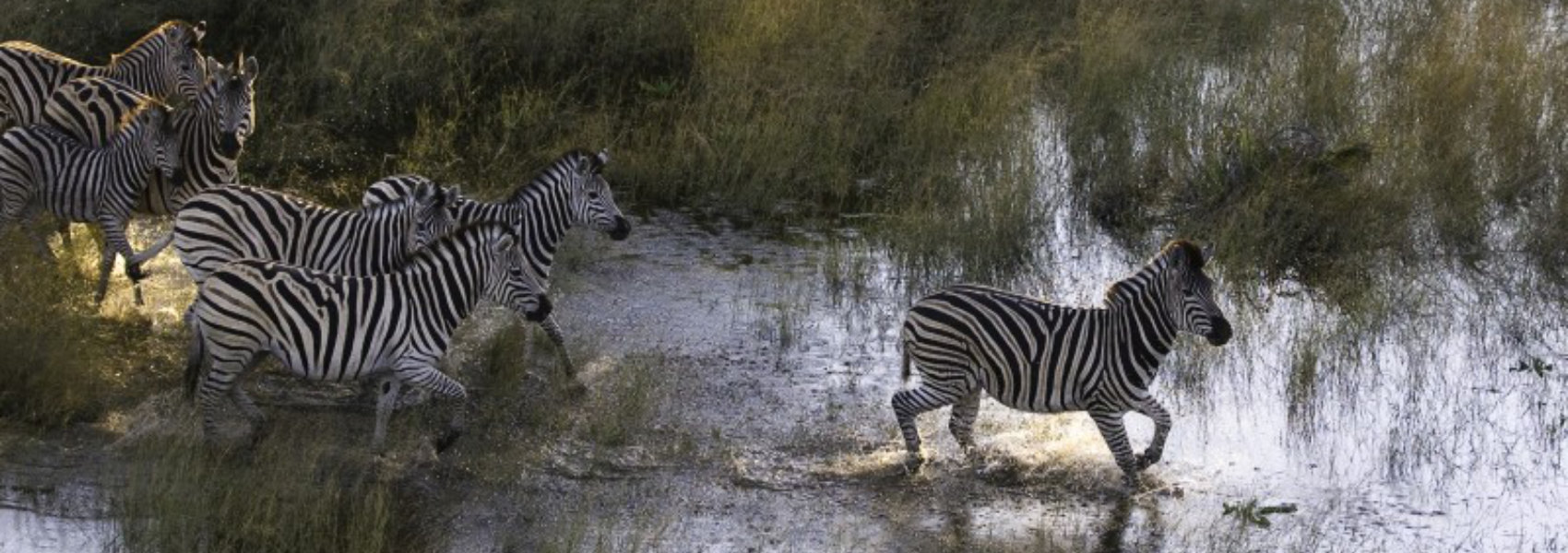
2026 has been an exceptionally good year for the Okavango Delta flood, with months of heavy rain contributing to high water levels across the floodplains. This means channels are reopening, access is increasing and areas that have remained dry in recent years are once again retaining water. As a result, the local ecosystem is in full swing, with elephants swimming and lilies blooming. The landscape itself has also expanded, as water has travelled into the northern and eastern parts of the Delta, both of which usually remain drier. Safe to say: it's shaping up to be a stellar year.

Image by Coke Bartrina/Nuria Val
What this means for safaris in 2026
But how does this affect safaris? Well, aside from the chance to witness various animals responding to the rising water levels, the main change is the reliability of water-based activities. In recent years, when floods were less bountiful, access to the waterways was unpredictable, leaving boating and mokoro (traditional dugout canoe) excursions up to chance. But thanks to the fullness of the Delta this year, conditions are particularly good for water exploration.
And the cherry on top: game drives are still available. Since flooding is natural for the Delta, most camps have access to dry areas throughout the season, along with specialist vehicles adapted to the flooded plains. In some areas, there are also bridges connecting parts of the Delta, so you can have your cake and eat it too.

Image by Andy Robson / Unsplash
When is the best time to visit?
We've clarified just how magical the Okavango Delta will look this year, but how long does the water-logged wonderland last? Normally, flooding is at its best between June and August, with water levels often receding by September. But thanks to 2026's prime pairing of strong flooding and heavy rains, the season is likely to last a little longer. To ensure you don't miss the opportunity to see the Delta at its best, reach out to one of our Botswana specialists for a last-minute safari.
Even if you're unable to visit during full bloom, in the Okavango Delta there are adventures to be had in every season. This includes the off season – more alluringly known as the green season – from November to March/April. (Psst: we can cater to water-based safaris at this time of year, too.)

Image by Hans Jurgen Mager / Unsplash
Header image by Dana Allen / Wilderness Safari
Why visit Botswana with Original Travel ?
Having spent ample time in beautiful Botswana, our consultants' expertise allows us to tailor each trip to you, whether you’d rather have meerkats scramble over you in the sandy Mkadikgadi Pans or hop on a mountain bike safari in the Mashatu Reserve. We work with incredible guides to ensure you not only see wonderful wildlife but learn about local culture, too. In-country, our Concierges keep things running smoothly, while our trusty team of local partners go the extra mile to make your trip unforgettable. From honeymooners seeking ultimate luxury to multi-generational families needing space, we’ve got your accommodation sorted.
Enquire nowA few of the benefits of travelling with us to Botswana
- Our local Concierges
- The Original Travel app
- Destination Dossier
- 24-hour helpline
- Expert guides
- 100% carbon absorption
You might also like
Practical advice and inspiration for your next trip

Traditional Food in Botswana
When you think of Botswana you might conjure up images of swollen deltas, expansive deserts and bountiful game reserves, but you'll likely be unfamiliar with the country’s cuisine – often referred to as Setswana. While Botswana has amassed global recognition for its immersive safaris, the country is not generally considered for its gastronomical assets. We’re here to change that. Home to one of the oldest cultures in the entire continent (the San), Botswana boasts a rich cultural heritage, and if there’s one thing a long lineage guarantees, it’s a catalogue of tried-and-true recipes.
5th January 2026 - Botswana Food & Drink

Best Botswana Horse Safaris
Channelling your inner cowboy and heading on a horse safari in Botswana is one of the ultimate safari experiences. With a variety of stunning landscapes available for exploration, it’s an incredible way of getting up close and personal with game in a way that just isn't possible in a traditional 4x4. You won't just be on a safari, you'll be in it. With the contrasting scenes of the Makgadikgadi Salt Pans, Thamalakane River and Okavango Delta in the nation’s arsenal, it's not hard to understand why Botswana horse safaris remain such a popular choice.
9th June 2025 - Botswana Safari & Wildlife

Most Beautiful Places in Botswana
Narrowing down the most beautiful places in Botswana is no easy feat, but we love a challenge. From boundless deserts and rugged marshlands to dazzling salt pans and wild wetlands, the country’s landscapes are truly spectacular. Whether you trundle across the Kalahari’s sandy stretches on a game drive or drift along the Okavango Delta’s flowing waterways on a boating safari, you’re sure to spot some seriously cool wildlife species along the way.
17th January 2025 - Botswana Travel Inspiration