Inspiration for your own tailor-made trip
Safaris and Sand Dunes A Self-Drive Namibia Adventure
Namibia - Etosha - Damaraland - Walvis Bay - Namib
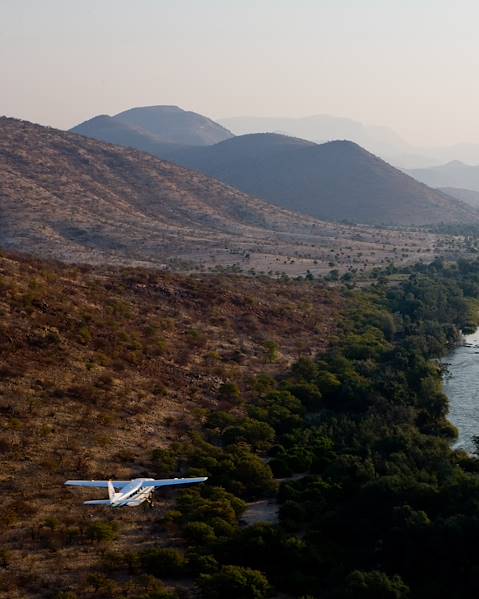
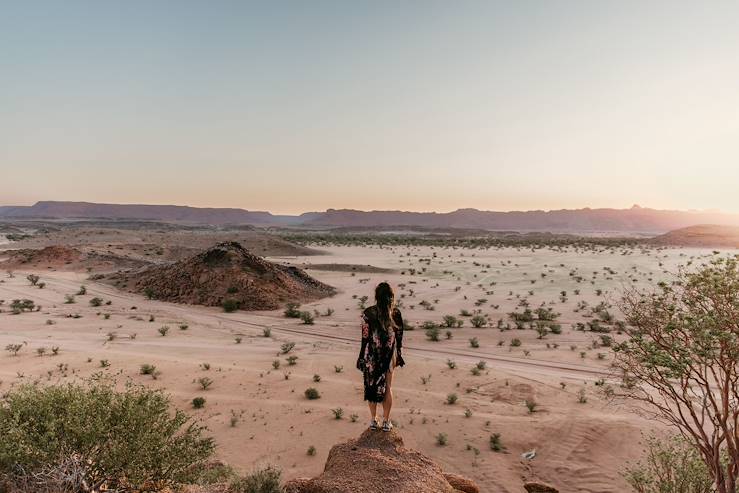
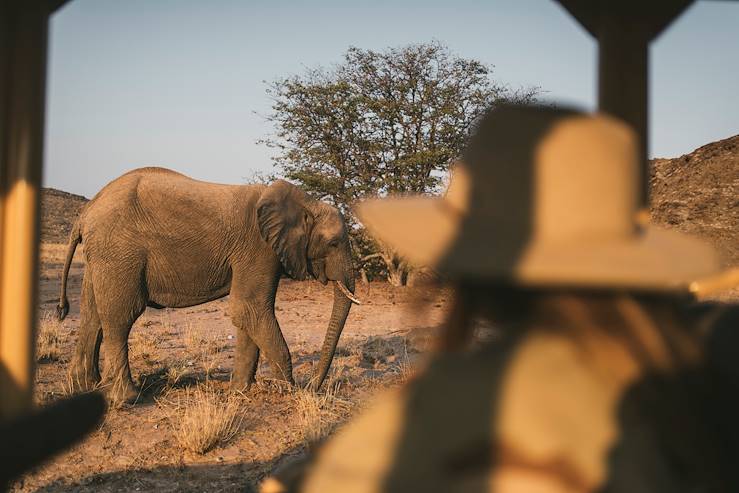
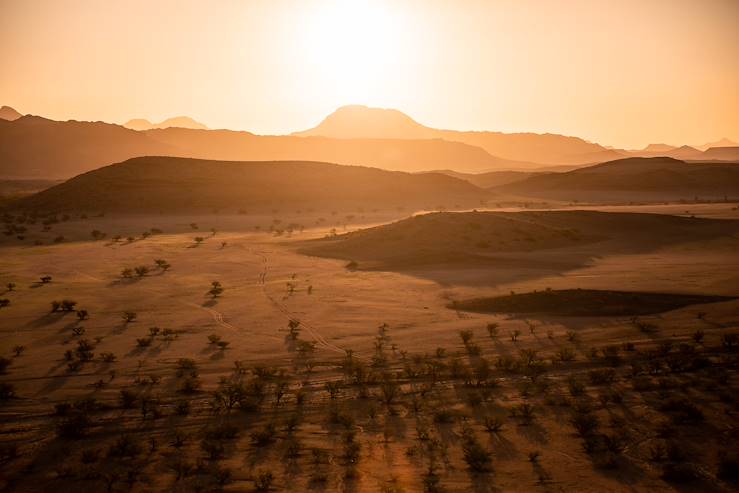
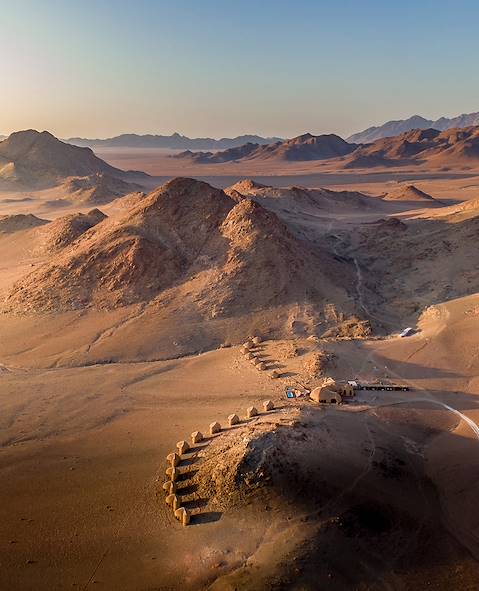
The route moves through some of southern Africa's most distinct terrain. At Okonjima Nature Reserve, the focus is the leopard – elusive by nature, you’ll have a great chance of spotting them here thanks to a conservation project that tracks collared animals across the reserve. Further north, Etosha’s immense salt pan draws animals to its waterholes in numbers that reward patience and a quiet engine. West into Damaraland, the landscape shifts again: rocky, austere and prehistoric, where desert elephants patrol in single file and rock art left by hunter-gatherers thousands of years ago still marks the cliff faces.
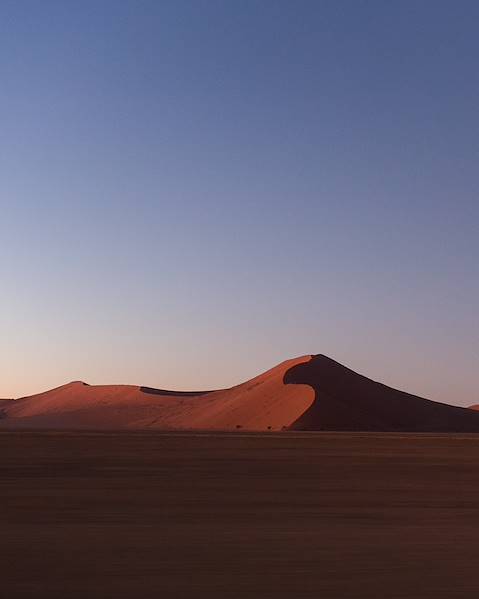
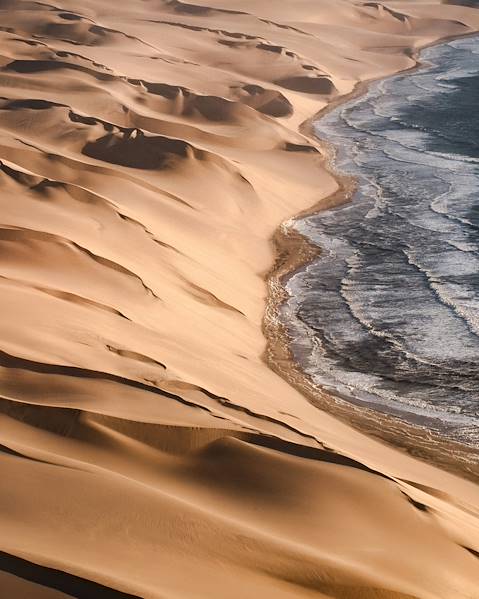
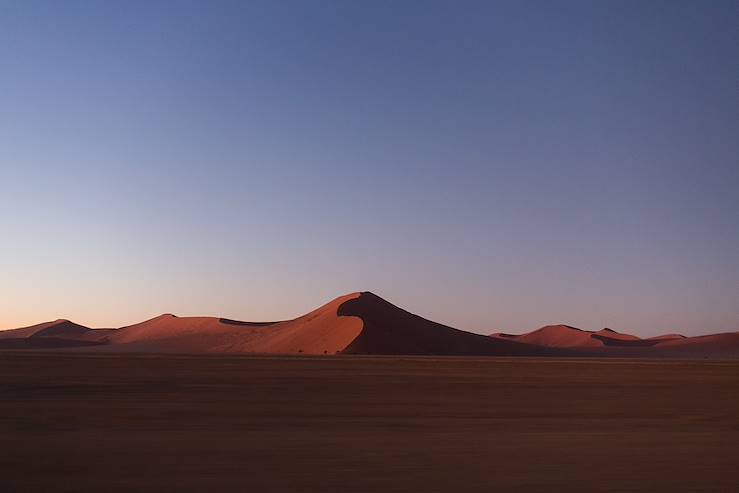
From there, make for the coast. Walvis Bay sits at the point where the Namib dunes meet the Atlantic – a collision of environments best explored by kayak and 4x4. The journey ends in the desert, among the dunes of Sossusvlei, some of the oldest and tallest on earth, where oryx move through the silence and the light changes everything by the hour.
Itinerary
100% customisable for you
Today, fly from London to Windhoek, typically via Johannesburg or Nairobi, with a total travel time of around 13 to 16 hours (depending on your connection). An overnight flight for most of the journey means you arrive the following morning, ready to get moving.
Arrive in Windhoek and transfer privately to your accommodation in Eros Park, a quiet residential neighbourhood a short distance from the city centre. Your rental car will be waiting for you along with your Concierge, ready to run through the road ahead over an evening briefing, answering questions and filling in the gaps that no app quite manages.
Before that, the afternoon is yours. Windhoek is compact and walkable: the Christuskirche Lutheran Church is a good anchor, with Independence Avenue stretching out from there past the Meteorite Fountain and towards the State House. For an early dive into the country’s history, the Alte Feste museum covers Namibia’s independence struggle with more honesty than most.
This morning, drive the two-and-a-half-hour journey north from Windhoek to the Okonjima Nature Reserve, your base for the night in the heart of the bush.
In the afternoon, head out on a thrilling leopard safari. The reserve runs a conservation project that fits selected animals with tracking collars, so a sighting is much more likely here than it would be elsewhere. Saying that, the leopard remains one of the most difficult animals to observe in the wild: fast, camouflaged and reliably indifferent to being found. Brown hyenas patrol the same ground, ears up, following tracks in search of whatever the day has left behind.
Today, head further north on another two-and-a-half-hour drive through vast cattle ranches to reach Etosha National Park: at 8,900 square miles, it’s one of the largest wildlife reserves in the world. The immense salt pan at its heart creates a landscape of near-total flatness, which makes spotting its residents – lions, giraffes, rhinoceroses, flamingos – rather easier than the animals might prefer. Over 100 mammal species and 300 bird species call it home, drawn reliably to the park’s desirable waterholes.
Settle in for two nights at Onguma Private Game Reserve on Etosha’s eastern border. The camp sits beside a waterhole with a direct sightline from the dining room, so the wildlife tends to keep pace with the itinerary long after the day’s driving is done.
This morning, set out at first light with a ranger for a guided walk through the bush. On foot, the same landscape reads entirely differently: sounds carry further, tracks tell more and encounters with wildlife feel closer than any vehicle allows. The ranger will lead and interpret at an unhurried pace.
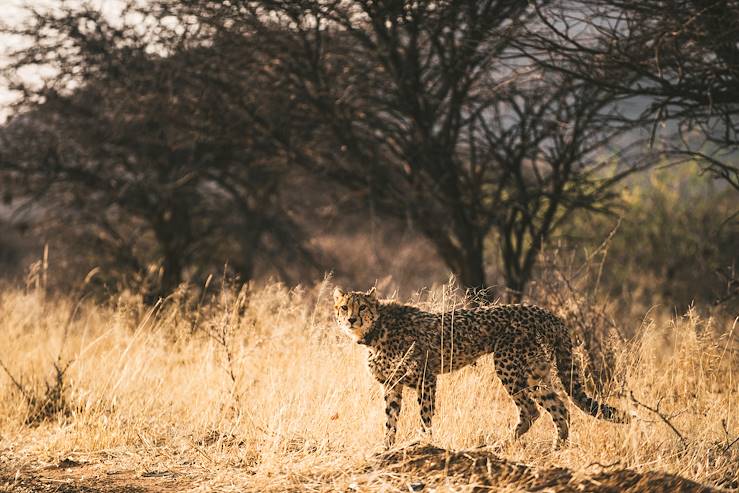
In the evening, head out by 4x4 across the reserve’s 34,000 hectares as the light begins to drop. The landscape is home to kudus, giraffes, oryx, zebras, impalas and elands, alongside lions, cheetahs and leopards, and a resident family of black rhinoceros. Take it from us: it’s the kind of sunset that makes it genuinely difficult to put the binoculars down.
Today, move to a camp at the heart of the reserve that takes a different approach to the safari aesthetic: corrugated iron, anti-apartheid propaganda posters, bicycles, jerrycans and strings of wire assembled into something that reads as part art installation, part celebration of pre-independence township life.
Spend the day tracking elephants, lions, giraffes and kudus through the reserve, before gathering in the courtyard around the fire in the evening as musicians play and sing the history of the country.
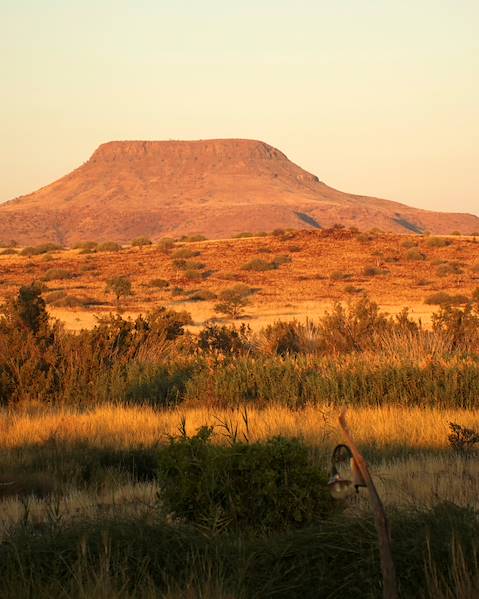
Today, a four-hour drive west trades the flat silver expanse of the Etosha Pan for the rugged hills of Damaraland – one of the last places on the continent where animals move freely outside national park boundaries. The landscape is stark and ancient, and the shift in atmosphere is immediate.
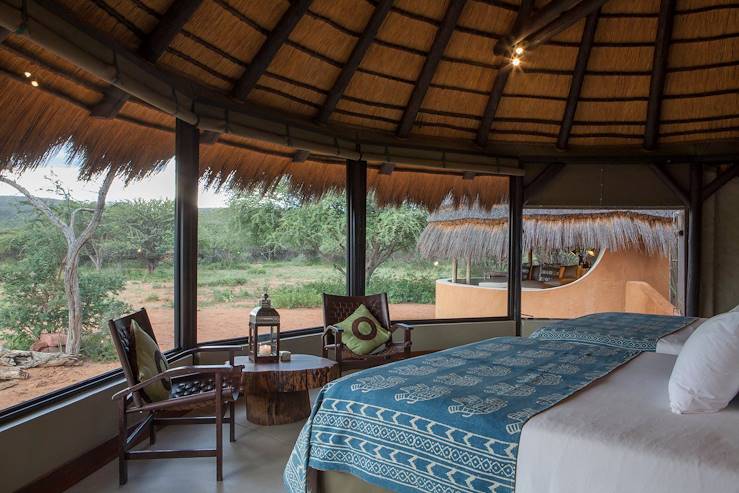
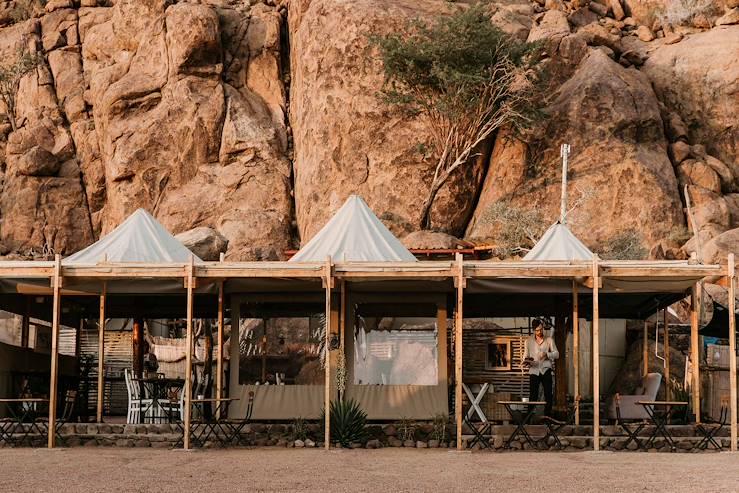
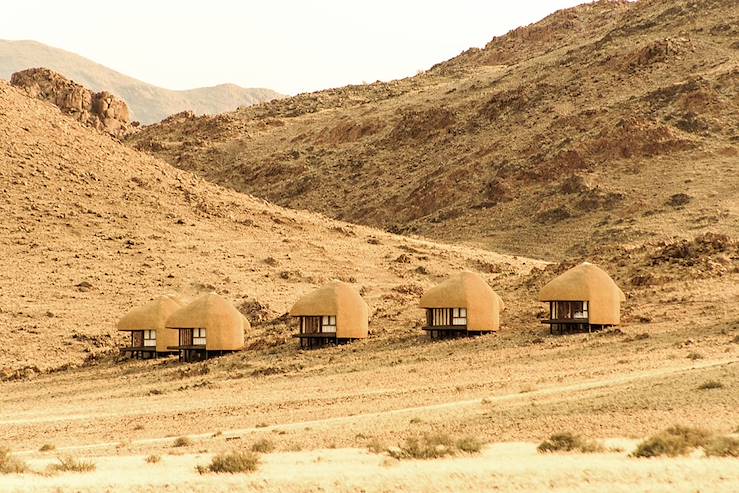
Settle in for the night at a camp pitched at the foot of a dramatic granite boulder formation. Tents are on low wooden platforms, each with its own shaded terrace, sitting quietly in the company of rocks that have been shaping the landscape for millennia (and with the good sense not to compete).
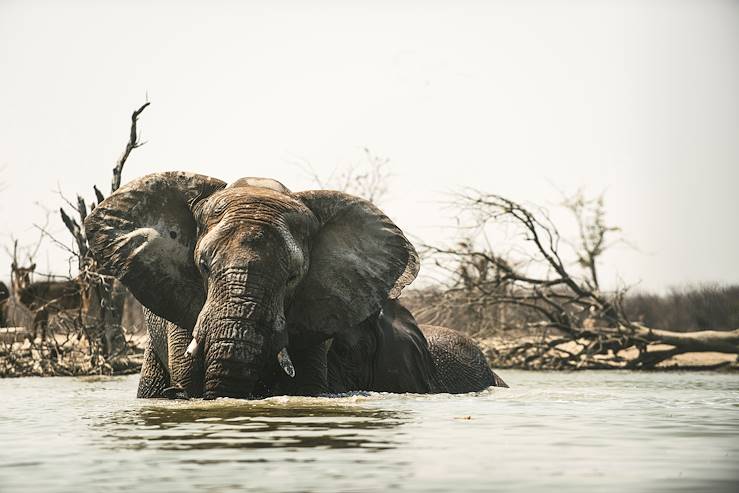
This morning, head out by 4x4 with a ranger in search of Damaraland’s desert elephants – animals that can cover over 43 miles a day in pursuit of water, as well as the acacia and mopane trees that sustain them. Tracking them requires patience and a good eye for the landscape, both of which the ranger has in abundance.
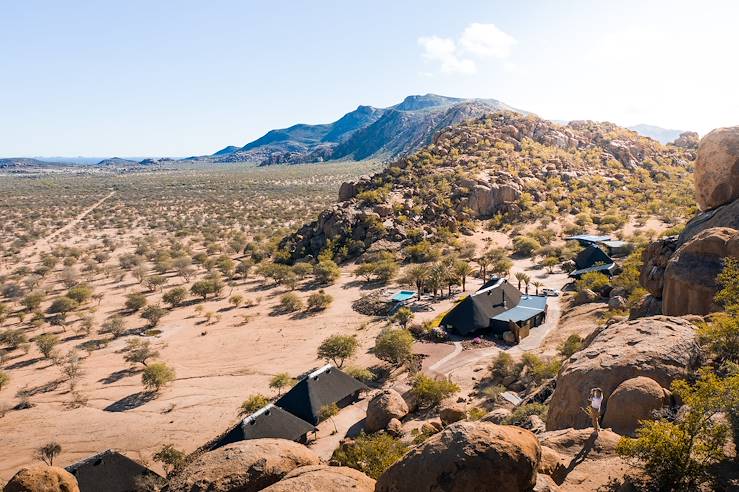
In the afternoon, drive south into the Erongo region, where an ancient extinct volcano has left behind a landscape of extraordinary granite formations. The Namib lies to the west, mixed savannah to the east and the mountains between them hold an ecosystem that feels entirely its own: endemic plants, birds and reptiles finding their footing in the cracks. Settle in for the night in lodgings set among the rocks – keep an eye out for warthogs as they tend to appear at the waterhole as the heat of the day begins to ease.
Today, take the scenic route west towards Swakopmund (we promise the extra distance is worth it). The road runs through plateaus and flat-topped mountains worn smooth by time, with plenty of spots perfect for a picnic lunch along the way. Stop at the Brandberg, Namibia’s highest point at 8,438ft tall, an ancient volcano that has quietly dominated this landscape for longer than feels entirely comprehensible. Further along the coast, Cape Cross is home to one of the largest fur seal colonies in the world.
Once you’ve arrived in Swakopmund, check into your accommodation for the next two nights. The town centre and the beach are both within easy walking distance (in a place this size, most things are).
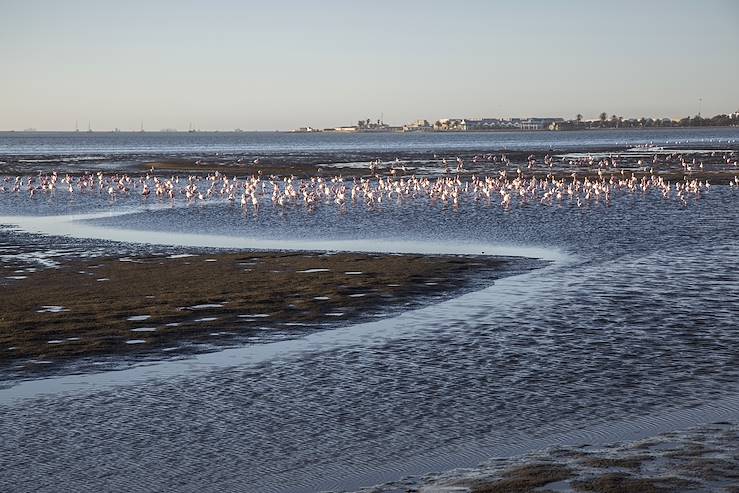
Today, head to Walvis Bay for a day that splits neatly between water and sand. Set out by kayak from Pelican Point, where pelicans, cormorants and flamingos are reliable company, and dolphins tend to show up unannounced to steal the show.
Once back on land, switch to a 4x4 for Sandwich Harbour, where the Namib dunes meet the Atlantic in a collision of environments that needs to be seen to make sense. Big Daddy, the tallest dune, tops out at just under 1,000ft – enough to make the climb feel purposeful and the view to feel earned.
Today, leave the coast behind for a drive of up to six hours south into the Namib – one of the oldest deserts on Earth, and one that makes sure you know it. The road is long, but the landscape keeps pace, shifting gradually from coastal scrub to the stark, mineral terrain of the interior.
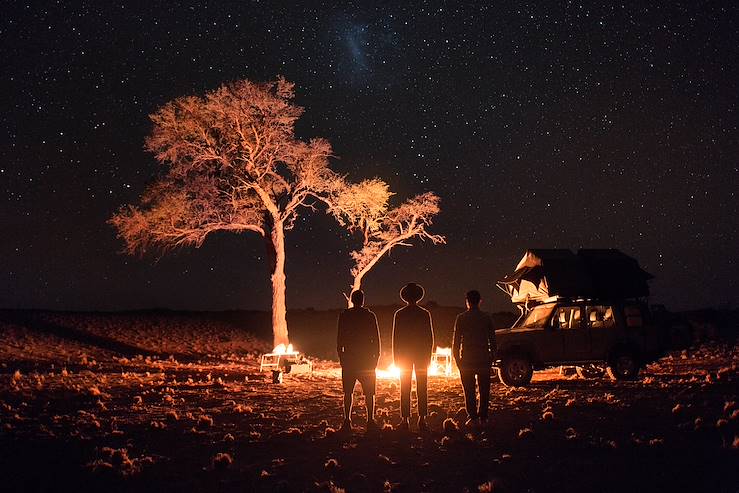
When you arrive, unwind and settle in for two nights at Sesriem, deep in the Naukluft Mountains, where the desert silence is broken only by the wind and the cold nights call for a cosy outdoor fire.
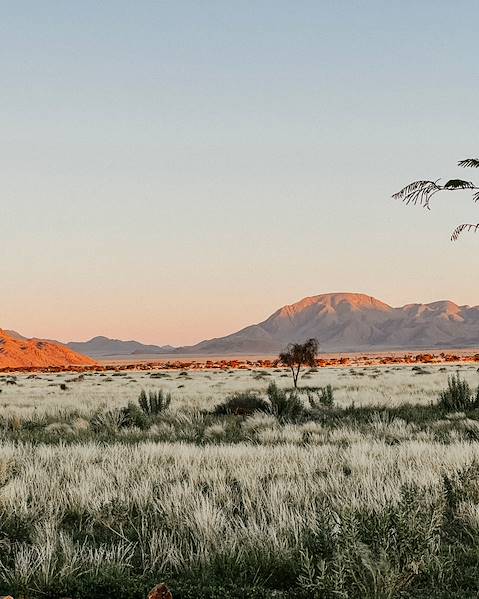
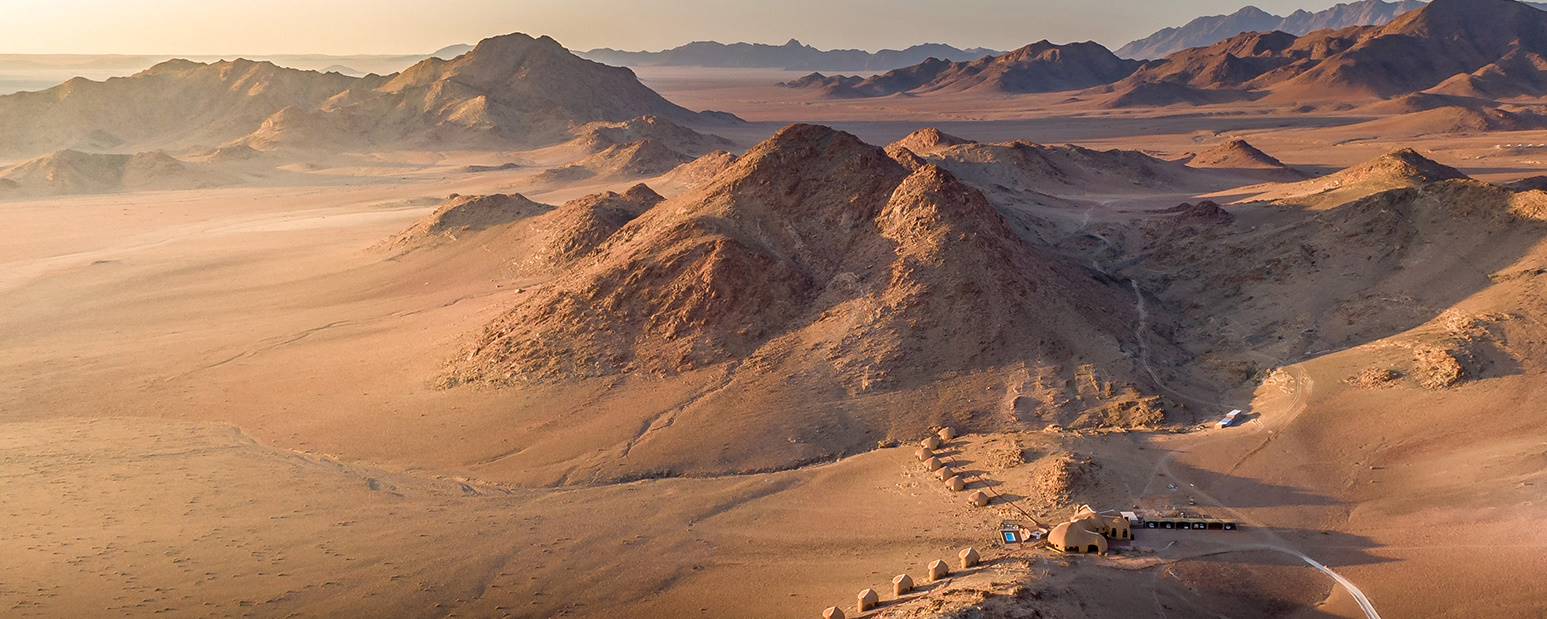
Today, explore the Namib-Naukluft National Park: a landscape of extraordinary colour, with sand shifting from orange to deep scarlet depending on the hour and the light. The dunes here are among the tallest in the world, some exceeding 1,100ft-tall, arranged around a dried ancient salt lake fringed by acacia trees. Oryx, ostriches and jackals move through the silence at their own pace, with the occasional skeletal tree breaking the skyline. In the Sossusvlei sector, a vast salt flat extends into the dunes – a landscape that resists adequate description and rewards an early start.
For an optional activity, rise before dawn for a hot air balloon flight over the Namib, drifting high above the dunes as the light arrives and the colours shift beneath you. Back on the ground, enjoy a champagne breakfast while the desert slowly awakens around you.
Today, leave the Namib and drive for four to five hours back up onto the Namibian plateau: a final stretch of ochre, sand and deep blue sky that serves as a quiet reminder of everything the past two weeks have covered. The road is long and the landscape unhurried, which feels appropriate.
Arrive back in Windhoek for one final night, the capital city feeling considerably more familiar than it did days before.
Return your trusty rental car at the airport and check in for your flight home. You’ll journey overnight via Johannesburg or Nairobi, arriving back home the following morning. From salt pans to boulder country, dunes to the Atlantic coastline, the landscapes have a way of staying with you long after the flight home.
Suggestions
Everything in this itinerary is entirely customisable, down to the smallest details. Here are some more suggestions of what could be included
HOT AIR BALLOON RIDE OVER THE NAMIB
Rise before dawn and climb above the Namib in a hot air balloon as the light arrives, drifting over dunes that shift from deep ochre to pale pink as the sun comes up. Back on the ground, indulge in a champagne breakfast while the desert slowly wakes around you.WITH A FEW EXTRA DAYS...
DISCOVER NAMIB RAND NATURE RESERVE
Head into one of southern Africa’s largest private reserves, bordering the Namib-Naukluft National Park on its western edge. The landscape here is stony and stripped back, with plains, dunes and hills holding on to whatever vegetation the rains allow. Explore by 4x4 and on foot with expert rangers who read the terrain instinctively: tracking oryx and springbok by their horns, and identifying the toktokkie beetle by the rhythmic tapping of its mating call. 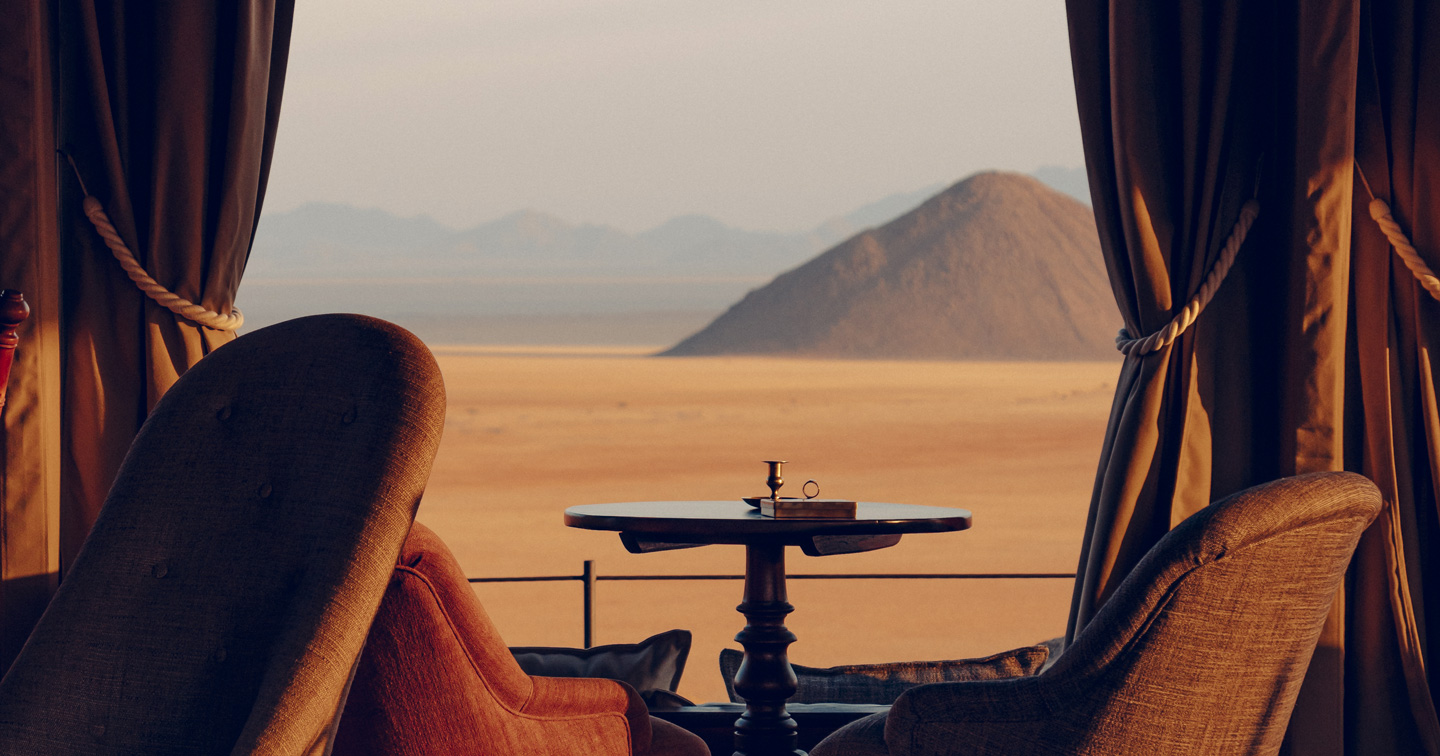
Why visit Namibia with Original Travel ?
Each of our trips is entirely tailor-made with originality, quality and cultural immersion in mind. Our team of destination specialists will craft itineraries based on your tastes, using their first-hand knowledge and the help of our in-country team of Concierges and guides. All trips are accompanied by a wide range of additional services, including a 24-hour helpline, the Original Travel app, fast-track airport services and much more.
Enquire nowA few of the benefits of travelling with us to Namibia
- Our local Concierges
- The Original Travel app
- Destination Dossier
- 24-hour helpline
- Expert guides
- 100% carbon absorption