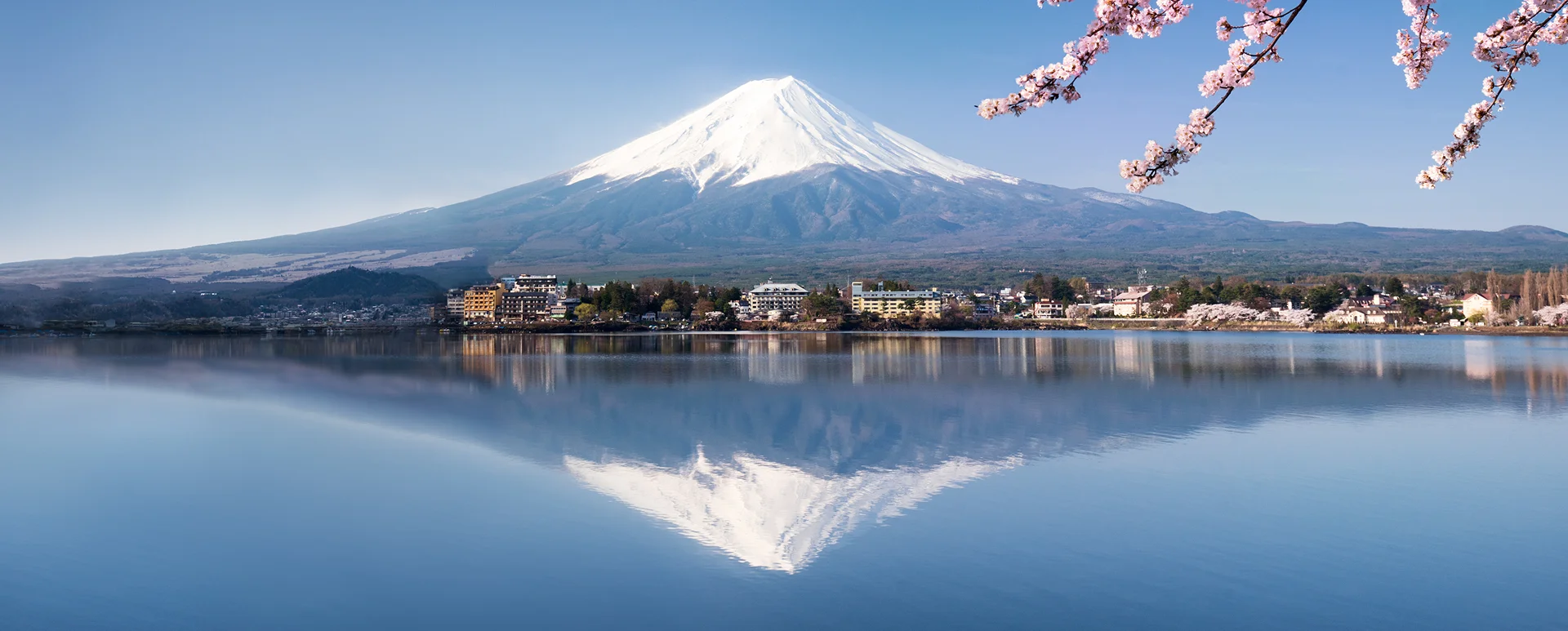
A global leader in wellbeing travel 30+ statistics about Japan's approach to mindful travel
Read more
In a world that encourages you to do more and do it faster, it can be easy to apply the same approach to your travel experience. Squeezing as many places and activities as you can into your holiday can be seen as simply making the most of your time there – and is how some people prefer to travel. But if you’re someone who finds you’re craving a holiday after your holiday, then it might be time to consider a different approach.
Enter mindful travel: the idea that slowing down, soaking in the details of the place you’re in and being present rather than rushing to the next destination is the way forward.
This might mean staying longer in one place, reducing the number of destinations you visit on a multi-stop trip, or simply freeing up your itinerary and giving yourself time to sit down at a local café and watch the world go by. It sounds simple, but can feel pretty revolutionary if you’re not used to travelling this way.
If this sounds appealing to you, then one of the best locations in the world for mindfulness is Japan. The ‘Land of the Rising Sun’ is known for its appreciation of nature, respectful etiquette, temples, hot springs and, of course, its superfast but calm Shinkansen train travel. This is a destination that really knows a lot about switching off and doing things in a considered way.
In this statistics-based guide, we’ll discuss the need and increasing desire for mindful travel, as well as showcasing how Japan really does embrace this philosophy.
Contents
In this guide

Chapter 1
The need for mindful travel
Whether it’s work, your home life or even just the weather, travelling is a chance to escape from everyday life and take a break. A holiday is a chance to step away from those regular responsibilities and live life at an easier pace, where the hardest decision is where to eat dinner or what time to head out sightseeing.
But do holidays really help? And are the benefits longlasting? The research suggests yes.
FACT 1.
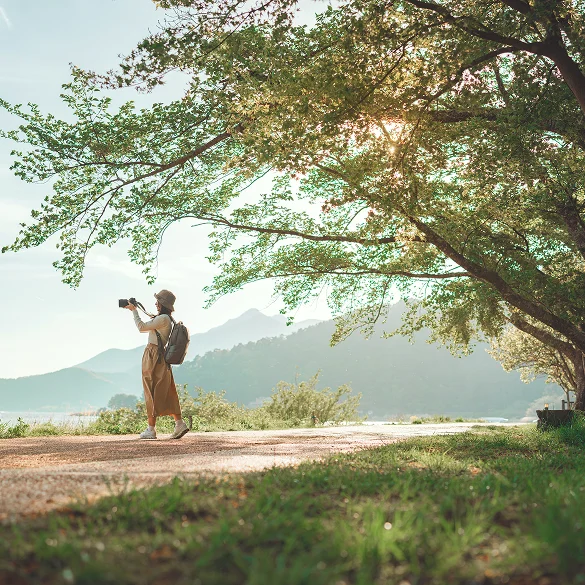
56% of millennials recognise the mental health benefits of going on a holiday
That’s according to the Association of British Travel Agents (ABTA), in their 2024-2025 holiday habits study.
The stats varied slightly by age group, with 54% of Gen Z, 51% of Gen X and 43% of Baby Boomers agreeing with the statement.
It’s clear, then, that the younger generations in particular are seeing travel as a way to recharge and reset.
FACT 2.
More specifically, 53% of millennials see travel as a way to escape everyday pressures
With a challenging job and housing market impacting many millennials, as well as many people being in the years of significant personal change, a holiday is a chance to get away from it all. Whether they’re looking to soak up the sun on a far-flung beach, get their fill of culture in Europe, or go somewhere completely different to their home, ABTA’s research showed that millennials see the benefits of a change of scenery.
FACT 3.
The benefits last between 21 to 43 days after returning home
That’s according to The British Psychological Society (BPS), who found that the relaxing benefits of being on holiday don’t actually vanish as quickly as previously thought. Wellbeing remained elevated even after returning to work (although there was a slight dip – sitting behind a desk isn’t quite the same as strolling the streets of Kyoto).

Chapter 2
Why take a mindful break?
FACT 4.
What you do on holiday makes a difference to the level of wellbeing benefits you take away
The same BPS study found that the activities you undertake on holiday really do matter. The biggest wellbeing benefits were found in the groups who were able to meaningfully step away from work and focus on relaxing, rather than trying to keep in the loop.
FACT 5.
Holiday duration also matters
The length of the trip also made a difference – the longer BPS participants were away, the bigger the boost in wellbeing.
That’s a good reason to go further afield and explore Japan, extending your trip to get maximum benefits.
However, they did find that a heavy workload on returning to the office meant the benefits didn’t last as long – so it’s important to manage expectations when you get back to your desk, to keep the holiday happiness flowing.
FACT 6.
Slowing the pace can lead to more meaningful experiences
Sheldon (2020) found that slow-paced travel can lead to higher rates of inner calm, wellbeing and meaningfulness, forging strong connections between travellers and the world around them. It makes sense: in slowing down, we can truly see the wonder of the world around us and take everything in in technicolour detail.
FACT 7.
Mindful tourists are more likely to enjoy their travel experiences
Research by Moscardo (2009) shows that when we’re mindful during our travels, we’re more likely to enjoy ourselves, feel satisfied and acquire more new knowledge. This can be especially fulfilling in a destination like Japan, where the culture may be very different to what you’re used to at home.
Getting completely lost in the moment while you travel is known as cultural immersion.
Cultural immersion shows that you’re fully engaged with your destination’s culture and people, and want to deepen your knowledge. Being so present can also mean you make vivid memories, with a simple smell, sight or sound instantly bringing back positive feelings of your time there.
The rising popularity of mindful travel
FACT 8.
21% of people are travelling for health and wellness reasons
That’s according to a joint study by Virtuoso and YouGov, reported in National Geographic. What health and wellness looks like for each traveller and how they incorporate that into their trip may vary quite a bit. For example:
- Some use their travels to reconnect with loved ones, away from the hustle and bustle of everyday life. Social connection is good for our emotional health and is powerful enough that it can benefit our physical health too, reducing the chance of developing chronic disease or serious illness.
- Sleep tourism is growing in popularity and expected to reach a global market size of $148.98 billion by 2030. Travellers are seeking out accommodation that’s specifically designed to optimise sleep, or even sleep retreats.
- Making time for meditation is an increasingly common activity and enthusiasts are keeping up their practice while on holiday, downloading guided meditations to follow on flights and during quieter moments. You can find guided meditations on specialist apps, as well as YouTube and Spotify.
- Hotels and resorts have taken note of the health and wellbeing trend, highlighting their spa facilities and offering treatments designed to calm the mind and body.
FACT 9.
Global spending on wellness is higher than per capita out-of-pocket spending on healthcare
This is true in every region except for North America, according to the Global Wellness Institute.
The difference is only slight ($788 on wellness vs $746 on medical services), but it just shows how important wellness is becoming.
FACT 10.
The global wellness industry is predicted to be worth $1.35 trillion in 2028
That’s an increase of more than 100% in comparison to 2022’s statistics. Global wellness tourism is now the fourth largest part of the entire global wellness industry. The Global Wellness Institute defines wellness tourism as ‘travel associated with the pursuit of maintaining or enhancing one’s personal wellbeing’.
FACT 11.
Wellness tourism has a predicted growth rate of 16.6% between 2022-2027
The top ranked category was wellness real estate (17.4% growth). That’s well ahead of the general wellness economy growth rate, which sits at 8.7%, according to the Global Wellness Institute.
Many of these categories and activities can be part of wellness tourism, whether that’s visiting the local hot springs or booking a treatment at the hotel spa.
FACT 12.
We’re increasingly happy to spend on wellness activities
When compared to different spending categories, wellness has seen the biggest growth rate. From 2019-2023:
- Wellness grew by 5.9% annually
- Healthcare grew by 4.1%
- Hotels/restaurants grew by 3.8%
- Clothing/shoes grew by 1.4%
- Education grew by 1.6%
It’s no surprise, then, that we’re increasingly seeking out wellness experiences on holiday.
FACT 13.
Japan is one of the top five wellness economies in the world
With the wellness sector in Japan valued at $241 billion, the country is a key part of helping travellers find a place to unwind. Wellness travel is also popular domestically within the country, with predictions suggesting it will be worth $74.5 billion in 2030, according to Magnificent Japan. Wellness travel is here to stay.
FACT 14.
Millennials and Gen Z travel has risen by 1,300% in Japan since 2019
In an active demonstration of the statistics we discussed at the start of the guide, millennials and Gen Z are favouring holidays that take them to the wellness capital, Japan.
Magnificent Japan says that this age group is visiting in such high numbers because they are prioritising experiences, mental restoration and meaningful journeys.
Furthermore, they found that these age groups are more likely to opt for nature and cultural experiences, rather than traditional tourist activities.
FACT 15.
The number of inbound tourists visiting Japan is set to reach 40.2 million in 2025
Even outside of the Millennial and Gen Z age groups, Japan remains a firm favourite for travellers worldwide, with visitor numbers expected to exceed 40 million in 2025.
FACT 16.
By the end of the first half of 2025, 21,518,100 tourists had already visited Japan
This puts the country on track to reach the 40.2 million prediction by the end of the year.
FACT 17.
The estimated number of international travellers to Japan in June 2025 alone was 3,377,800
This was a 7.6% increase compared to 2024, according to Japan National Tourism Organization (JNTO), and sets a new record for the month.
FACT 18.
34.2% of Japanese people see the rise in international visitors as a good thing for the national economy
There’s always a balance between tourism and protecting local communities, which is why mindful travel is so important. However, in addition to believing that international travel will revive the national economy, 23.3% believed travel supports local economies as well, with 17.8% saying that it’s good that tourist destinations will become busy.
FACT 19.
Even though tourism appears to be welcomed, it’s important to have a minimal impact. Travellers appear to agree: 76% want to travel more sustainably over the next year
And many consider slow or mindful travel to be a key part of having a minimal impact, with 85% saying they want to visit a place where they can truly experience the local culture.
One way to travel with a lower impact is to follow the principles of Leave No Trace. Leave No Trace offers guidelines for visiting the outdoors, but some of these can be applied more broadly, such as:
Plan ahead and prepare
Know the rules for the places you’ll visit so you’re equipped to follow them.
Dispose of waste properly
If there’s no bin nearby, pack up your rubbish so you can put it in the bin when you next find one. You can keep a bag with you for this purpose.
Leave what you find
Don’t touch or move historic structures or artefacts, or take any rocks or plant life.
Respect wildlife
Keep your distance and don’t feed them.
Be considerate of others. Be courteous, and research the etiquette of your destination so you can act accordingly. For example, in Japan:
- You must take off your shoes when you enter a building; this is done in an area called a genkan. Slippers are provided (make sure you wear socks, or bring a pair with you if you’re barefoot in your shoes). Separate toilet slippers are often provided solely for use in washrooms.
- Watching out for others in public is very important. Make sure you don’t block pathways, eat while walking, smoke outside of designated areas or photograph anyone without permission.
- Slurping noodles is polite, as it’s a sign that you’re enjoying them.
- It’s impolite to stick chopsticks into your food, or pass food from your chopsticks to another set, as these actions are only done at funerals.
Chapter 3
How is Japan embracing mindful travel?
Hot springs and spas
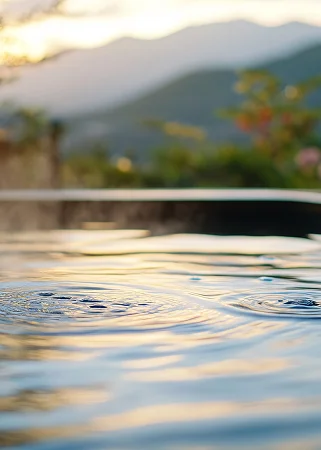
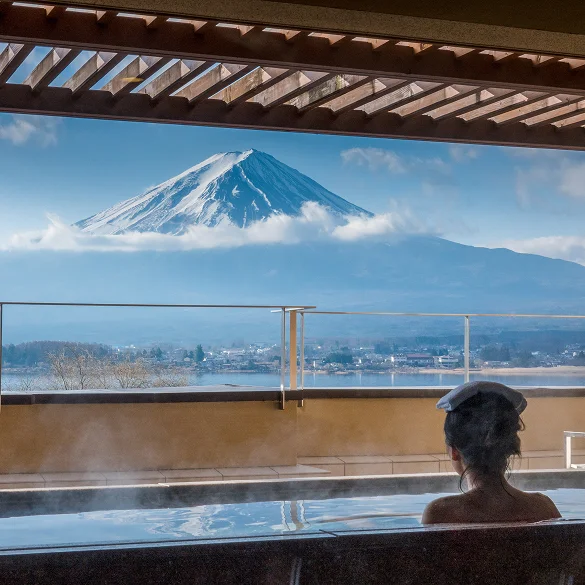
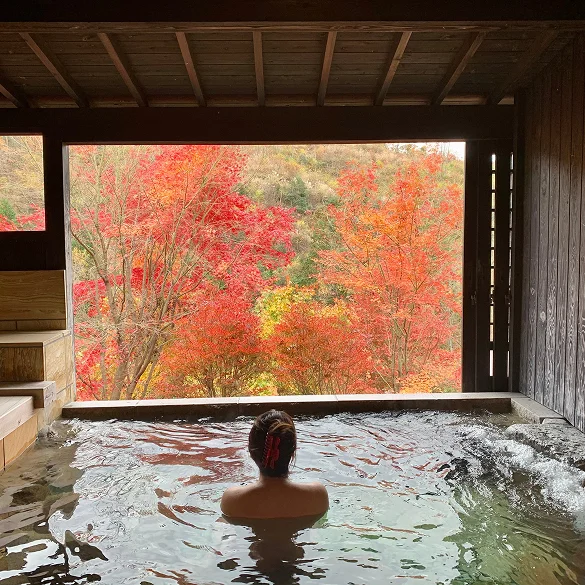
The tradition of spending time in hot spring water has been around for thousands of years in Japan. The water bubbles up from the Earth, creating natural springs that are then channelled into pools that are perfect for sitting back, relaxing and taking in the world.
The term ‘onsen’ is used to describe the hot spring pool (or pools) and surrounding amenities which will include washing facilities – it’s a very important part of the onsen experience to make sure you’re properly clean and follow the hygiene traditions. Traditionally, you’re naked when you use an onsen. This might feel strange as a visitor, but it’s an important part of the cultural experience and it’s essential to follow the instructions listed at your chosen hot springs.
If you are unsure about bathing naked, there are private onsen rooms available to hire, allowing you to bathe in private. Just make sure you check if your private bath is filled with hot spring water or just standard hot water, if you’re particularly looking to soak up the mineral benefits.
A private onsen room can be a good solution if you have tattoos, as these are still taboo in a lot of Japan due to their association with gangs. They were illegal until 1948 but the association remains, something that’s become tricky due to Japan’s popularity as a tourist destination. Many onsens won’t allow visitors with tattoos to enter, or ask them to use plasters to cover their tattoos if they’re on the smaller side. However, this is changing in some places – always check with the onsen first. Showing concern about etiquette will often go a long way.
FACT 20.
Spas and saunas are among the top wellness activities in Japan
The financial figures reported by Magnificent Japan show that these experiences continue to appeal to both domestic and international visitors.
The sector was valued at $1.48 billion in 2023 and is expected to hit $8.5 billion by 2030.
FACT 21.
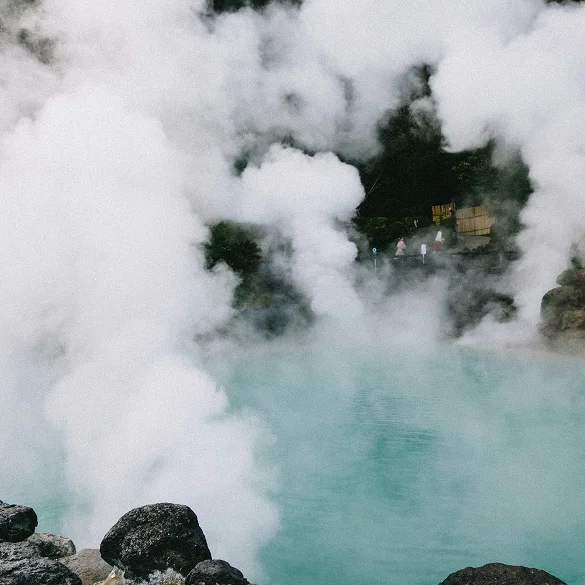
There are over 27,000 hot springs and 3,000 onsens in Japan
Japan’s location on the Pacific ‘Ring of Fire’ means that it is susceptible to volcanic and tectonic activity. The nice side-effect of this activity is the country’s access to hot springs and therefore geothermally heated pools that locals and visitors can easily enjoy.
With over 27,000 hot springs spread across the country, you’re sure to be able to find one close to where you’re staying.
FACT 22.
2.6 million litres of hot spring water move through Japan’s onsens every minute
The mineral-rich waters offer a chance to slow down, relax and soak up the benefits, including boosted blood circulation and soothed joints. It’s no wonder they’re so popular. Some people go for a quick dip, but you could easily spend an entire afternoon bathing in different pools in the onsen (making sure to shower in between).
FACT 23.
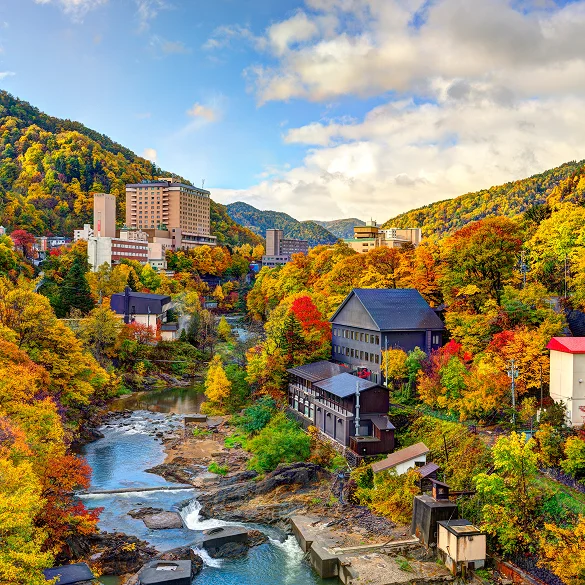
Hokkaido has the largest number of onsen facilities
The northernmost of Japan’s main islands is a hotspot for hot springs, with more than 250. As one of the regions of Japan that sees snow in the winter, it doesn’t matter what season you’re visiting – you can enjoy a relaxing soak in the sunshine or with a wintery landscape around you.
Train travel
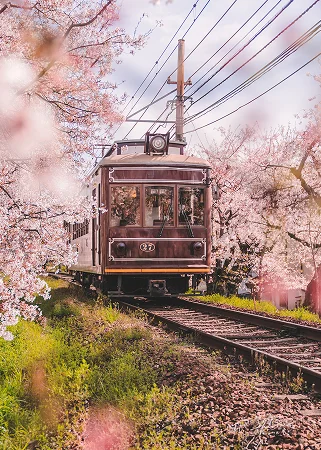
The train network in Japan is legendary for being one of the most efficient and clean in the world. From the super-fast, super-sleek Shinkansen (bullet train) that can get you across the country in a matter of hours, to the charming old-fashioned local trains and even the extra-cute themed trains (the Hello Kitty train is just one example), train travel is an easy part of everyday life.
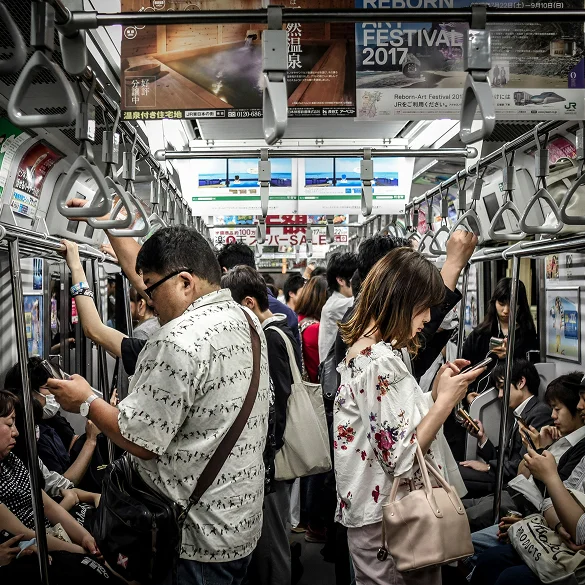
However, unlike the bustling stations experienced in other countries, train travel in Japan is calm, organised and always on time. In 2017, an express train left 20 seconds early, leading to a public apology from the Japanese rail company. There are markings on the platforms to show everyone where to stand and all the locals follow the process of allowing passengers to disembark the train before attempting to board. Travellers are aware of others around them and move out of the way of walkways and stairs.
It’s generally considered inappropriate to eat on all but long-distance trains and talking on your phone, having it set to ring or playing music out loud is frowned upon. The result is a calming, mindful experience, where you can simply sit back and watch the landscape without being disturbed.
FACT 25.
Travelling by train is more common in Japan than anywhere else across the globe
In 2021, 28% of passenger kilometres in Japan were done on the train, as opposed to taking a car or other method of transport.
To give some context, only 5% of passenger kilometres in the UK were undertaken on trains and just 0.25% in the US.
FACT 26.
Japan’s hassha melodies are reducing accident rates by 25%
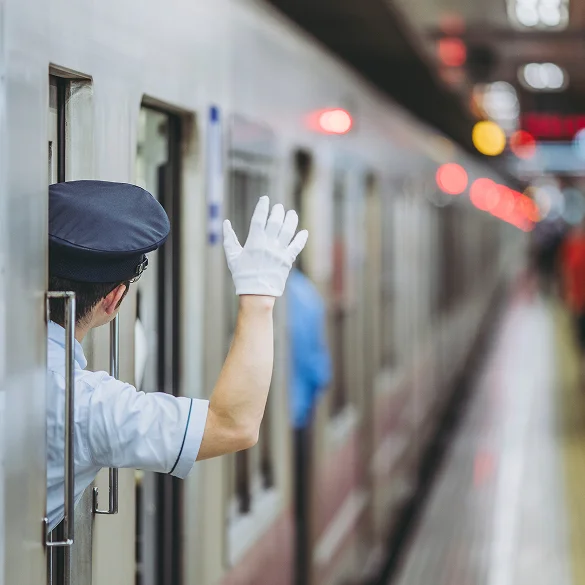
If you’ve ever jumped at a train announcement telling you to ‘move out of the way of the closing doors’, then you know that train stations aren’t usually a calm place. In Japan, the opposite is true, with lines on the platform to help everyone queue considerately and a specific set of hand signals that employees use to keep things running smoothly.
In addition to this, travellers can listen out for the polite, pleasing hassha jingles that signify that the train is ready to depart. They last for seven seconds and are only played while the doors are open. Each station uses their own one, so locals can tell how long they’ve got to board the train, based on how long is left in the tune.
Research suggests that this has reduced the number of injuries from rushing by 25%.
Forest bathing
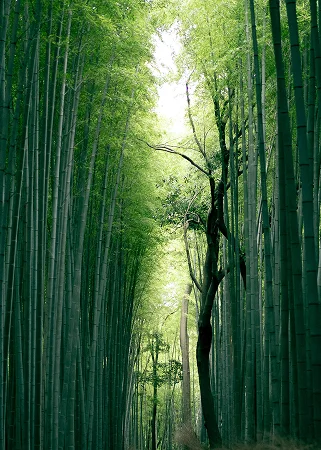
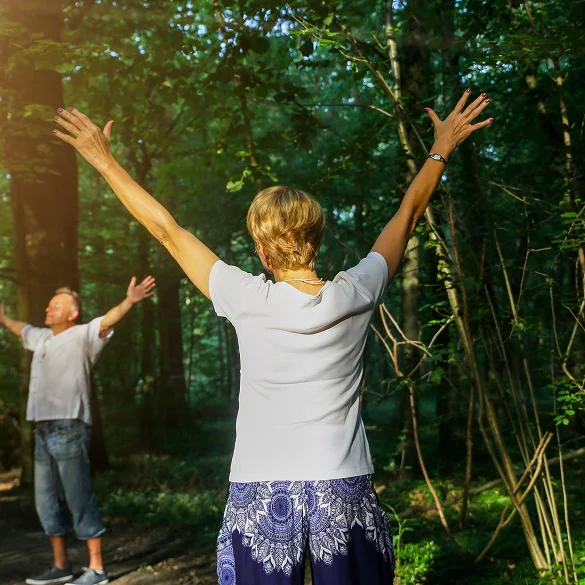
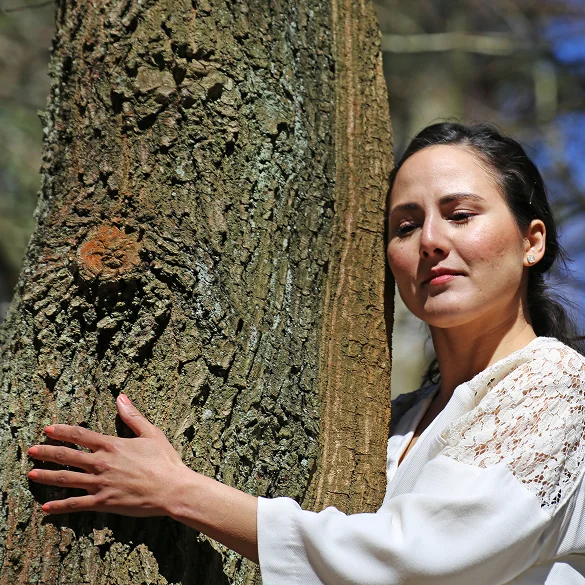
The practice of shinrin-yoku (forest bathing) is another essential mindfulness practice to incorporate into your Japanese adventure. Actively prescribed by Japanese doctors to combat the effects of living in a busy urban environment, forest bathing is about more than just walking in the woods. It’s a chance to switch your phone off, breathe deeply and listen to all of the sounds around you, while slowing down your breathing and your thoughts. Many people even choose to sit down and feel the moss or the trees around them, engaging all their senses.
This is an activity you can take part in by yourself, but if you’re unsure about going into the woods by yourself, there are plenty of guided tours available across Japan. This can also be useful if you’re not used to calming your mind through meditation.
Meditation is the practice of clearing your mind using different techniques. You might focus on your breathing, let thoughts come and go instead of exploring them, or concentrate on the sensations in your body, for example. There are many ways to do it and you don’t have to be perfect – it’s completely natural to find it difficult to let thoughts go. Taking time to meditate can reduce levels of stress and anxiety, creating a sense of calm.
One 2023 study found that meditation potentially has positive impacts on the immune system, anti-inflammatory response, and mental health. While it states that further research is needed, this is a promising result.
FACT 27.
50% of the benefits of forest bathing come from the air
Dr Qing Li at the Nippon Medical School found that half of the benefits of forest bathing do actually come from the air – it’s not just a way to feel calmer.
There’s a higher oxygen content in the air around trees and the trees actually emit chemicals that help fight plant diseases.
These same chemicals boost our immune system, according to The Forest Bathing Institute.
FACT 28.
There are 65 Forest Therapy centres in Japan
Spread all across Japan, from the southern region of Okinawa to the northern reaches of Hokkaido, Forest Therapy centres were set up by the Japanese government to help people experience the benefits of forest bathing. Each centre has a base, official trails and a certified guide. To keep the certification, the Forest Therapy centre must ensure that the area is being properly maintained and it is making it easy for visitors to take part in effective forest bathing sessions.
It’s good to note that not all centres guarantee an English-speaking guide, so if you want to visit one, make sure you check before you travel.
FACT 29.
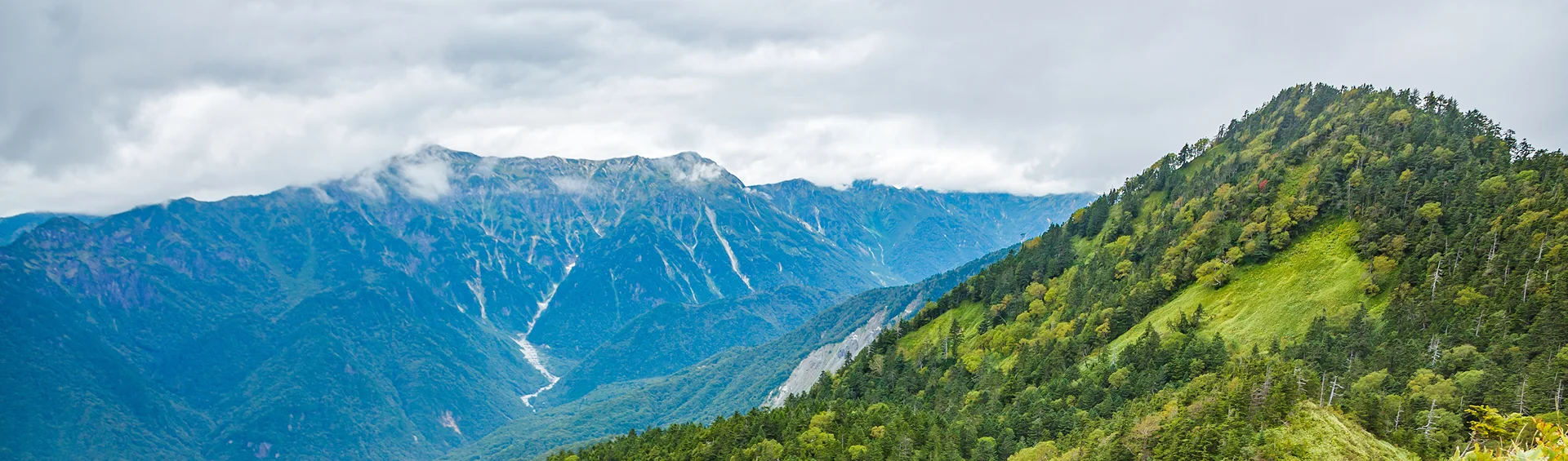
69% of Japan is covered in forest
That’s equivalent to around 96,525 square miles of forest. Of this, 19% is primary forest, which is the most biodiverse type of forest, and is home to 919 species of amphibians, birds, mammals and reptiles, as well as 5,565 species of plants.
Forest bathing can involve closing your eyes and breathing in the fresh air around you, but it’s also a chance to slow down and appreciate the wonders of the forest in all their beauty.
Tea ceremonies
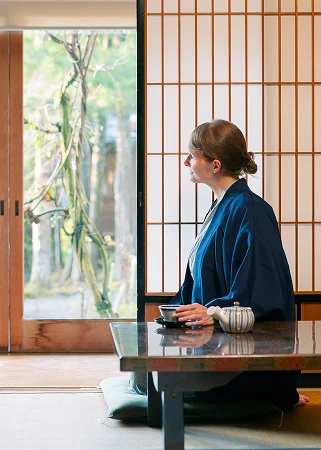
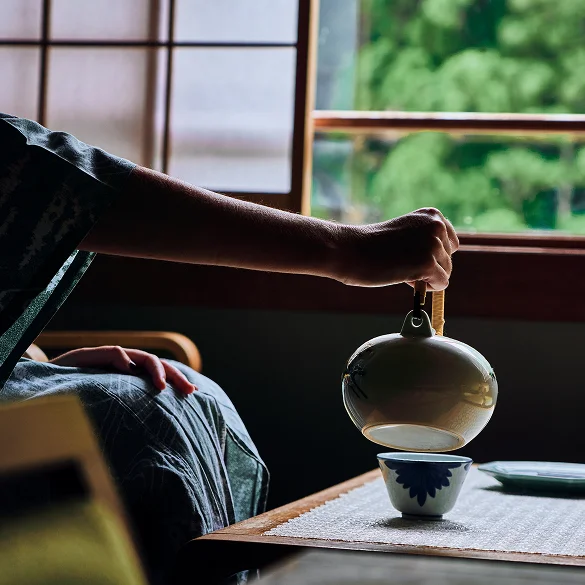
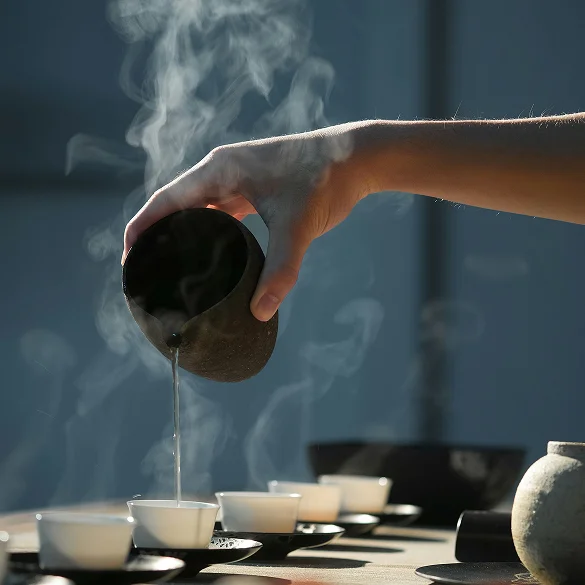
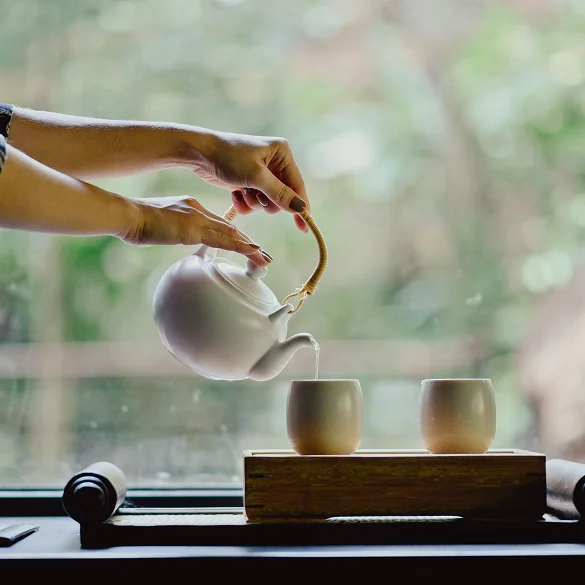
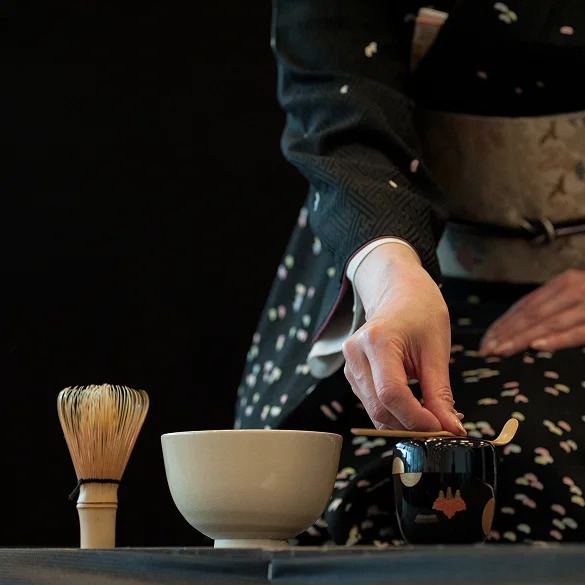
Tea ceremonies are an important part of Japanese culture. Initially practiced by monks during mediation and then by Samurai warlords, the tea ceremony is about far more than just preparing a hot drink and sweets. There are two types of tea ceremonies: chakai (informal) and chaji (formal). The former takes 45 minutes and the latter can last up to four hours. Both have specific steps to follow and training can take years.
Taking part in a tea ceremony while in Japan is an opportunity to be truly in the moment, appreciating all the small details involved in the ceremony. Participants also sit on the tatami flooring, allowing them to feel the ground beneath them. The whole process is designed to still the mind and promote calm.
FACT 30.
88.9% of people said that taking part in a tea ceremony was ‘peaceful and calming’
That’s according to research which interviewed participants who visited the Samurai Museum in Kyoto in October 2020, as well as an online survey to people who booked online.
The survey also showed that 69.4% of people said they agreed that the tea ceremony helped them ‘feel more mindful of their environment’, including ‘awareness of the room, details and presence in the moment’.
FACT 31.
The finest brushes used in the tea ceremony have 120 ‘tines’
An essential part of the tea ceremony is whisking the matcha to achieve a frothy, mousse-like foam. To do this, tea ceremony experts use a chasen – a brush made from a single piece of bamboo, which is then split into delicate bristles called tines. In Japan, these are only made by certain families, who have been in the business for generations.
The highest quality chasen are made in Takayama in northwestern Nara and are made up of 80, 100 or even 120 tines.
The most mindful places in Japan
FACT 32.
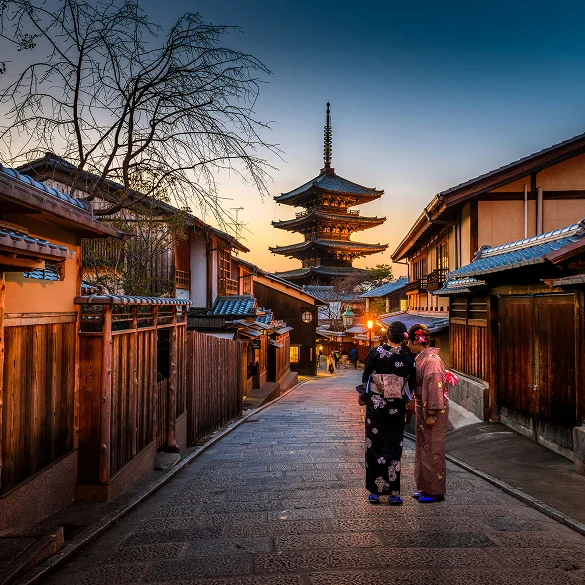
Kyoto has been ranked the 10th most mindful destination in the world
That’s the top-ranked city in all of Asia, according to a 2025 study that used keywords from Tripadvisor reviews. As the previous capital of Japan, the city is full of thousands of Buddhist temples and Shinto shrines and is famous for its food.
It’s ideal for wandering around, noticing your surroundings as you go and then finding a moment of peace and quiet contemplation in a temple.
FACT 33.
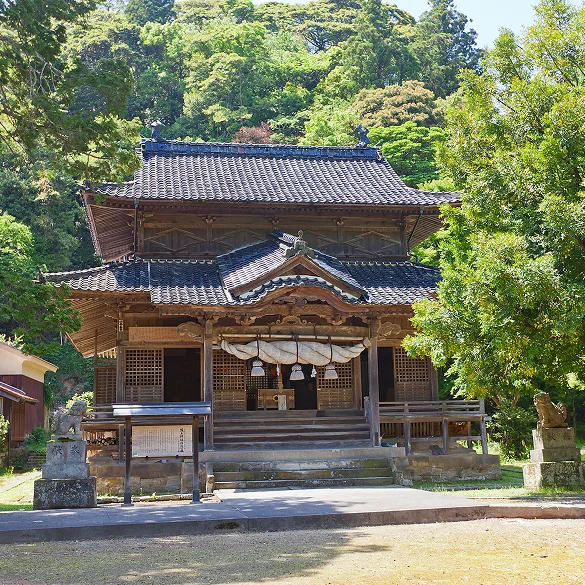
Shimane Prefecture has 178 shrines and 196 temples per 100,000 people
As a result, it’s considered one of the most spiritual places in Japan. It’s also the second-least populated prefecture in Japan, so is the perfect place to stop if you’re looking for a quiet, mindful break.
Located south of Kyoto and Osaka and north of Hiroshima, it’s also home to Iwami Ginzan, Japan’s oldest shrine.
Japan is an ideal place to visit if you want to put the concept of mindful travel into practice. Many aspects of its culture encourage you to slow down and be present, from the soothing warmth and quiet of bathing in the onsens to the intricate details of a traditional tea ceremony. Even in a busier destination like Tokyo, you can still be mindful by paying attention to the sights and sounds of the city. Give it a try – you might be surprised at what you find.