Family road trips in Italy 30+ safety tips, scenic route recommendations and more
Read moreThere’s nothing quite like the adventure of a family road trip, especially when the destination is as captivating as Italy. With its stunning coastlines, rolling countryside and charming villages, a road trip gives families the freedom to chart their own course, whether it’s winding through Tuscany’s vineyard-covered hills or stopping at beaches along the Puglian coast. With essential safety advice, detailed route suggestions and practical tips, this guide will help you make the most of your Italian road trip.
Contents
In this guide
Chapter 1
Italy travel statistics
Italy has long been a popular destination, with its alluring mix of ancient history, impressive architecture, delicious food, and rolling countryside proving irresistible to travellers. But its popularity has soared in recent years as people seek out the beauty of something simple, done right.
FACT 1.
In April 2025, Italy welcomed over 10.6 million visitors
This was a 13.14% increase compared to April 2024.
FACT 2.
Visitors are staying in Italy for long periods of time in 2025
There could be a couple of reasons for this. Slow travel is increasing in popularity, with travellers focused on soaking in the details and experiences of their time away instead of rushing through each destination.
The renewed appreciation for travel that many of us felt after the pandemic could also still be in effect.
FACT 3.
They’re spending more, too
Data from the World Travel & Tourism Council (WTTC) predicts international visitor spending in Italy will reach €60.4 billion in 2025, which would be a new high.
Chapter 2
The rules of the road in Italy and how to stay safe
Having access to a car while you’re in Italy gives you the freedom and flexibility to explore on your own timeline and reach places you might not have seen otherwise. But it’s important to learn and abide by the rules of the road so you can feel confident and stay safe during your travels. Here’s what you need to know.
FACT 4.
You must be 18 or over and hold a full, valid driving licence to drive in Italy
Some car rental companies may have their own additional restrictions. For example, they may require the driver to have held their licence for a minimum of one year, charge a young driver fee for drivers under 26 years old, have a maximum age limit (this is often 75 years), or charge a senior driver fee (for ages 70+). These can vary, so compare different providers before you commit to renting a car.
FACT 5.
You can bring your own car, or rent one
Bringing your own car
You can bring your own car into Italy for up to a year, if you make sure you carry your:
- Full, valid UK driving licence
- Passport
- Car insurance certificate
- V5 registration document
You also need to display the letters ‘UK’, either on your number plate or a sticker.
Renting a car
You may prefer to fly to Italy and pick up a rental car at the airport. Booking in advance is essential and allows you to think about what you need, for example:
- Are you willing and able to drive an electric car? This will depend on whether your road trip route has enough charging stations along the way. If in doubt, stick to petrol or diesel.
- Will the car have enough room for your luggage? The type of cars available are often on the smaller side, simply because this is the norm in Italy.
- Does the rental car provider’s insurance include all the coverage you need? All car hire rates in Italy include basic Collision Damage Waiver car insurance, but you may want an extra layer of protection.
- Do you need to book a child’s car seat? This will save you from packing one, but adds an extra cost to the hire rate.
- Are you able to meet the rental company’s minimum requirements?
- Do you have a credit card? Most rental companies ask you to present a credit card in the lead driver’s name and pay a deposit with it when you collect the car. This deposit will be returned to you if there’s no damage to the car when you return it. Always check the car for existing marks and photograph them before you set off.
- What time is realistic for pick-up and drop-off? Car rentals at airports are often a bit of a walk from the main building and flights are often delayed, so give yourself plenty of time to get there.
The pros and cons of bringing your own car vs renting one
| Bringing your own car | Hiring a rental car | ||
|---|---|---|---|
| Pros | Cons | Pros | Cons |
| You're already familiar with how the car works | Driving a right-hand drive car can make it more difficult to drive on the right side of the road | A rental car will be set up as a left-hand drive, making it easier to drive on the other side of the road | You need to drive a car you're not familiar with |
| No car rental fees | Driving your car from the UK to Italy costs a lot in terms of petrol, and you may need to add extra insurance (UK insurance provides third party cover in EU countries) | Basic insurance is included in the car rental fee | You need to pay for the car rental in addition to petrol, toll road fees and parking |
| You have more flexibility while you travel | You have more flexibility while you travel | ||
FACT 6.
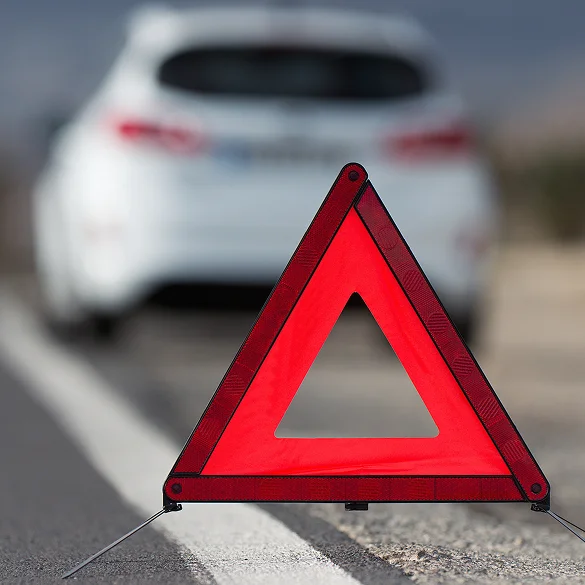
All drivers in Italy must have a number of items in their car
Make sure you have:
- A warning triangle, which you must place at a distance from your car if you break down or have an accident.
- Headlamp beam deflectors, which you must put on the headlights of your own car to adjust them for driving on the right side of the road. The headlights of a rental car will already be set up as needed.
- Reflective jackets, which you must wear if you break down or have an accident and are outside of your car.
A rental car will have a warning triangle and reflective jacket in the boot as standard. Always check they’re there before you drive away from the collection area.
FACT 7.
Seat belt laws
By law, you must wear a seatbelt when you’re inside a car, whether you’re sitting in the front or the rear. There are fines if you’re caught without a seat belt.
FACT 8.
Car seat laws
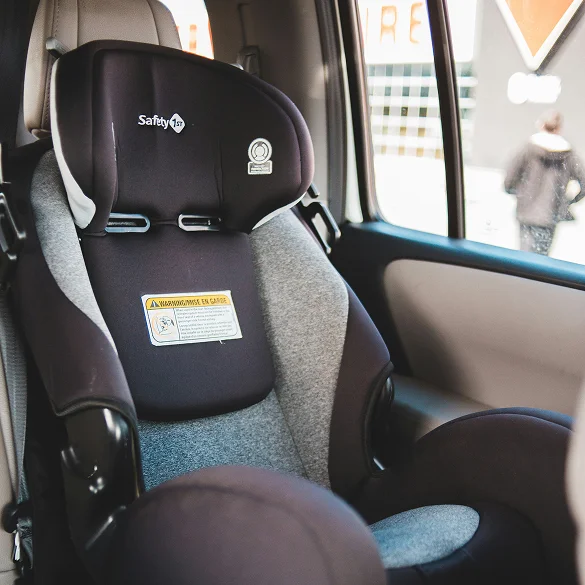
If you’re travelling with children, you must secure all children under 150cm or 36kg in a UN R44/R129-approved child car seat that’s suitable for their height and weight.
A baby can only travel on the front passenger seat in a rear-facing car seat if the airbag has been deactivated.
Italy introduced a new law in 2019 that requires anti-abandonment devices to be used on car seats for children under four. These devices are alarms that go off if you leave the car without your child. Many car seats already have one integrated, or you can buy one once you’re in Italy.
FACT 9.
Road signs
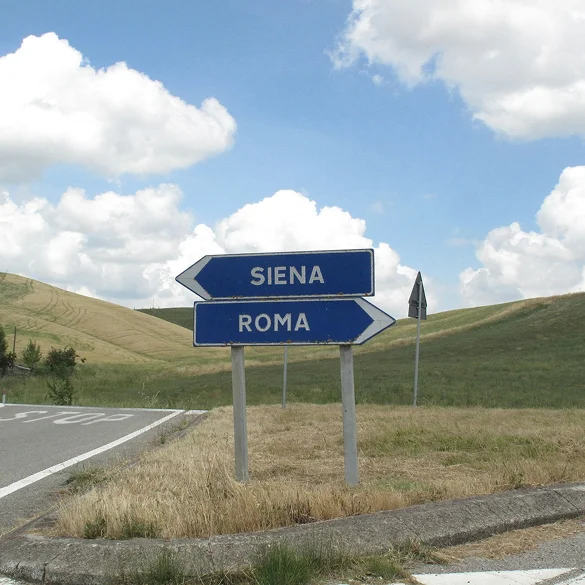
Road signs in Italy are colour coded, which makes it easy to figure out which type of road you’re about to drive on.
- Green = motorway
- Blue = urban roads
- Brown = scenic roads or historic attractions
FACT 10.
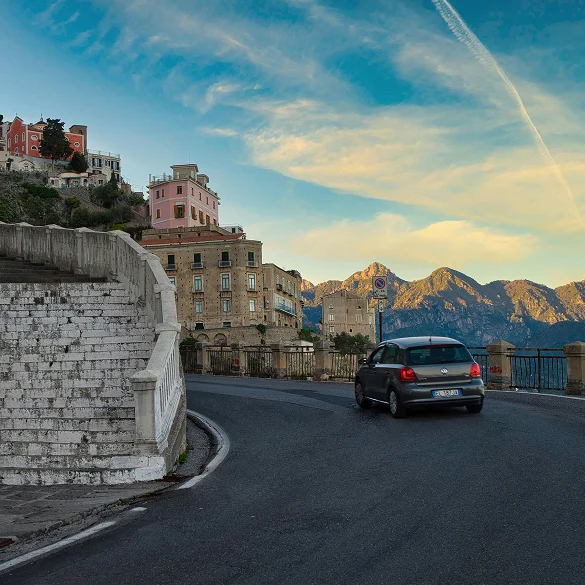
Like most of Europe, in Italy you drive on the right-hand side of the road
In fact, the only countries in Europe that drive on the left are the UK, Ireland, Malta and Cyprus, as well as the British Crown Dependencies, the Channel Islands and the Isle of Man.
Driving on the other side of the road can take some getting used to. Here are some things to remember:
- While the clutch, brake and accelerator are all in the same place, you need to use your right hand to operate the gearstick and handbrake.
- Cars will overtake you (and you’ll overtake) on the left.
- Give way to the left on roundabouts, and drive anti-clockwise.
- Oncoming traffic will be to your left, so you’ll cross oncoming traffic if you need to turn left.
- Traffic signs will be to your right.
- Toll booths will be to your left.
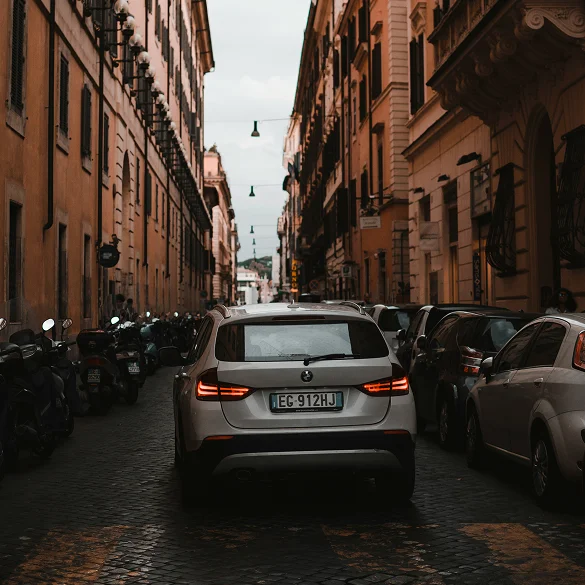
FACT 11.
Priority
Understanding who has the right of way can save you from making a mistake in a pinch. In Italy, the rules say that:
- You must give priority to vehicles coming from the right, including vehicles on rails.
- Emergency vehicles and vehicles on rails have priority at all times.
- Pedestrians have priority at crossings, as do cyclists near cycle paths.
- If a road is too narrow for two vehicles to pass each other safely, the heavier vehicle has priority.
- If a mountain road is too narrow for two vehicles to pass each other safely, the ascending vehicle has priority and the descending vehicle must reverse to the nearest passing point.
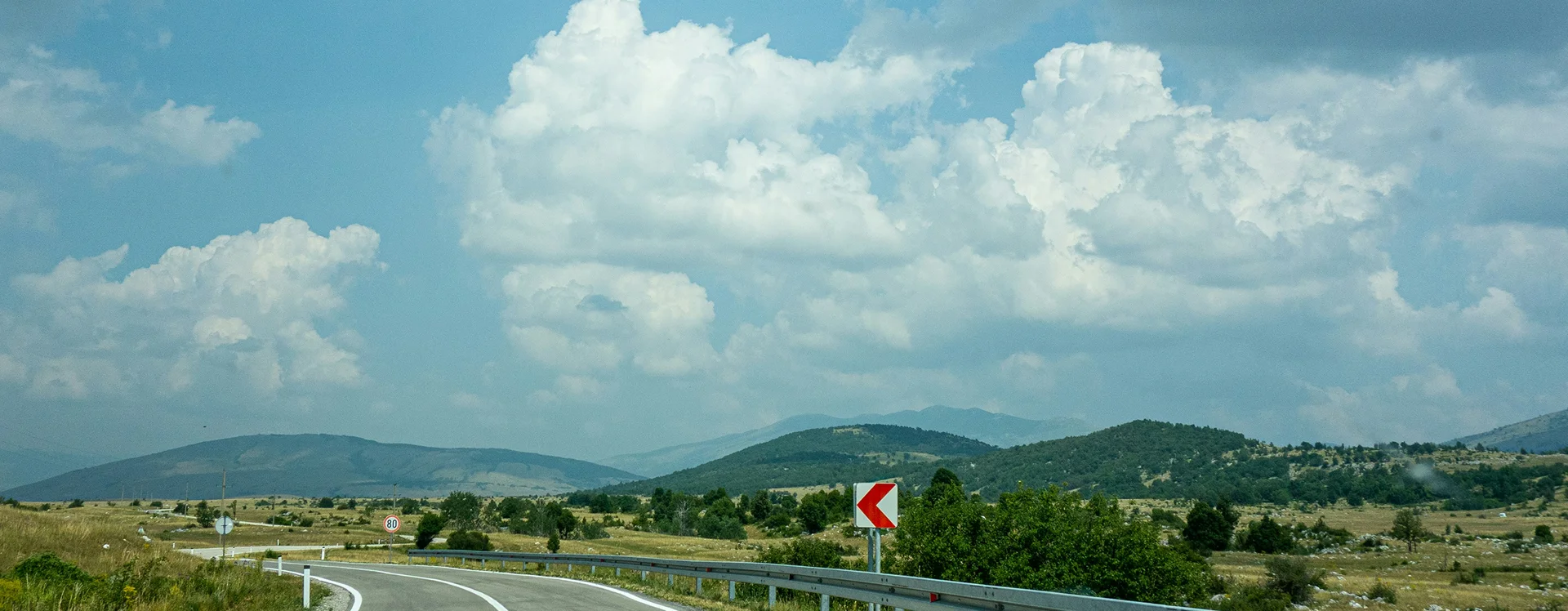
FACT 12.
Overtaking
If you’re on the motorway and want to overtake, you must do so in the left lane; the right lane is the slow lane. Return to the right lane once you’ve finished overtaking.
If the line in the middle of the road has gaps, overtaking is permitted. If the line is solid, you can’t overtake. Overtaking is also not permitted:
- When the vehicle in front has slowed down so pedestrians can cross
- On bends in the road
- On the brow of a hill
- At intersections
- When a tram has stopped to pick up passengers where there’s no island
- Anywhere where your visibility is limited
FACT 13.
Speed limits
Speed limits are written in kilometres per hour. This will be easier to follow in a rental car, which will have kilometres on the speedometer as standard. We’ve written the approximate speed in miles per hour for those who choose to drive their own car.
| Area/road type | Speed limit |
|---|---|
| Rural areas | Between 5km/h and 50km/h, according to the signs. This is between approximately 3mph and 31mph. |
| Built-up areas | Between 50km/h and 70km/h, according to the signs. This is between approximately 31mph and 43mph. |
| Outside built-up areas | Between 90km/h and 110km/h, according to the signs. This is between approximately 55mph and 68mph. |
| Motorways (known as autostrade) | Between 150km/h and 130km/h (approximately 93mph to 80mph), according to the signs. 110km/h in adverse weather conditions (including snow), which is approximately 68mph. |
Speeding fines
Speeding fines in Italy are calculated based on how far you drive over the limit. The police can issue the fine on the spot, whether your car is registered in Italy or elsewhere, but can’t collect all of it.
| Amount over the limit | Possible speeding fine |
|---|---|
| Up to 10km/h | Between €41 and €168; no points deduction. |
| Between 11km/h and 39km/h | Between €168 and €674; three-point deduction. |
| Between 41km/h and 59km/h | Between €527 and €2,108; six-point deduction; license suspension between one and three months (up to 18 months for drivers with similar offenses in the past two years). |
| 60km/h or more | Between €821 and €3,287; ten-point deduction; license suspension between six to 12 months (license revocation for drivers with repeat offenses). |
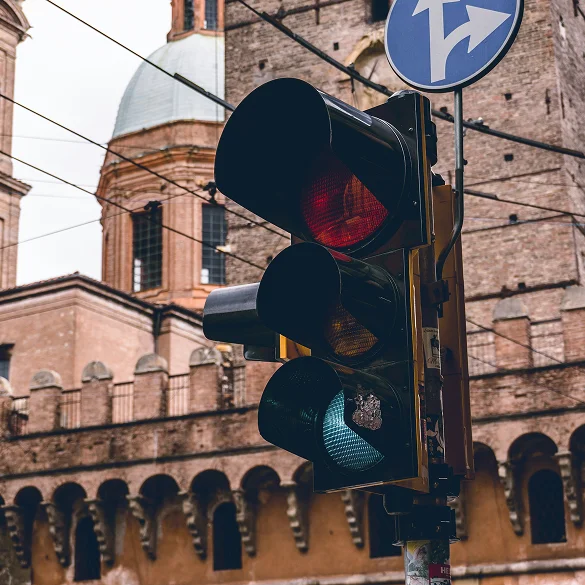
FACT 14.
Traffic lights
The traffic light system is incredibly similar to the one we use in the UK, with red, amber and green lights. There’s one difference to be aware of: a flashing red light means you must stop.
Flashing red lights are used at level crossings, mobile bridges and ferry boarding points.
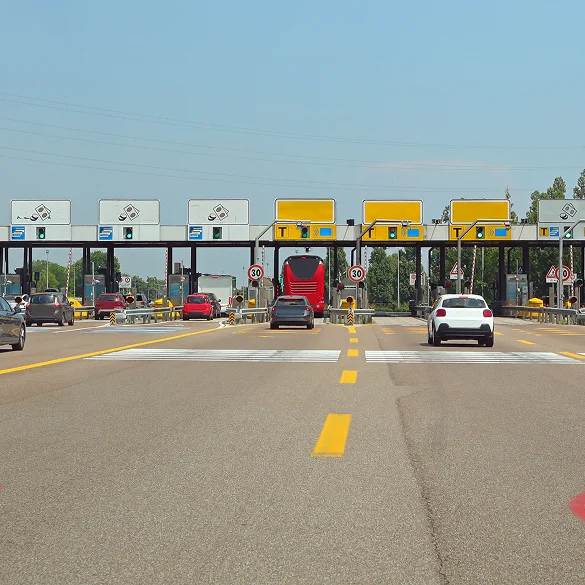
FACT 15.
Toll roads
Toll roads are common on Italian motorways. Normally, you get a ticket from a booth at the start of your journey, then pay for it towards the end, so be sure to keep the ticket somewhere safe.
Some toll booths accept credit card payments, but not all, so make sure you carry cash.
You can pay at a booth attended by a person, or at a machine. Some toll roads have an electronic system where you pay online after your journey – be sure to do this promptly to avoid fines. If you have a choice, it’s easier to pay upfront than risk forgetting about it later.
The sign for a toll road is a red circle with a black horizontal line in the middle and the words ‘Alt Stazione’.
FACT 16.
Limited Traffic Zones
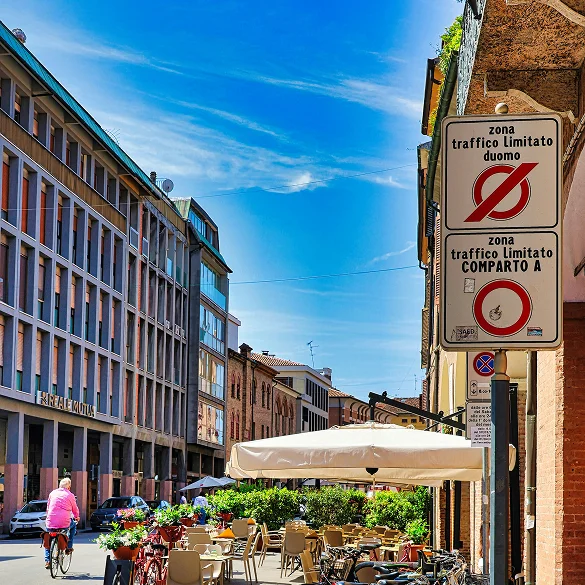
Limited Traffic Zones (Zona Traffico Limitato, or ZTL) are common in major cities in Italy. Cars are prohibited from entering these zones and you can receive a significant fine for doing so. If you’ve hired a rental car, this fine would be passed to the rental company, resulting in an extra admin fee from them.
Luckily, there’s an easy way to avoid ZTLs: park on the outskirts of the city and use public transport to get closer to the centre. It’s much simpler and less stressful than trying to drive in a busy, historic city.
FACT 17.
Parking
Parking options in Italy can vary – a lot. Street parking is often chaotic (not everyone parks neatly!) but has a colour-coded system:
- White spaces = free parking
- Blue spaces = paid parking (you can pay at a machine or at a nearby tabaccheria)
- Yellow spaces = parking for taxis, official vehicles or people with disabled permits
- Pink spaces = parking for pregnant women or mothers with infants
Larger paid car parks may also be available, especially on the outskirts of bigger cities where it’s best to travel to the centre via public transport. Always check how long the car park is open for before you leave.
FACT 18.
Directions
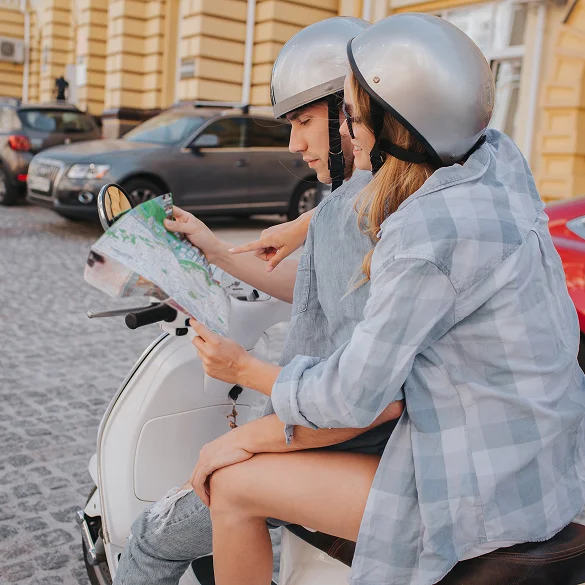
While using Google Maps or an up-to-date Sat Nav will undoubtedly be helpful on your journey, they don’t always have all the information you need, especially in rural areas. It’s worth going old-school and keeping a physical map on hand, just in case.
The staff or hosts at your accommodation may have insider knowledge, too, so it’s always good to ask them for tips.
FACT 19.
Using the horn
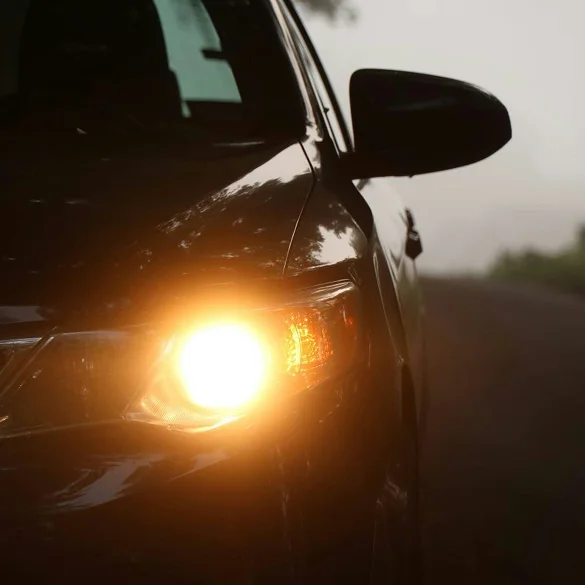
You should only use your horn if there’s an emergency. Otherwise, flashing lights are the preferred method for warning other drivers.
FACT 20.
The alcohol limit
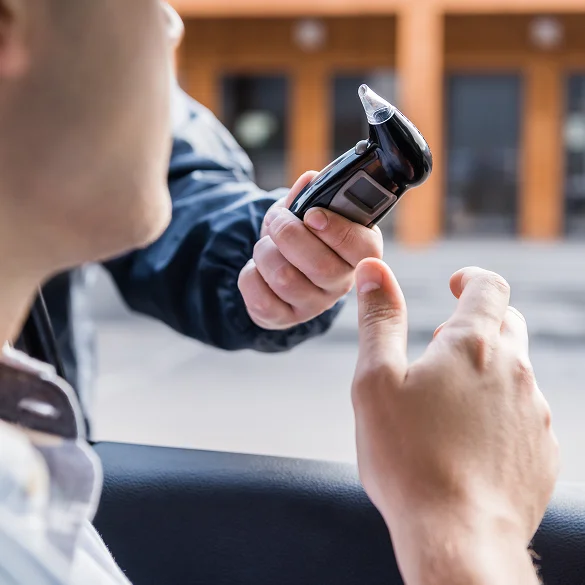
The Blood Alcohol Concentration (BAC) limit in Italy is 0.05%, or 0% BAC for drivers under the age of 21, drivers with less than three years of driving experience and professional drivers.
Fines for driving over the legal limit range from €2,000 to €10,000, plus a driving ban and even a prison sentence depending on your BAC.
FACT 21.
Fuel
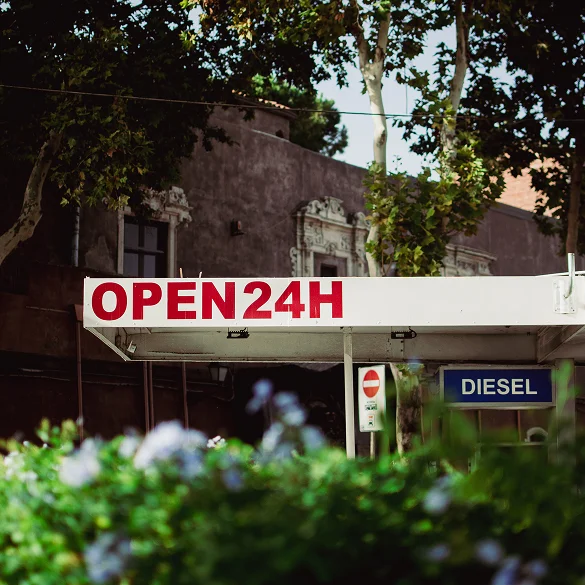
You often have two options when refuelling at an Italian fuel station: self, or servito. Self is, well, self-explanatory, and you fill up your own car, while servito means an employee will do it for you. The latter is more expensive.
Petrol is called benzina, while diesel is called gasolio. Make sure you check which type your rental car takes.
You can pay in the station, if it’s open, or at the machine if it’s closed. Most machines take cash or cards.
FACT 22.
Other ways to stay safe on the road
Driving in another country, on the other side of the road, with a different car, can be a challenge, even if the freedom to explore is utterly worth it. There are some things you can do to make it easier and manage your nerves, including:
- Take regular breaks and consider stopping more often than you would if you were at home, especially if you go on your trip in summer. The heat can tire you out (and you can still get sunburn in a car, so don’t forget to apply and reapply SPF throughout the day).
- Wear sunglasses to protect your eyes from the glare of the sun, especially if you’re travelling in summer.
- Leave more space than you normally would between you and the car in front. This gives you more time to react.
- Write yourself reminders on post-it notes and stick them to the dashboard. For example, if you find it difficult to remember how to deal with roundabouts, leave a post-it note with ‘Anticlockwise’ written on it. This can also help you avoid going into autopilot by staying focused on the task at hand.
FACT 23.
What to do in an emergency
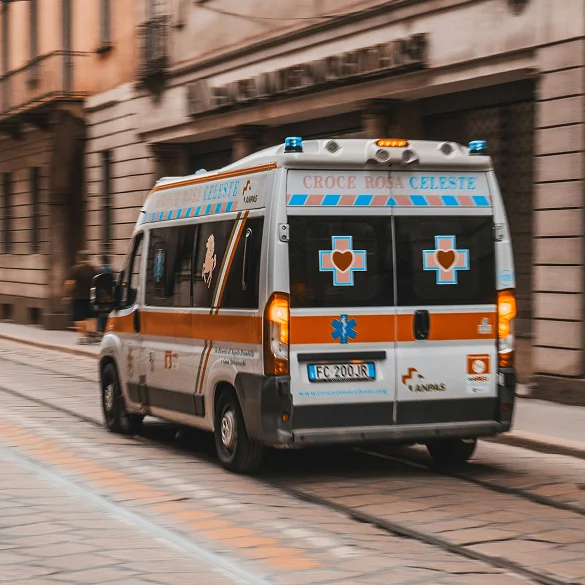
Emergency phones are available every two kilometres on the motorway. You can either connect to an emergency call centre to speak to an operator, press a spanner button if you’re having car trouble, or press a red cross button if you need medical help.
If you’re not on the motorway, you can call one of the Italian emergency phone numbers: 118 for the ambulance service, 115 for the fire service and 112 for the police.
FACT 24.
Returning a rental car
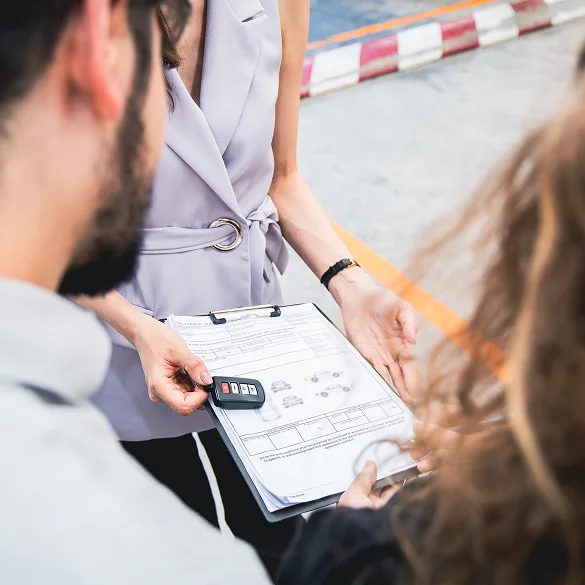
Check the terms and conditions before you return your rental car. Some companies require you to come back with a full tank, for example.
Check the car for any damage and take photos if there is something - it’s better to own up to it.
And, if you took photos of the car before you drove away at the start of your trip, you’ll only have to pay for the new damage.
Chapter 3
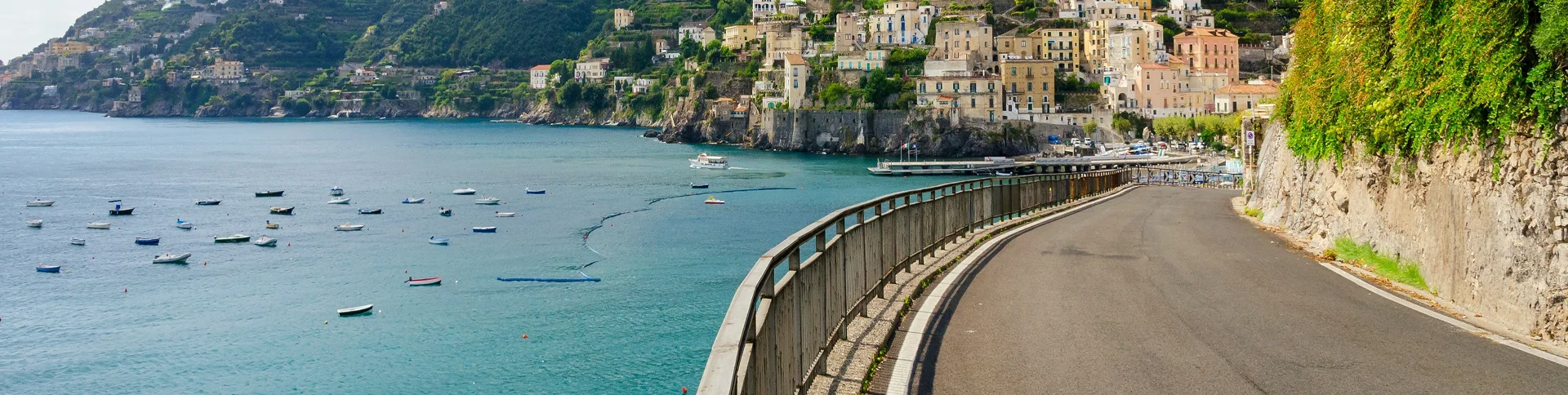
Scenic routes to follow in Italy
So, you’ve swotted up on the rules of the road, you know what type of rental car you’d choose and you’re ready to explore everything Italy has to offer. But which route to take?
FACT 25.
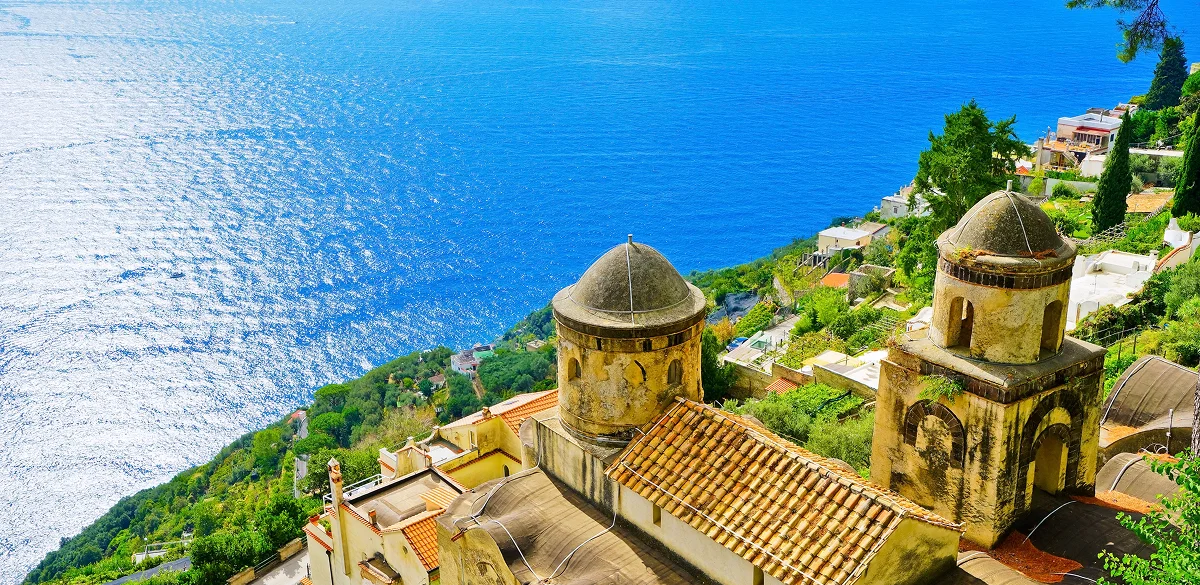
The Amalfi Coast: Salerno to Sorrento
Route : Salerno - Vietri Sul Mare - Amalfi - Ravello - Positano - Sorrento
This is a challenging drive, with narrow roads and tight bends, so it’s one for confident drivers. You could tick off every place on our route in a day, but we recommend slowing down and really taking time to soak in the sights. This is a road trip best suited to families with older children who can appreciate the slower pace.
Salerno
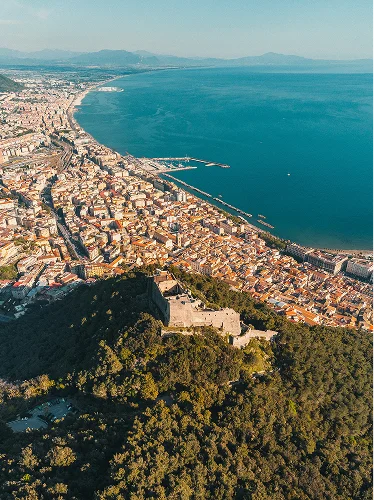
This ancient city might not be as famous as Florence or Rome, but it's got all the historical sites, hospitality and delicious food your family could want. Step back in time as you explore Salerno Cathedral or Castle of Arechi, slow down to the locals' pace of life and relax by the sea, and sample the area's speciality: scialatielli, a pasta from the Amalfi area served with seafood including mussels, prawns, clams and cuttlefish.
Vietri Sul Mare
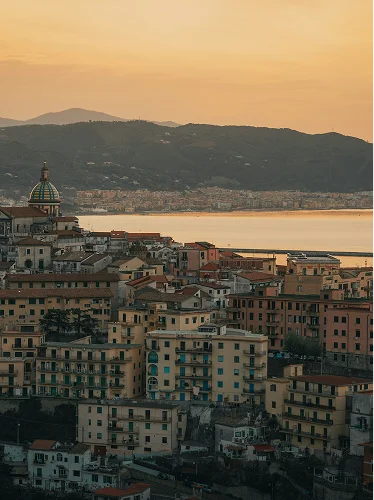
Vietri Sul Mare is a seaside town with a character all of its own. Brightly coloured houses line the narrow streets and, on the main street, Corso Umberto I, shops are tiled to show off the area's famous ceramics. Visit the Vietri Ceramic Museum if you want to learn more about this art form. And don't forget the Chiesa Parrocchiale di San Giovanni Battista, which has a dome covered in, you guessed it, ceramics.
You get the best of both worlds in Vietri Sul Mare, with views of the mountains and some quiet sandy beaches. Marina di Vietri has beach clubs if you want to hire a daybed or umbrella, while Vietri Vacanze Noleggio Barche has kayak and canoe rental facilities, and boat tours can be booked from here.
Amalfi
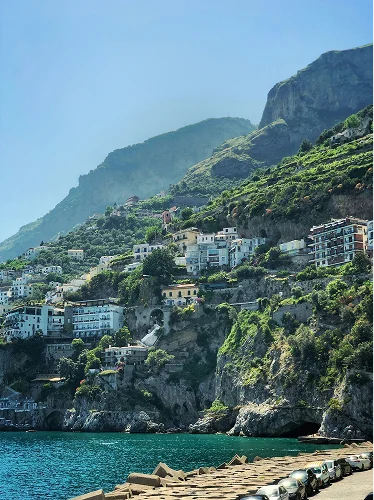
Like many places in the area, Amalfi is known for its impressive views. Walk or take the lift up to Amalfi Cemetery to gaze over the town, its lemon trees, and the water beyond, or book a boat tour so you can really take in the coastline and the clear blue waters of the sea.
Get your history fix when you visit Cattedrale di Sant’Andrea, which was first built way back in the ninth century and has an intricately decorated exterior with steep stone steps. And don’t forget to sample sweet treats made with the town’s bright yellow fruit – we recommend the lemon sorbet served in a lemon.
Ravello
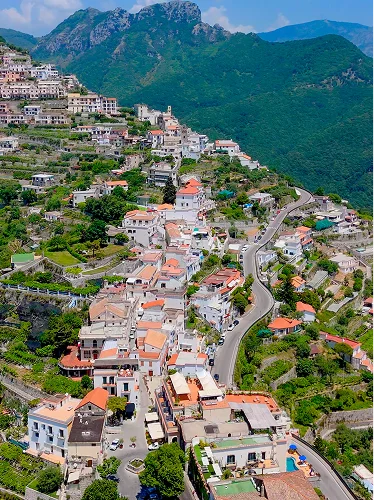
Ravello is set back from the coast, so there are no beaches, but don’t let this deter you. Its position in the hills means you still get incredible panoramas of the cliffs, the twinkling lights of other towns and the water beyond. Visit Villa Cimbrone to explore the gardens and the Infinity Terrace viewpoint with its marble busts, or settle down for people watching in the piazza. You can even follow the stone paths between Ravello and other towns, like Minori, if you want to explore further.
Positano
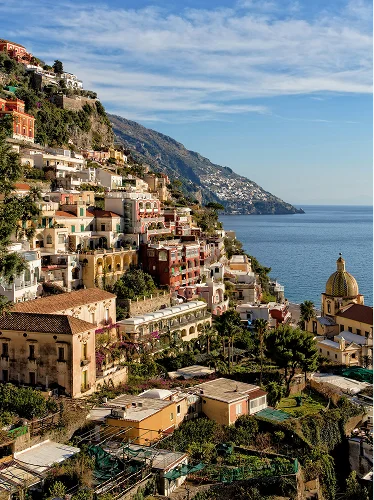
Positano is built into steep hills, with steps connecting each level (you can take a shuttle bus if you don’t feel like making the hike up or down). The main area of the town is at the bottom, alongside a rocky beach where you can hire sun loungers. Active families may want to hike the Sentiero degli Dei (the Path of the Gods), but you’ll have just as much fun learning how to make pasta at a cooking class.
Sorrento
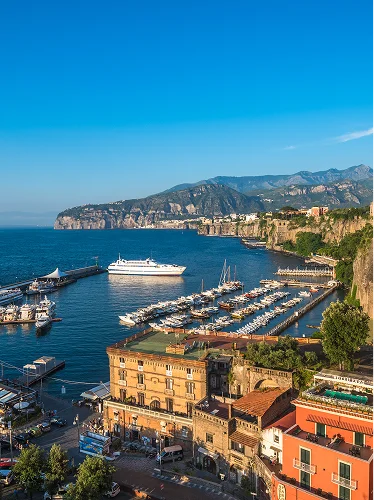
Relaxed, lively and welcoming, Sorrento is the end point of your Amalfi coast road trip. Explore the town’s narrow alleyways in search of souvenirs, take a tour of one of the lemon farms, and stop at one of the seafood restaurants along the marina to enjoy freshly caught fish and indulge in some people watching.
FACT 26.
Bari to Brindisi
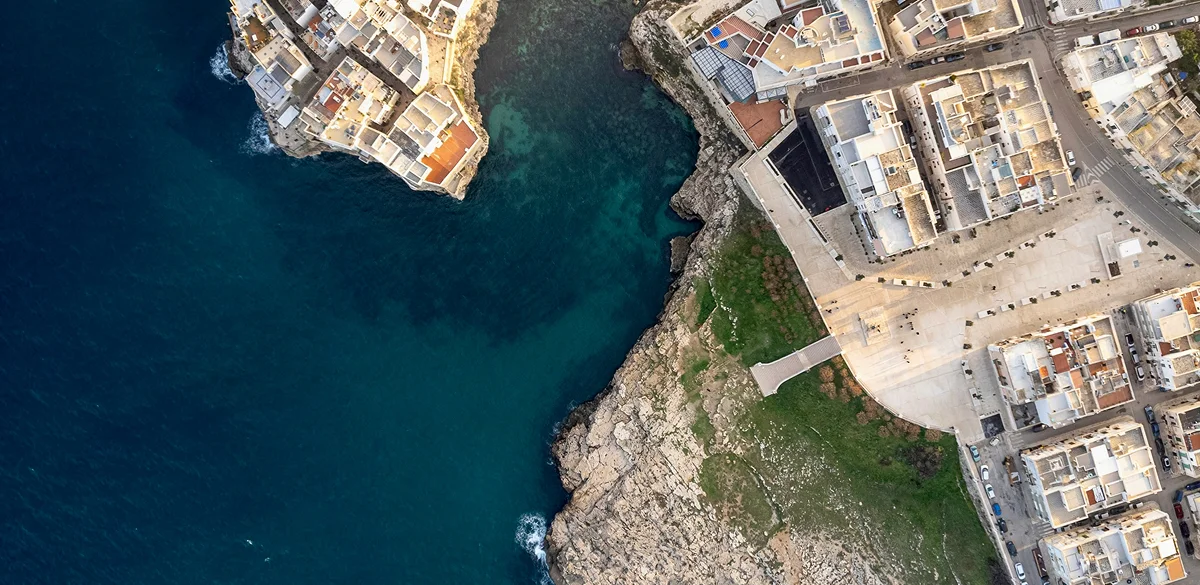
Route : Bari - Polignano a Mare - Alberobello - Brindisi
This exploration of southern Italy is an easy drive, with plenty of things for families to do along the way. Bari isn’t particularly car friendly, so we recommend flying into Bari International Airport, travelling into Bari to visit, then heading back to the airport to pick up your rental car and travel onwards to Polignano a Mare (which is around 40 minutes away).
Bari
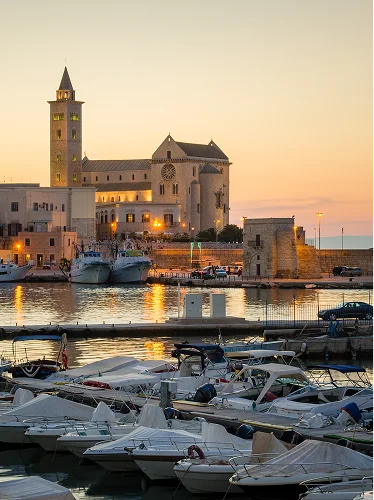
Your entryway to Puglia, Bari is the area’s capital, celebrated for its long seaside promenade. This vibrant and bustling city is split into two main areas: the old town (Bari Vecchia), with medieval buildings, and the new town, where you can shop for souvenirs.
The old town, a UNESCO World Heritage site, is home to the Basilica di San Nicola, the shrine of St Nicholas (Father Christmas himself) and Cattedrale di San Sabino, where you’ll see a rose window decorated with animals.
Hungry? Make your way to Largo Albicocca to try the Italian street food. From fried dough balls to handmade pasta, you’ll find it hard to choose what to have.
Polignano a Mare
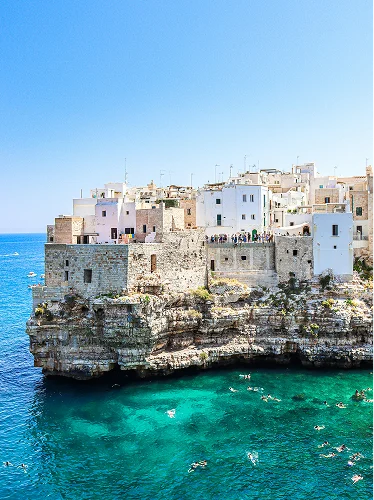
This charming fisherman’s town is perched on a cliff. The winding, whitewashed streets are fun to explore and some of them lead to terraces where you can enjoy the views of the sea below. It’s also a great place to enjoy a beach trip, as there’s a Blue Flag beach with clear waters and lifeguards on duty. Of course, it wouldn’t be an Italian road trip without plenty of ice cream, and Polignano a Mare is known for its abundance of excellent gelaterias, serving a mix of classic and experimental flavours.
Alberobello
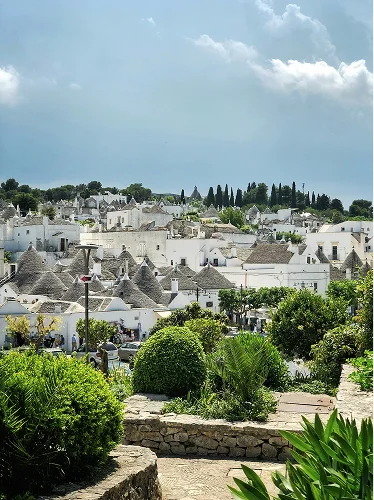
Travel around half an hour or so inland and you’ll find Alberbello, a UNESCO World Heritage site. It’s best known for its trulli, which are dry stone huts with domed, conical or pyramid-shaped roofs. Each roof has its own symbol, which represents a good harvest. You can take a walking tour of the main area of trulli, Rione Monti, from a local guide to really get an insight into the history. Alberobello is a pit stop, rather than a place to stay, although you can stay in a trullo if you want to immerse yourself in tradition.
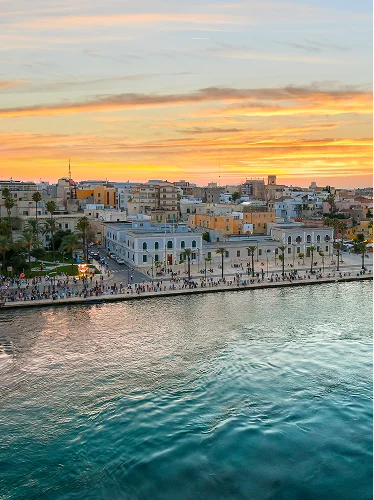
Brindisi
Brindisi is a port city. It’s right on the heel of Italy’s boot and is often overlooked by visitors, despite the abundance of history and stunning sea views. This means there’s a calmer, less crowded atmosphere, making for a peaceful end to your trip.
Many of the historical features and buildings are free to visit, like the Roman columns along the waterfront that once signalled the end of the road from Rome, the archaeological museum’s collection of excavated objects, and Brindisi Cathedral with its old mosaic floor. You can even look through a glass floor beneath the local theatre, Teatro Verdi, to see the ruins of an ancient Roman town. Want more adventure? Ferries leave Brindisi’s port heading to Greece, the Ionian Islands and Albania.
FACT 27.
Catania to Palermo
Route : Catania - Taormina - Syracuse - Modica - Palermo
On the island of Sicily (the one that looks like it’s being kicked by the ‘boot’ of Italy), you’ll find a mix of historical influences and stories to intrigue travellers of any age, lots of good food, and plenty of family friendly beaches – the perks of visiting an island. City traffic is chaotic, so use your car to drive between destinations and explore on foot otherwise. Don’t underestimate the size of Sicily, either. As far as islands go, it’s on the larger side, so give yourself plenty of time to explore.
Catania
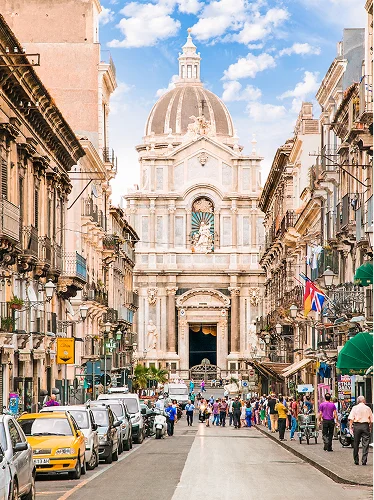
Spend time in Catania before picking up your rental car. It would be tempting to miss the city out altogether, but you’d be doing yourself a disservice. In the heart of the city, Piazza del Duomo, you’ll find landmarks like Fontana dell’Elefante, the Elephant Fountain, which legend says has protective powers, and the Roman Theatre, which is well preserved. Touring it truly feels like stepping back in time. Catania is also one of the best places to try sarde a beccadico: butterflied sardines stuffed with a mix of toasted breadcrumbs, parsley, anchovies, pine nuts and raisins, served on skewers and seasoned with lemon juice.
Taormina
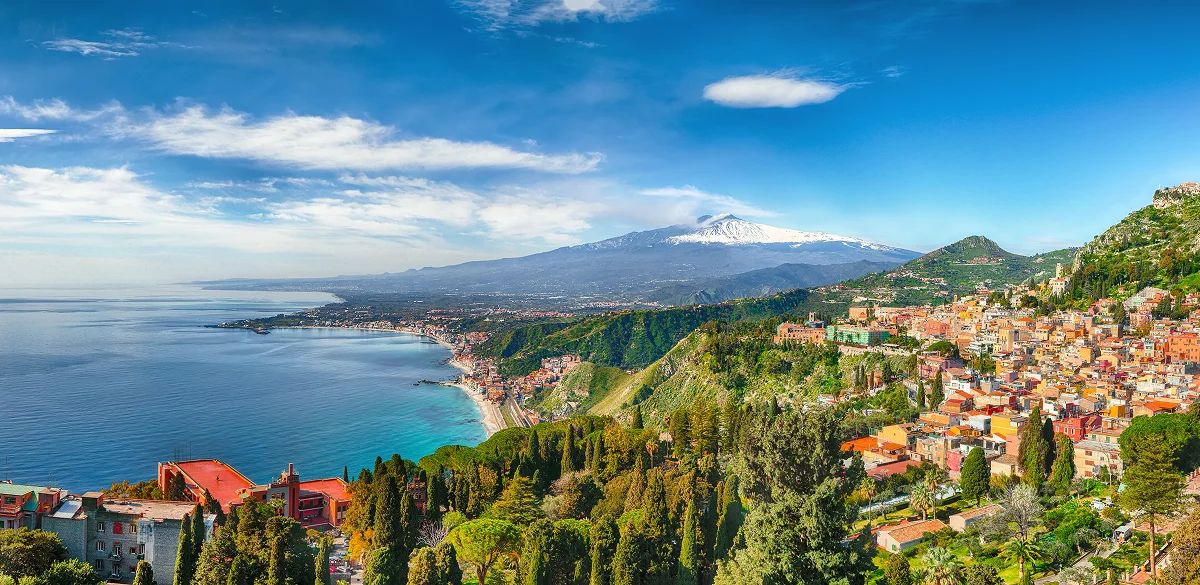
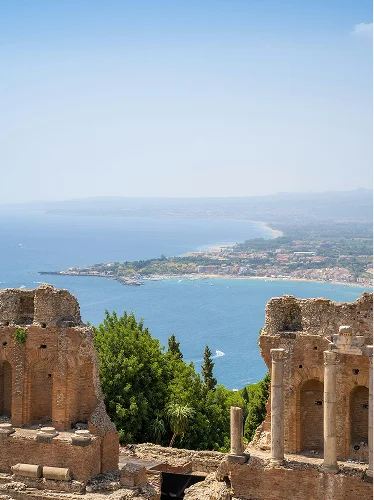
Taormina is a resort town with breathtaking views of Mount Etna, the tallest active volcano in Europe. It’s worth driving to the volcano to take the cable car, or hike, if you’re an adventurous family, and admire the views. Back in Taormina, you can see the ruins of the Ancient Theatre, walk down the Corso Umberto (there are some toy shops and sweet shops for younger travellers) and take the cable car to the Isolo Bella beach.
Syracuse
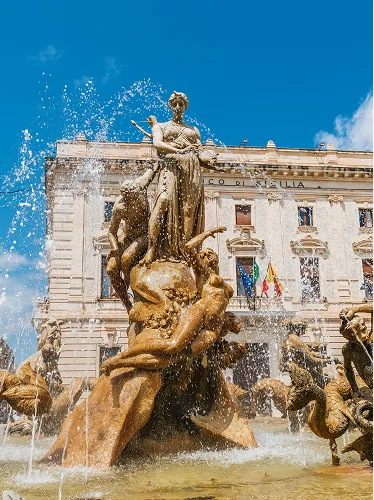
Like the rest of Sicily, Syracuse has history linked to other nations, namely Ancient Hellas (Greece). You’ll find evidence of this everywhere, from the Neapolis archaeological park with its Greek theatre and altar of Hieron, to the Temple of Athena. Cross one of the bridges to Ortigia to browse the outdoor market – children will get a kick out of choosing the fresh produce they’ll eat. And for the more daring, Parcallario adventure park has different routes through the pine forest, suspended above the ground, and is a short distance from Syracuse by car.
Modica
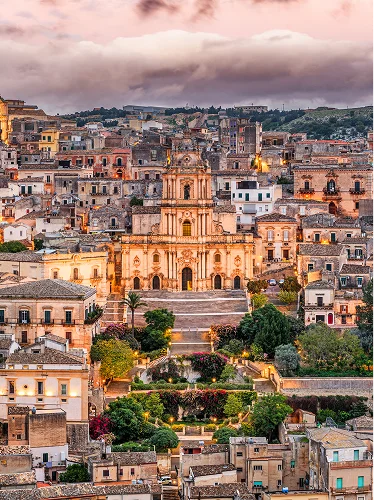
Modica is a city quite unlike any other, as it’s split into two areas: Modica Alta (Upper Modica) and Modica Bassa (Lower Modica). You can take a walking tour to get the lay of the land of both, but if the steep route up from Modica Bassa is too much for little legs, there’s a train from Corso Umberto I that goes up to Modica Alta and back down, with information provided about the city’s history.
Modica is celebrated for its chocolate, which was made using Aztec methods when cocoa first arrived in Sicily and often features flavours like chilli or cinnamon. You can find it at Antica Dolceria Bonajuto, the oldest chocolate shop on the island, or even join a class to learn how to make it yourself.
Palermo
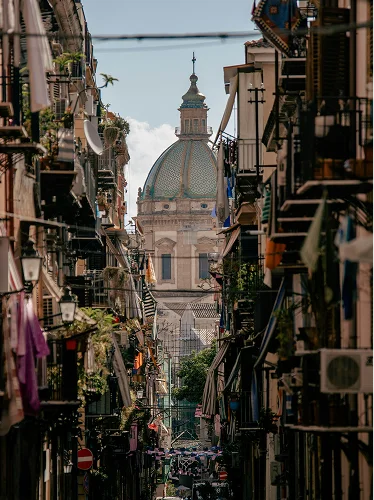
Palermo is the capital of Sicily and known as the Italian Capital of Culture, thanks to its mix of European and North African influences. It’s ideal for families with youngsters of any age – older children will enjoy the history and the atmosphere, while younger children will be mesmerised by the puppet shows and pastries. Browse the markets, which are reminiscent of souqs, and wander round Piazza Pretoria, which is home to a magnificent fountain filled with statues.
FACT 28.
Pisa to Siena
Route : Pisa - Florence - Greve - Siena
Experience the calm of the countryside and the historical architecture of the cities as you drive through Tuscany. The destinations all offer something different, but are close enough that you could give the rental car back in Pisa and save the fee for dropping it off in another place.
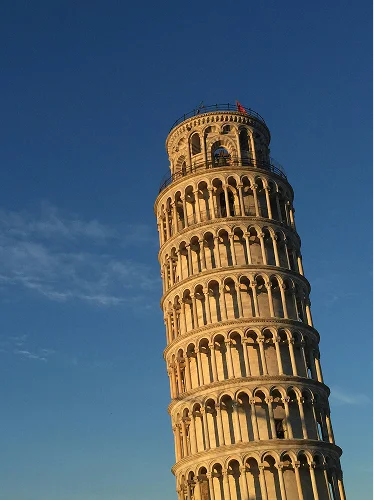
Pisa
Yes, Pisa is famous for the Leaning Tower, torre pendente di Pisa, and it’s fun to see it in person (and even climb it), but there’s so much more to the city. Next to the tower is Duomo di Pisa, the cathedral, where you can admire the paintings, frescoes and sculptures. Head to the botanic garden, Orto Botanico di Pisa, to escape the crowds, or visit the Palazzo Blu museum, which has family tickets available. Pisa is very walkable, so once you’ve explored these attractions, make your way through the city centre and alongside the river to get a feel for the atmosphere.
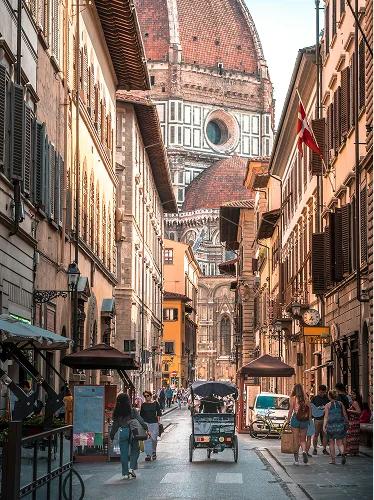
Florence
Florence combines the best of Tuscany: a historical city with lots of outdoor space. And good food, as you’d expect pretty much everywhere in Italy. Attractions are free on the first Sunday of every month, which can be a handy way to save on your holiday budget (or put it towards more gelato), but queues can be longer – you might prefer to visit on a week day when it’s slightly quieter. Look out for Fontana del Porcellino, a bronze pig statue meant to grant you good luck if you put a coin between its jaws. The original is at the Bardini Museum and there’s also a copy at the Uffizi Gallery.
As for the outdoor spaces, make your way to Giardino di Boboli, which is designed in the Italian Renaissance style with fountains, sculptures and even an amphitheatre. Younger children will enjoy themselves at Lungarno di Santa Rosa, which has a play area. And if you need a break from the city’s hustle and bustle, walk up the hill to the Piazzale Michelangelo lookout point to view the city from above.
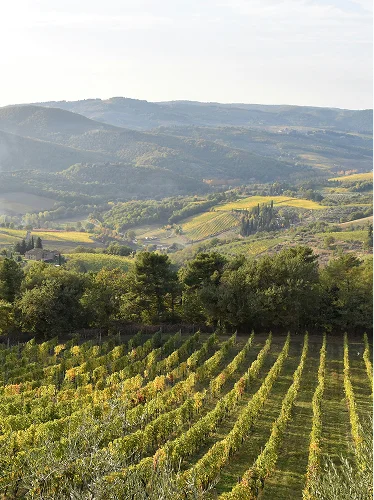
Greve
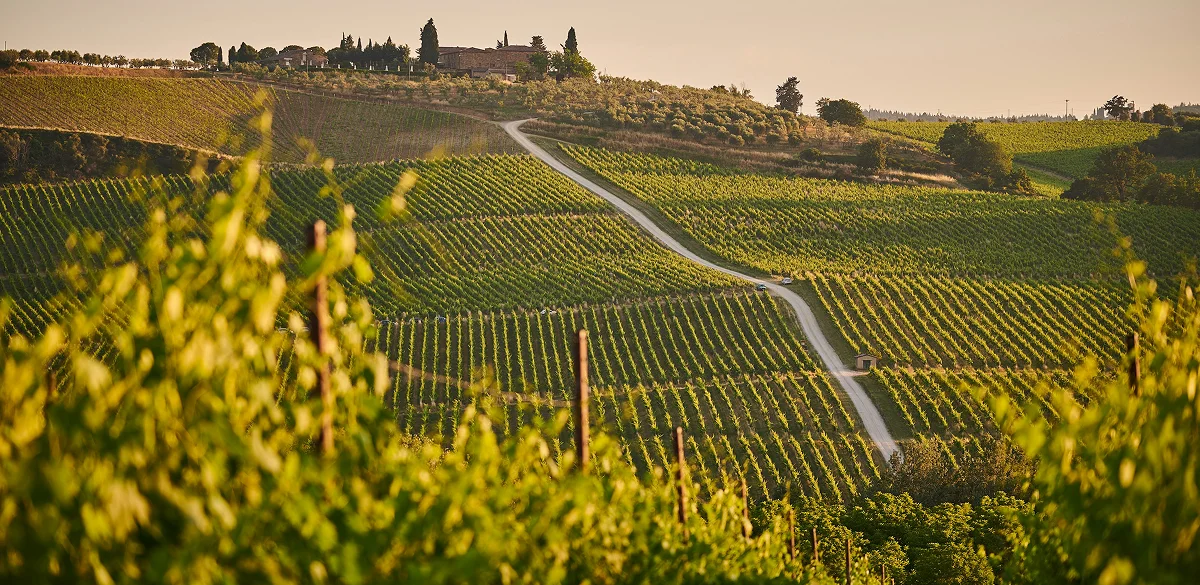
Greve is the gateway to the Chianti Region and, despite its location in the land of vineyards, has a welcoming family friendly feel. It’s a great base for exploring the rolling hills of the surrounding countryside, with a busy Saturday market and shops and cafés selling local produce ensuring that no one goes hungry. Head out to Brolio Castle to really get a taste for the area – grown-ups can taste the wine, and children can go on a scavenger hunt in the castle grounds.
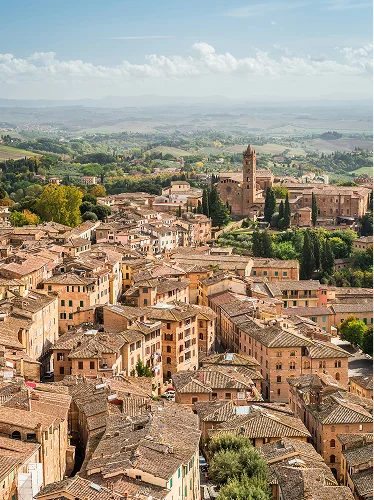
Siena
Siena is a city built high in the hills, with many buildings still standing despite their medieval origins, like the tower Torre del Mangia, which you can climb to admire the views from the top. You’ll have great fun making your way through the meandering streets. Pause in Orto Dei Tolomei, a park with space for little ones to let off some steam, or try some of the workshops at the Children’s Art Museum, which has plenty of interactive activities. Visiting in summer? A trip to the Acquacalda swimming pool will help everyone cool off.
FACT 29.
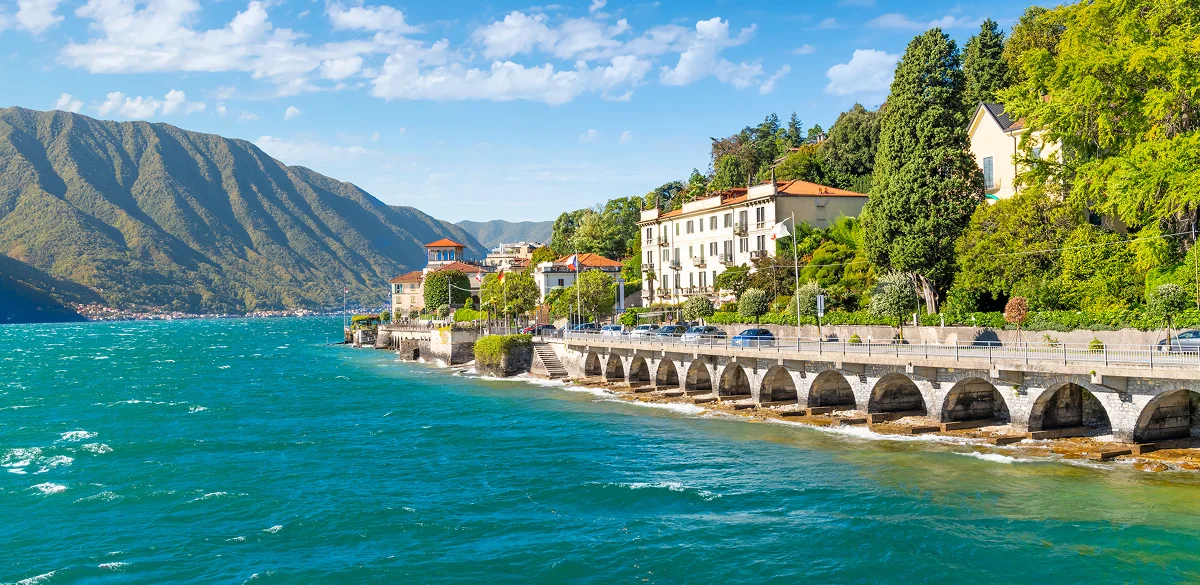
Venice to Milan, via the Lakes
Route : Venice - Lake Garda - Riva Del Garda - Lake Como - Milan
Venice is renowned throughout the world, so it wouldn’t make sense to do a road trip in northern Italy without paying a visit. Then make your way to the country’s glimmering lakes, complete with views of the Alps, before ending your journey in the cultural hub of Milan.
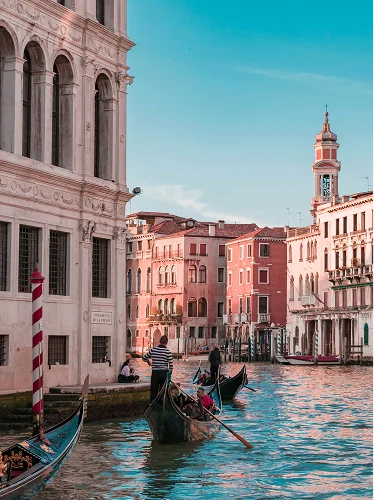
Venice
Fly into Marco Polo airport, then take the bus or a water taxi to the city. There are no cars in Venice, which creates a traditional, almost otherworldly feel. Half the fun is exploring the narrow streets, crossing bridges between the tiny islands that form the city, and watching the boats sail by. As for activities? Venetian mask painting is a lot of fun and gives everyone a souvenir to bring home. Stop by the Rialto Bridge, keeping the youngsters close (it gets crowded) and duck into the department store T Fondaco dei Tedeschi. You can book a free 15-minute time slot to stand on their terrace and see Venice from above, away from the busyness below.
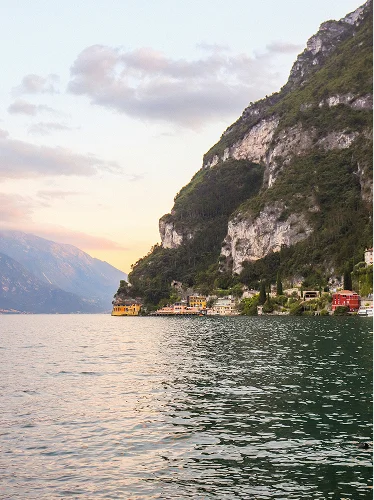
Lake Garda
Return to Marco Polo airport to pick up your rental car, then drive to Lake Garda, the biggest lake in Italy. Monte Baldo towers over the area and you can get to the top to admire the views in a cable car. But this is a cable car unlike most: the cars turn 360 degrees as you travel, so everyone gets the chance to see the full view. Back on the ground, you can rent bikes to explore some of the many bike paths round the lake, stopping to relax at the beaches along the way.
Lake Garda is known for its serenity, but what you might not realise is that it’s also home to the theme park Gardaland. Children will love Peppa Pig Land and the Legoland Water Park, a fun way to cool down on a hot day.
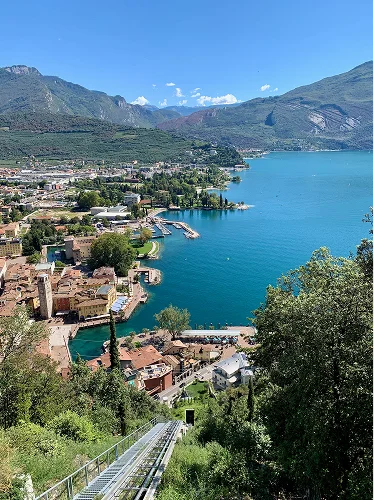
Riva del Garda
Active families will be spoilt for choice in Riva del Garda, with opportunities for cycling, hiking, climbing, sailing and windsurfing. History lovers will be pleased too, with plenty of old buildings and museums to explore (even the city walls are medieval). The Alto Garda Museum, housed in a 12th century fortress, is home to temporary and permanent exhibitions so you can learn more about different eras.
Children will enjoy seeing the reptiles at Reptiland and running around at the play area in Porta Orientale Gardens. It’s also worth taking them to see Varone Waterfall – the rushing water can be viewed from above or below. Wear sturdy shoes and a waterproof, and keep hold of little ones on the slippery paths.
Lake Como
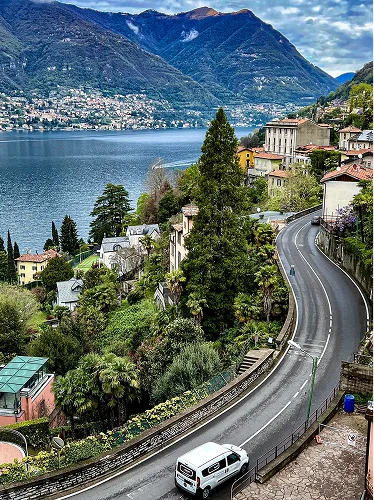
Visiting Lake Como and the surrounding towns and villages is like stepping into a fairytale world, with colourful houses, majestic mountains and, of course, the large glassy lake. Make your way through the narrow cobbled streets towards the shore, which is home to extravagant villas, some of which are open to the public. Villa Carlotta offers a scavenger hunt for children, while Villa Balbianello was once the residence of a famous Italian adventurer.
Milan
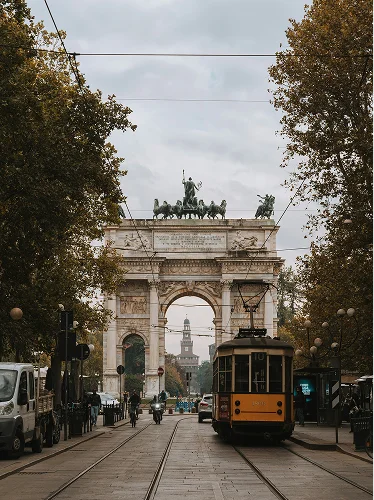
Park your car at your accommodation and switch to public transport. Milan has a metro, trams and buses, and you can buy a ticket for unlimited travel within 90 minutes. It’s handy to have the option if you’re doing a lot of walking, especially with younger children.
Visit the Duomo di Milano, where you can climb up to the roof to enjoy panoramas of the city. Castello Sforzesco is also worth the visit, as it offers child friendly tours and has multiple museums on sight, so you can pick the ones that interest you and your family most. Afterwards, take a break in nearby Parco Sempione and enjoy the fresh air. And don’t forget the Leonardo da Vinci Museum of Science and Technology, where you can learn about the man himself and enjoy the variety of permanent and temporary exhibitions.
FACT 30.
What to think about when you plan your road trip route
- Your interests – what do you want to see and do? For some, it’s the history, for others it’s exploring the outdoors, or maybe it’s all about the food. Many will want an element of all three, and why not when you’re in Italy?
- How long you’re willing to spend in the car – do you mind being in the car for hours? Or would you rather travel for shorter periods of time? This will help you decide where to stop and when.
- How much time you want to spend in each stop - there’s more to see in some places than others, or you might simply want a longer break between journeys. Plan out how many nights you’d like to spend in your destinations and your road trip will quickly take shape.
- Where you want to stay - are you looking for a small local guest house? A plush hotel? Smaller areas may not have as much variety as large cities.
- When you want to travel - consider the weather, public holidays and, of course, school holidays. You might also want to look at the shoulder season (if this is feasible with school term times), which is in April, May, September and October in Italy. It’s quieter, costs less, but often still has the good weather of peak tourist season.